

Due to F1 road closures, the Gallery carpark is open 7–9 Oct from 7–10am. The carpark will be closed from 9 Oct, 10am and will reopen on 13 Oct, 7am. Click here for more details.  

The UOB Southeast Asia Gallery is temporarily closed and will reopen in late 2027. In the meantime, works from the National Collection remain exhibited across the Gallery. 

Sustainable Collections Care in Tropical Climate​ Building Environments

This two-year research initiative aims to identify adaptive and sustainable solutions for the care and management of the National Collection and Archives in tropical building environments.

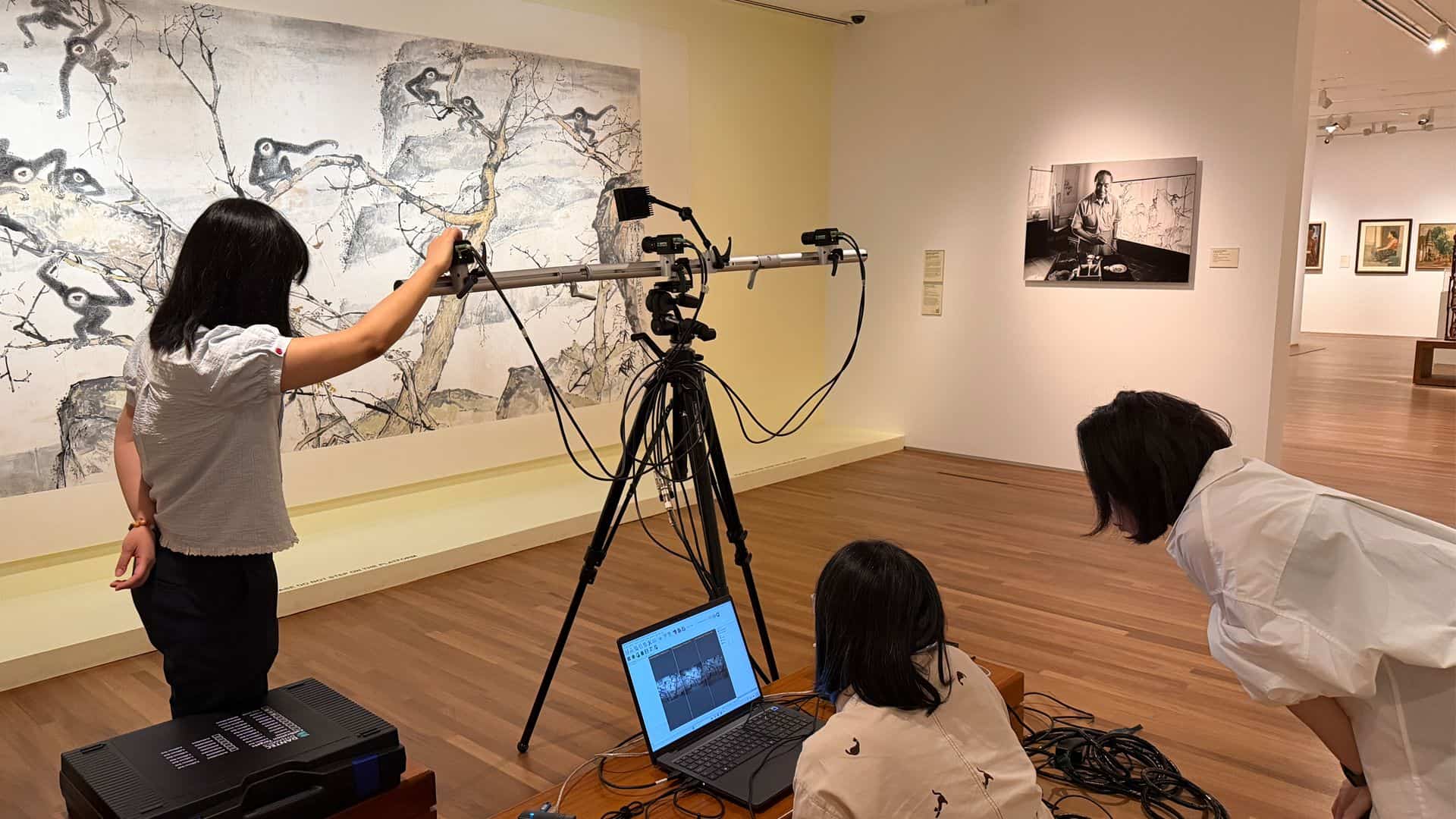
Three people in a gallery use a tripod-mounted camera system to scan an artwork, viewed on a connected laptop screen.

About the initiative

Sustainable Collections Care in Tropical Climate Building Environments is a two-year research initiative involving multiple agencies and supported by the Public Service Transformation (PST) Grant and Prime Minister's Office Public Sector Science and Technology Policy and Plans Office (S&TPPO).

This initiative aims to identify adaptive and sustainable solutions for the care and management of the National Collection and Archives in tropical climate building environments, with the goal of balancing energy consumption and preservation of the national collection.

National Gallery Singapore (NGS), as one of four participating institutions, is collaborating with the Heritage Conservation Centre (HCC) of the National Heritage Board and A*STAR Institute of Advanced Intelligence and Computing (A*STAR IAIC) to develop sustainable environmental guidelines specific to Singapore's tropical climate. This project combines evidence-based and risk-based scientific approaches, including building energy and indoor environment simulation models and material science, with heritage conservation expertise.

What challenges are we solving?

Museums operating in tropical climates face a unique set of challenges, including strict environmental requirements for artefact preservation and high cooling and dehumidification loads all year round. This creates a need to balance four key priorities:

  • Preservation of artworks and artefacts
  • Energy efficiency
  • Operational sustainability
  • Human comfort

This initiative is also aligned with the following guidelines:

  • Singapore's Sustainability Goals: To achieve net-zero emissions by 2050
  • Bizot Green Protocol Refresh (2023): A commitment by leading international museums, including NGS, to adopt more sustainable practices in collection care and operations. The refreshed protocol encourages museums to explore more energy-efficient environmental setpoints while ensuring the safety of their collections. Click here for more information.

Monitoring Art for a Sustainable Future

Beyond the data gathered, it is time to test if the findings are true.

Over a period of six weeks (from 20 Oct to 30 Nov 2026), National Gallery Singapore, in collaboration with NHB HCC and A*STAR IAIC will trial a new gallery environmental setpoint by increasing the room temperature from 20˚C±1 to 21˚C±1 while maintaining relative humidity at 60%±5.

To monitor the artwork's response to this change, a non-invasive artwork monitoring system — the Digital Image Correlation (DIC) — has been adopted.

This equipment tracks changes in the artwork across three dimensions (the x, y and z planes), allowing us to detect any minute changes that may occur as a result of the temperature increase.

Three people in a gallery use a tripod-mounted camera system to scan an artwork, viewed on a connected laptop screen.

Setting up

Before each set of photos, HCC conservators and scientists first check the cameras against the artwork, ensuring the required view of the artwork is captured.

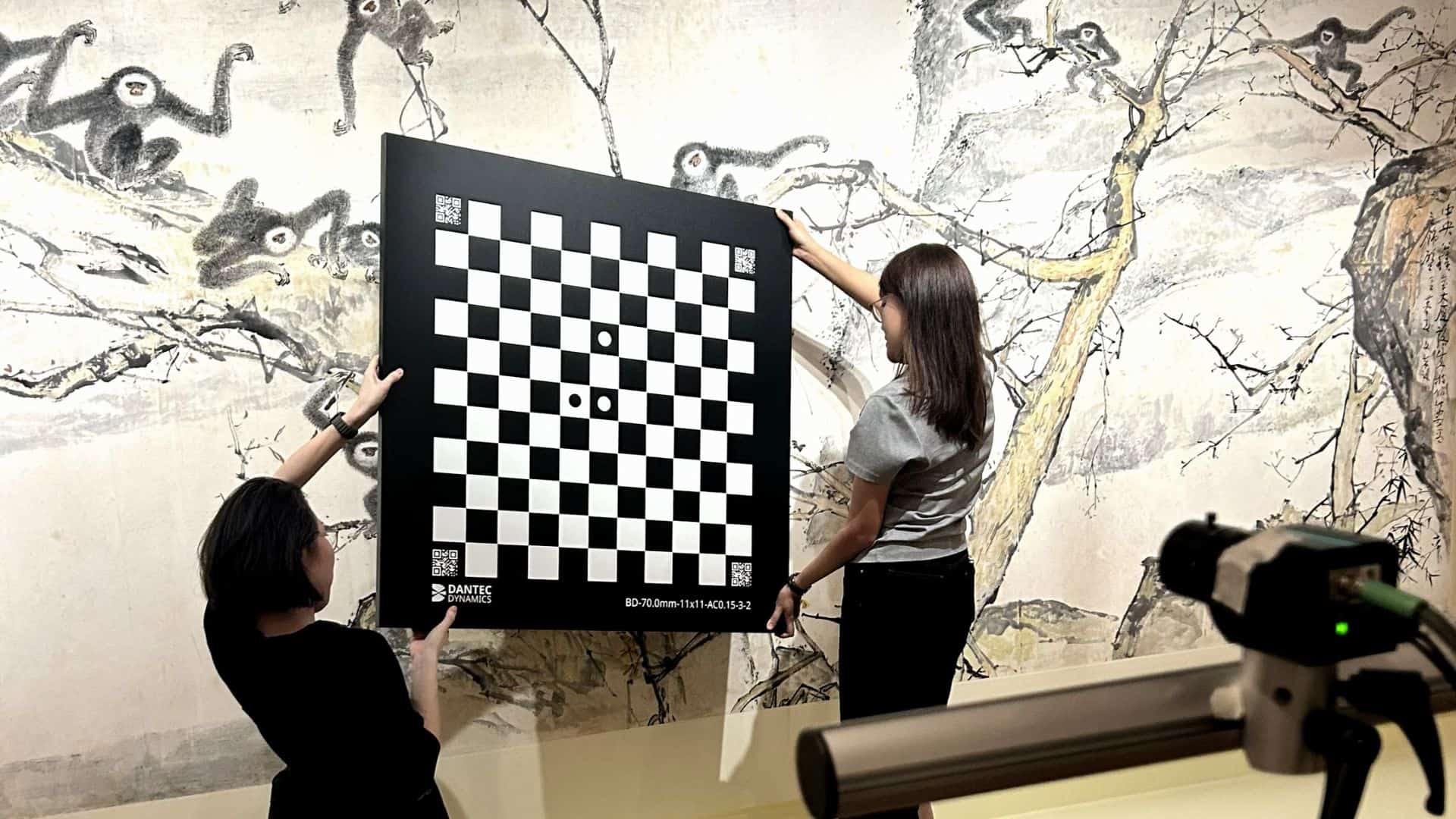
Two women hold a large black and white checkerboard calibration target in front of an artwork.

Calibration

Before each set of photos is taken, a calibration is conducted to establish reference or starting points for the cameras.

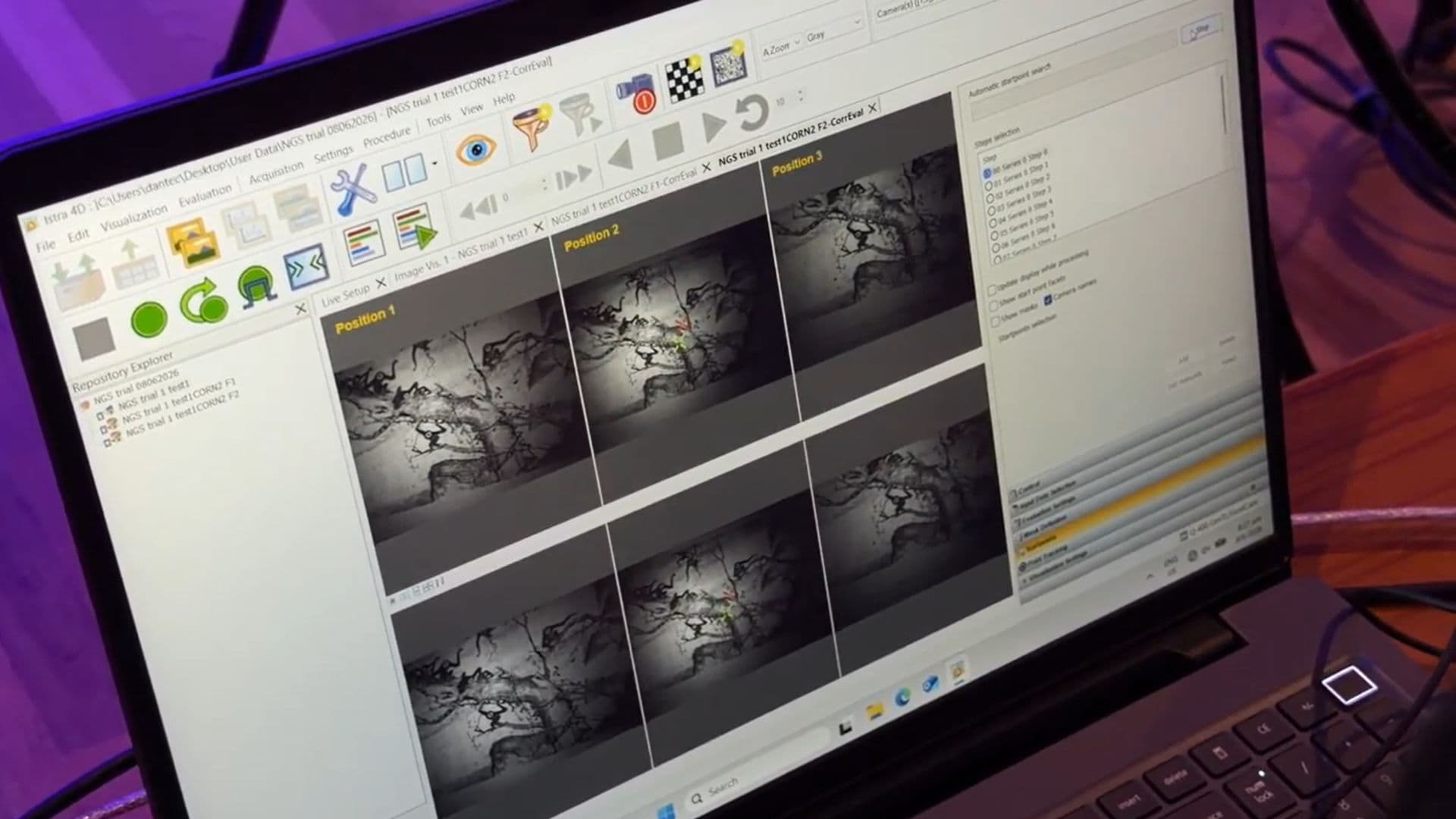
A laptop screen displays specialized software with multiple grayscale images of an artwork over time.

Taking photos over time

Three high-resolution cameras photograph the artwork from different angles. This process is repeated at regular intervals to build a picture of how the artwork changes. 

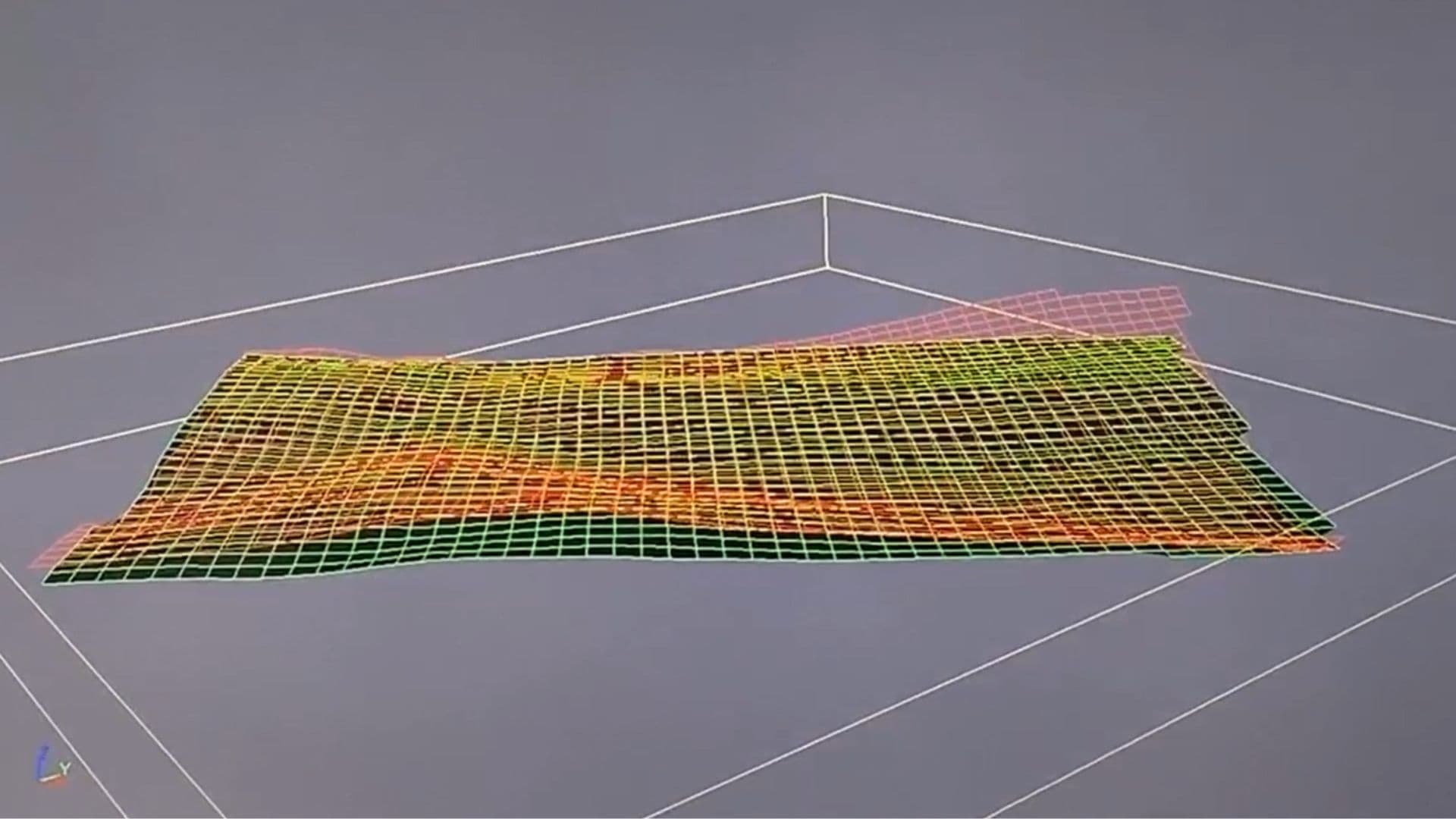
A 3D wireframe model of a rectangular surface with a color gradient from green to orange, displayed within a digital workspace on a gray background.

Visualising movement

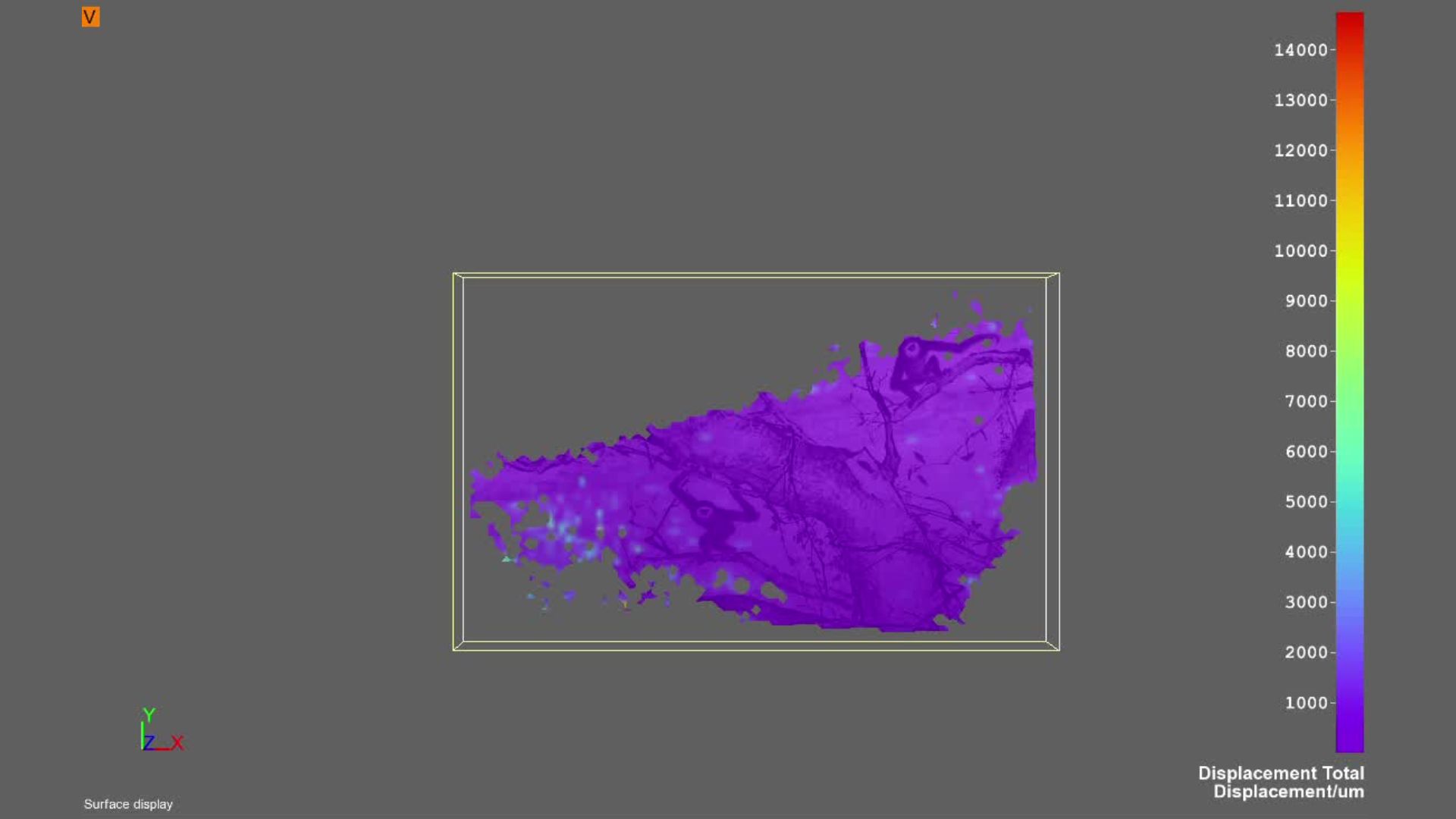
Specialist software (Istra-4D) compares the photos and tracks thousands of tiny points on the surface. It measures how far each point has moved from the start.

The results appear as a colour-coded map that corresponds to the degree of change — little movement (purple), moderate (blue and green), and large (yellow, orange, and red).

A digital 3D visualization displays a purple-toned map, with a color scale bar on the right.

Visualising shape

The software also builds a 3D map of the artwork's surface. This shows whether the artwork is expanding, shrinking, or warping, with colours showing the degree of change.

1 5

Important notice to visitors

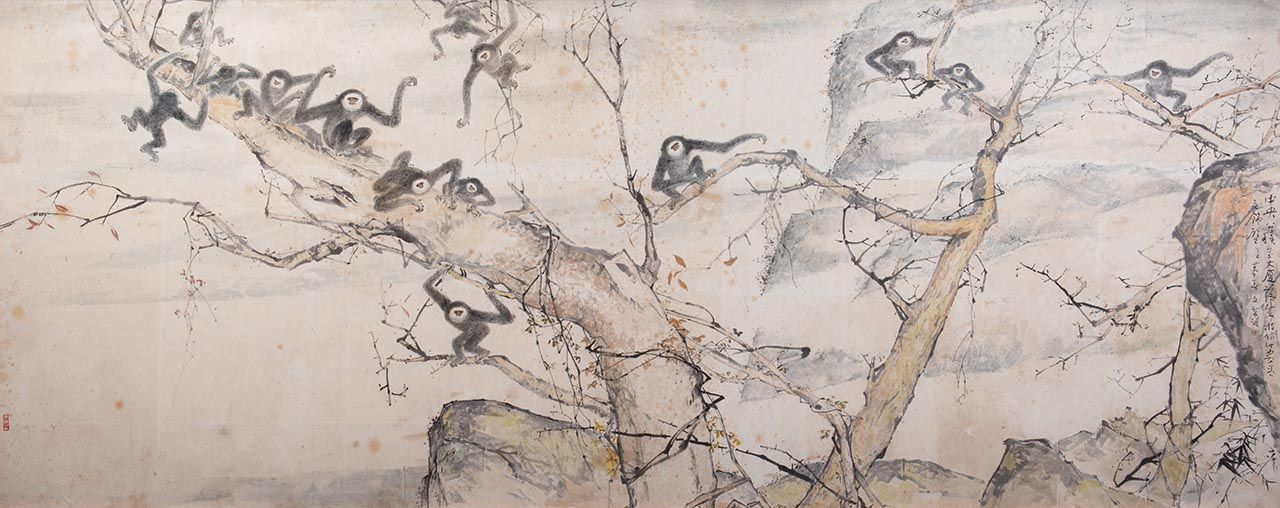
As part of this Sustainability Research project, a Digital Image Correlation (DIC) system has been set up in front of Chen Wen Hsi's Gibbons to monitor the artwork's response to a warmer gallery environment — balancing art preservation, energy savings, and visitor comfort. 

Limited access to artwork

To capture images of the artwork using a DIC equipment, access to the area in front of the artwork will be limited on the following dates and timings:

  • 20–26 Oct, 10–30 Nov 2026, 12pm & 6pm
  • 27 Oct – 9 Nov 2026, 10am – 7pm (every 15 minutes)

We invite you to take a moment to observe the science taking place right before your eyes. ​​

Thank you for being part of our journey to sustainably preserve these treasures for generations to come.​

Important notice to visitors

Acknowledgements

Special thanks to

Facilities Management

  • Mark Chee  ​
  • Gu Xiao Liang​
  • Khairul Hilmi Bin Jumaat​
  • Roy Xu​

Planning

  • Chua Swee Leen (Sustainability) 

Artwork & Exhibitions Management

  • Derrick Yam 
  • Hafiz Osman 

Curatorial

  • Adele Tan

Visitor Experience

  • Lynette Tan
  • Raymond Chai  
  • Christian Sng

Learning & Outreach

  • Annabelle Tan 
  • Jermaine Huang   

Sustainability Project Team 

  • Miki Komatsu  ​
  • Michelle Oh​
  • Lynn Chua​
  • Rui Chen​
  • Liu Tianyi ​
  • Karine Tan ​

Conservation Services

Paper, Photograph & Digital Media (PPDM)

  • Ayaka Ajiki
  • Jane Tan
  • Mariko Hirano
  • Kristin Low
  • Lee Siew Wah

Organic & Inorganic Objects

  • Ariane Segelstein
  • Birte Koehler
  • Clare Lim

Painting 

  • Irene Dominguez Jimenez 
  • Vanessa Ubaldi
  • Dr Koh Wee Shing
  • Dr Liu Huizhe
  • Aye Theint Theint

Building Energy Modelling

  • Dr Lee Hui Min 
  • Dr Li Xian
  • Dr Phua Wee Kee​

Indoor Environment Modelling

  • Dr. Ge Zhengwei
  • Kendrick Tan​

Explore more

Our Story

Sustainability

Media Centre

Our Awards