


Introduction
Crossings brings together works by Lai Foong Moi (1931–1995) in the artist’s first solo presentation since the 1960s. Born in Malaya and trained at the Nanyang Academy of Fine Arts (NAFA) in Singapore before furthering her studies at the École des Beaux-Arts in France, Lai’s practice emerged during a moment of profound transformation. At a time when the region was negotiating new boundaries of identity and nationhood, Lai’s reception became entangled in these questions. Celebrated as the first Malayan-born woman to hold solo exhibitions in Singapore and the Federation, she was positioned as a figure of promise at the intersection of national aspiration and cultural modernity. Despite this early recognition, Lai has remained less visible in the histories of Singaporean and Malaysian art compared to many of her contemporaries.
Working across portraiture, still life and landscape, Lai combined and expanded the conventions of these genres while consistently returning to the figure as her primary interest. These figures are often suspended in moments of transition, rest or contemplation, their gazes turned away, their inner worlds withheld. With an attentiveness to gender, labour and observations of the changing built and social environments, Lai offers a perspective on modernity and the place of the individual within it.
Crossings asks what might be lost as borders and narratives solidify. Reconsidering Lai’s ambitions and identity alongside those of her subjects, this new research creates space for more expansive explorations of her practice.
Crossing
.jpg/_jcr_content/renditions/cq5dam.web.1280.1280.jpeg)
Crossing (Home Coming). 1964. Oil on canvas, 77 × 65 cm. Collection of Singapore Airlines Limited.
Crossing (Home Coming)
1964
Oil on canvas
Collection of Singapore Airlines Limited
1 2
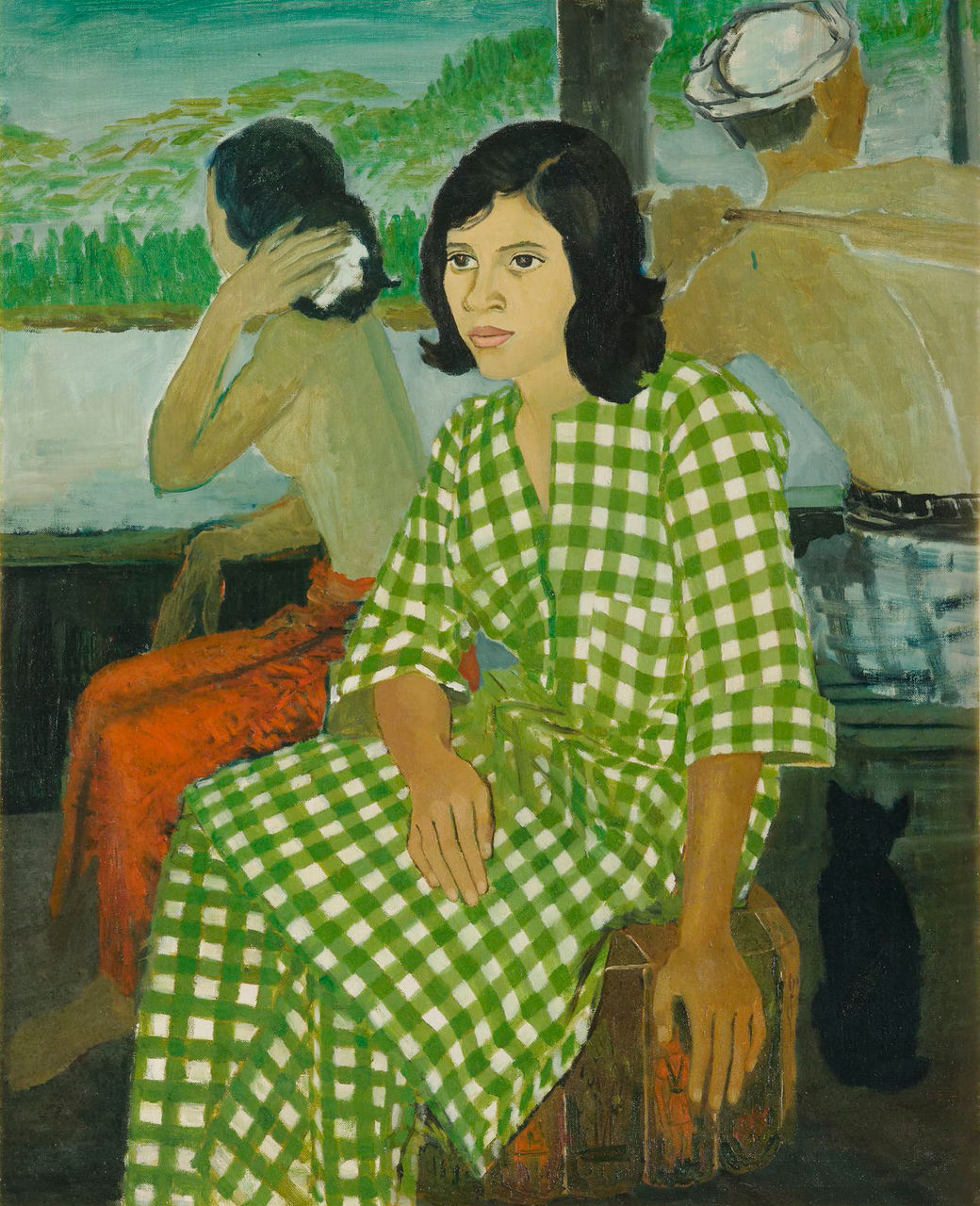
Crossing. c. 1965. Oil on canvas, 100 × 81 cm. Private collection.
Crossing
c. 1965
Oil on canvas
Private collection
2 2
Although these paintings share the same title, they depict significant differences. In this close study of figuration and posture, Lai was actively engaging with varying representations of fashion and gender. Seen together, the paintings explore different ideas of modernity and tradition, and the disjuncture between individual identity and shared experience. They mark the culmination of an intensely productive period in Lai’s career. Painted and exhibited across Singapore and Malaysia in the year of Singapore’s independence, the figures might allude to this symbolic moment of transition.
Still Life
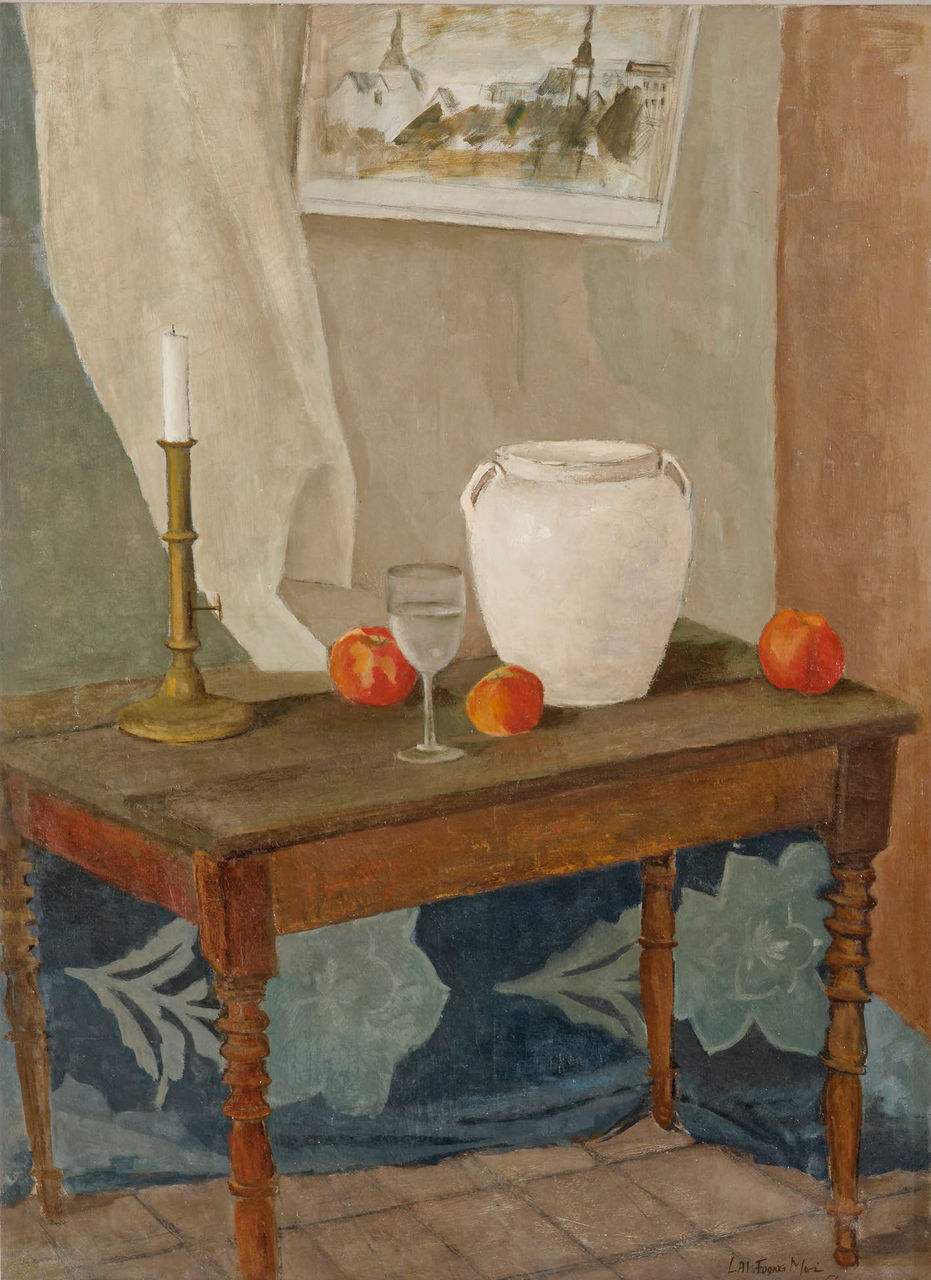
Three Apples on a Table. 1951. Oil on canvas, 100 × 74 cm. Collection of National Library, Singapore.
Three Apples on a Table. 1951. Oil on canvas, 100 × 74 cm. Collection of National Library, Singapore.
Painted while Lai was a student at NAFA in Singapore, this large-scale still life announces her early ambitions as an artist. The work focuses not only on the arrangement of objects on the table, but also the setting of the room itself. These carefully painted details contrast with the looser strokes of a framed landscape hanging above the table. Together, they reveal Lai’s awareness of other styles and pictorial traditions and her confidence in allowing them to meet within a single composition.
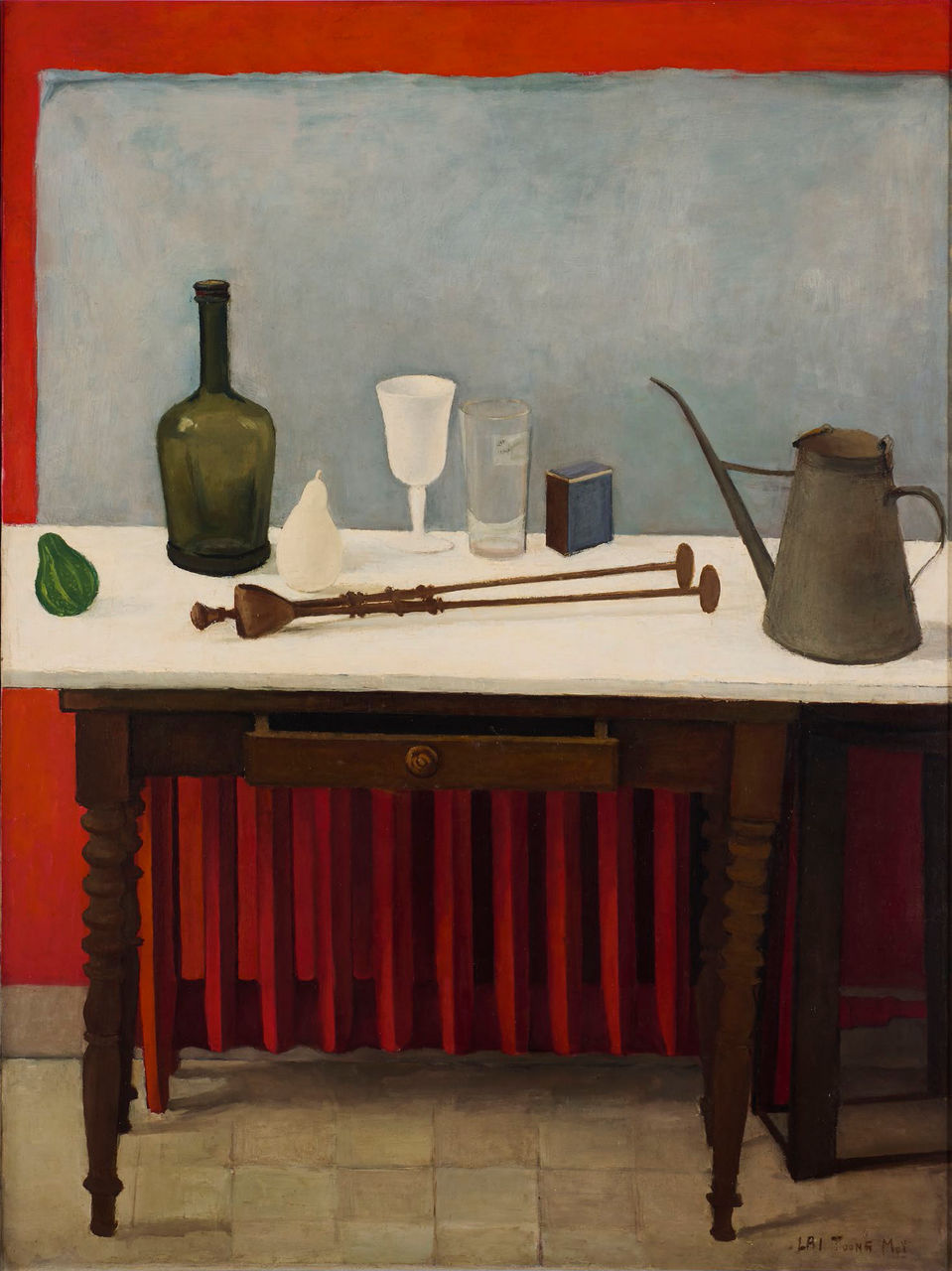
Still Life. c. 1955–1958. Oil on canvas, 130 × 97 cm. Gift of the Loke Wan Tho Collection.
Still Life
c. 1955–1958
Oil on canvas
Gift of the Loke Wan Tho Collection
1 2
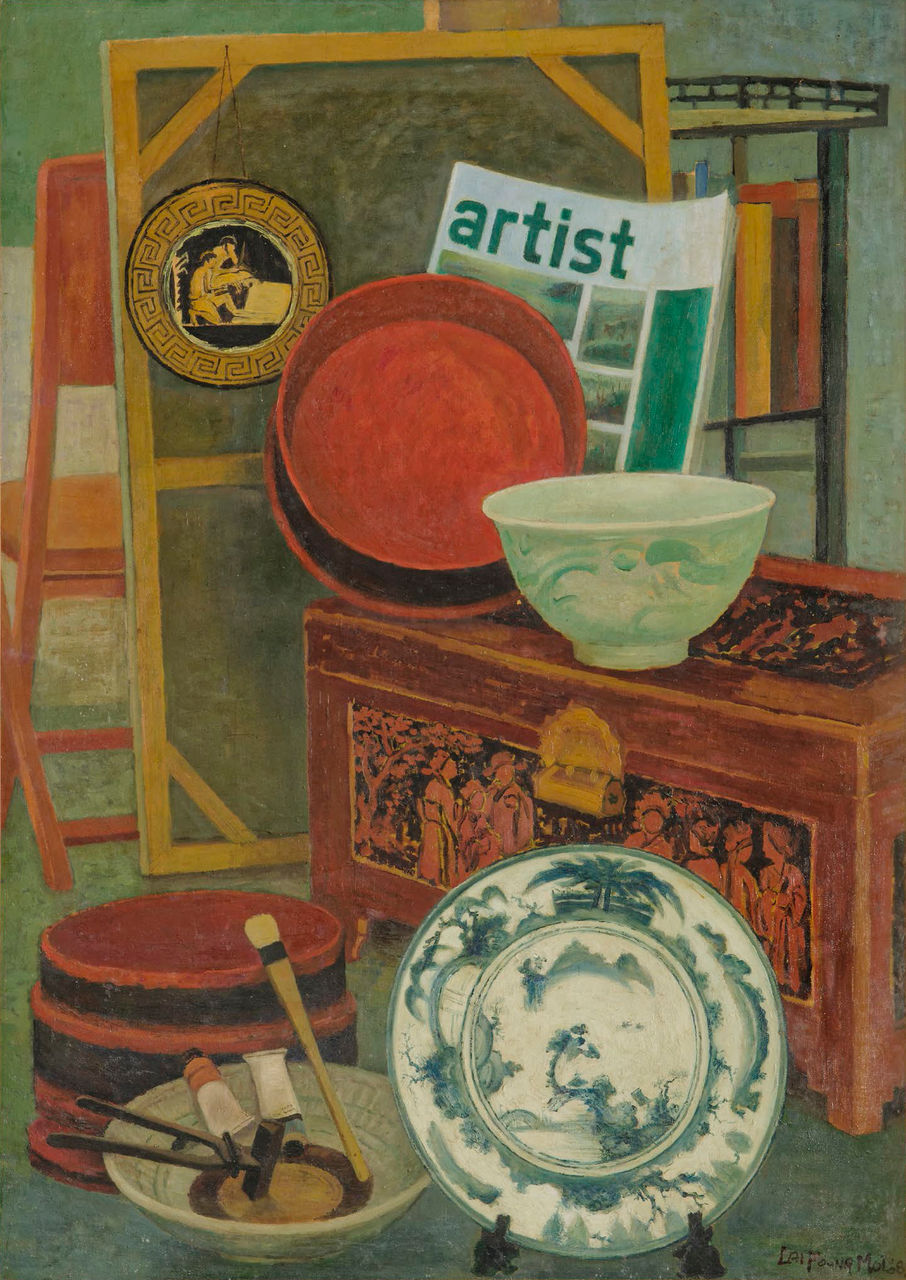
Still Life. 1968. Oil on canvas, 106 × 75 cm. Private collection.
Still Life
1968
Oil on canvas
Private collection
2 2
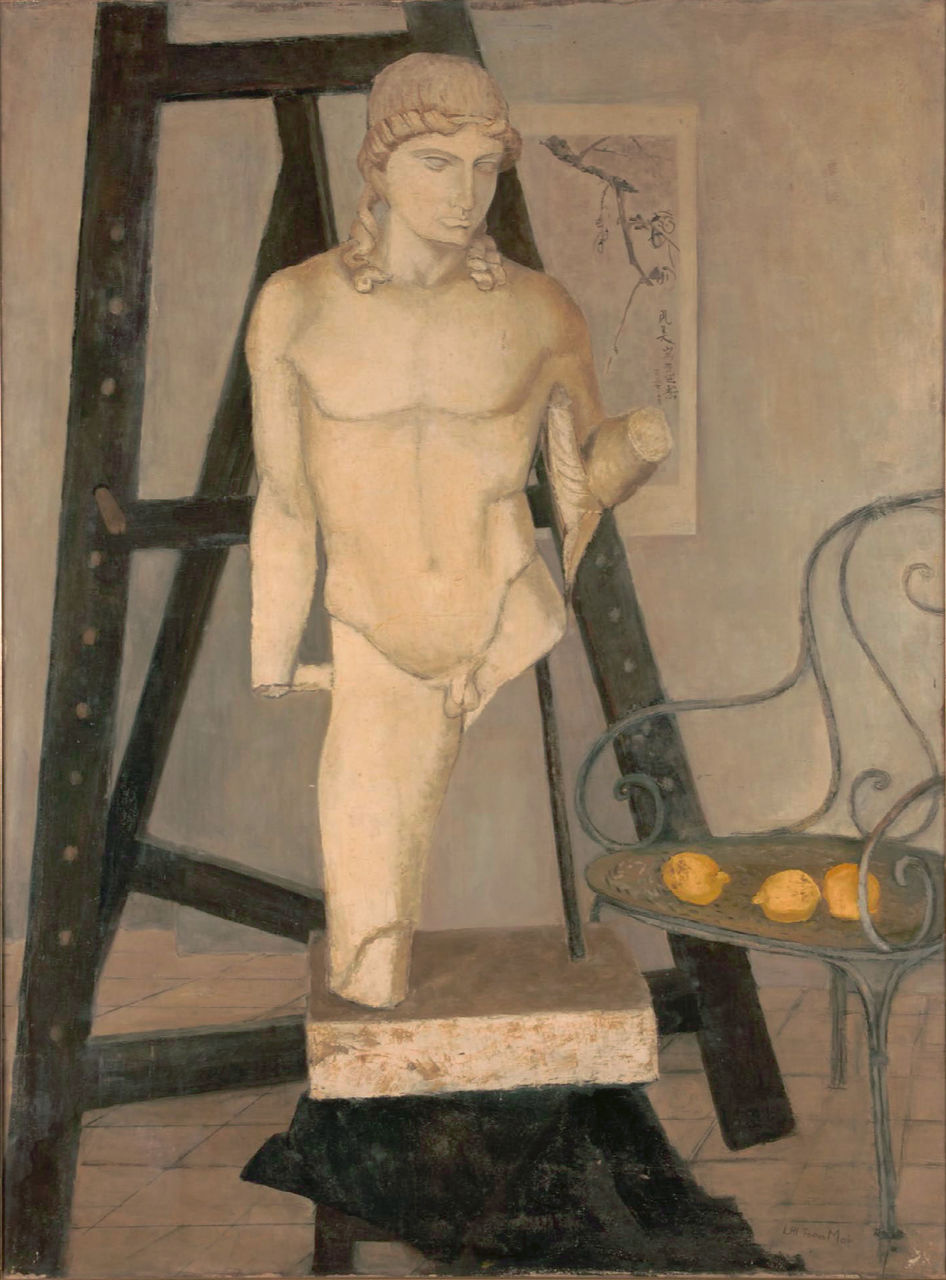
Still Life. 1957. Oil on canvas, 130 x 96.8 cm. Collection of National Gallery Singapore
Still Life. 1957. Oil on canvas, 130 x 96.8 cm.
Between 1955 and 1958, Lai was based in Paris where she exhibited her work at local salon exhibitions and travelled around Europe. Painted while she was enrolled at the École des Beaux-Arts, this carefully staged scene brings seemingly different visual and cultural traditions into dialogue. In the middle of the painting is a neoclassical torso used to teach anatomy. Behind it, Lai depicts a scroll painting of plum blossoms, using delicate strokes that reference the quality of Chinese ink. A chair with a loose arrangement of lemons recalls still life observation. A conspicuously empty easel signals the studio as a creative space where these elements and sources can be brought together.
Nude
Lai’s nude studies consistently draw attention to the process of their creation. Models are shown within the context of the life drawing session, posed with canvases and other traces of the studio. Complicating what might otherwise appear to be straightforward anatomical studies, their contemplative gazes which reach beyond the canvas reveal Lai’s interest in the interiority of her subjects.
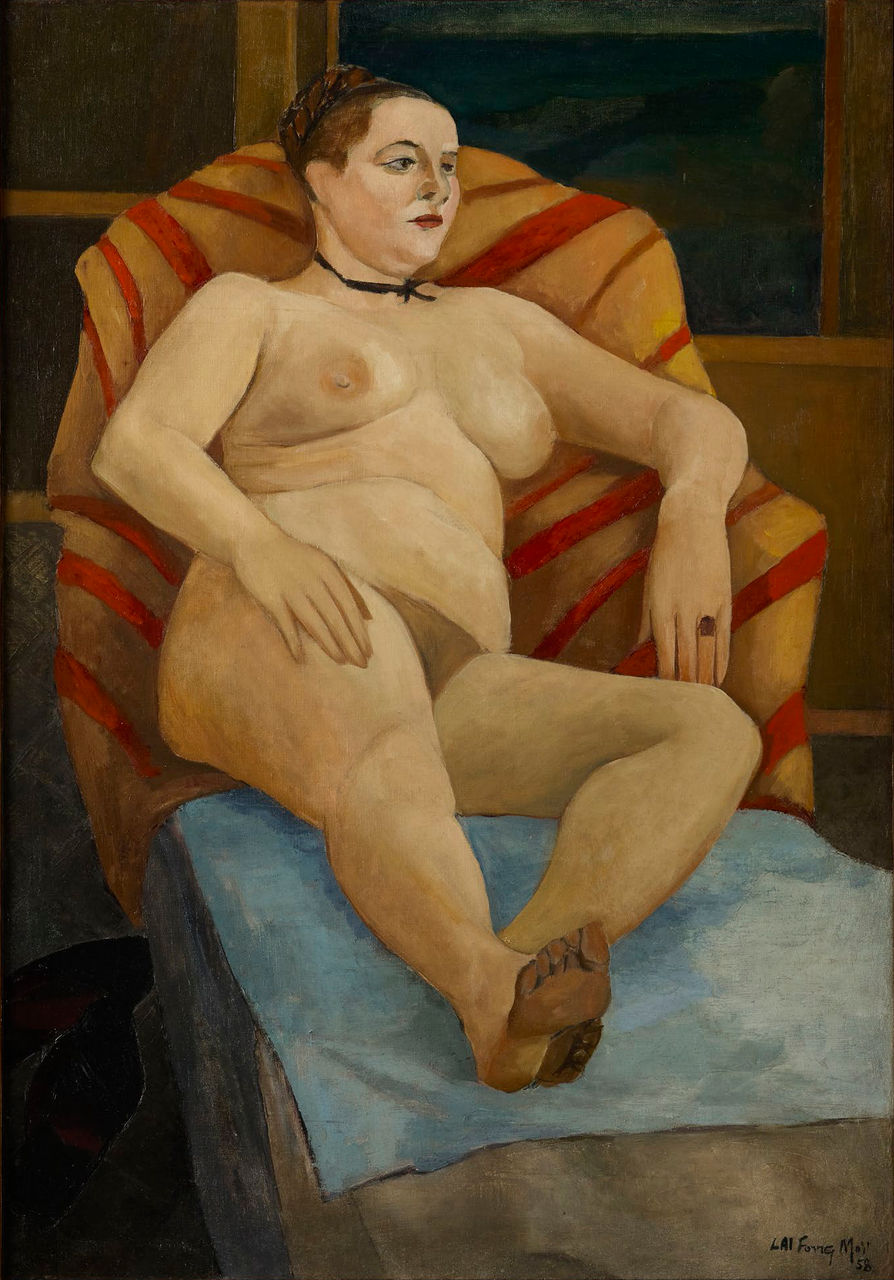
Nude. 1958. Oil on canvas, 115 × 80.5 cm.
Nude
1958
Oil on canvas
1 3
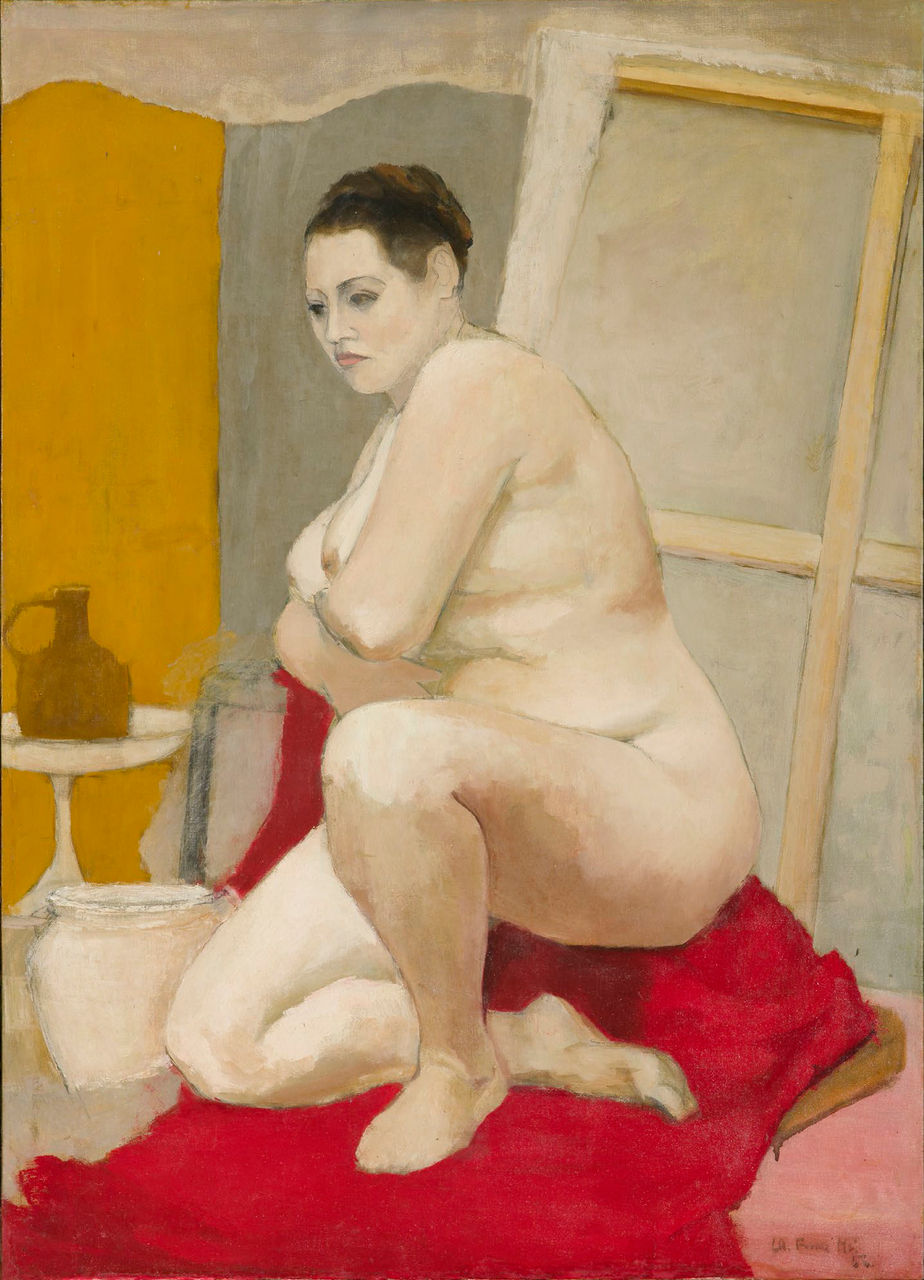
Nude. 1956. Oil on canvas, 100 × 72 cm. Private collection.
Nude
c. 1955–1958
Oil on canvas
Private collection
2 3
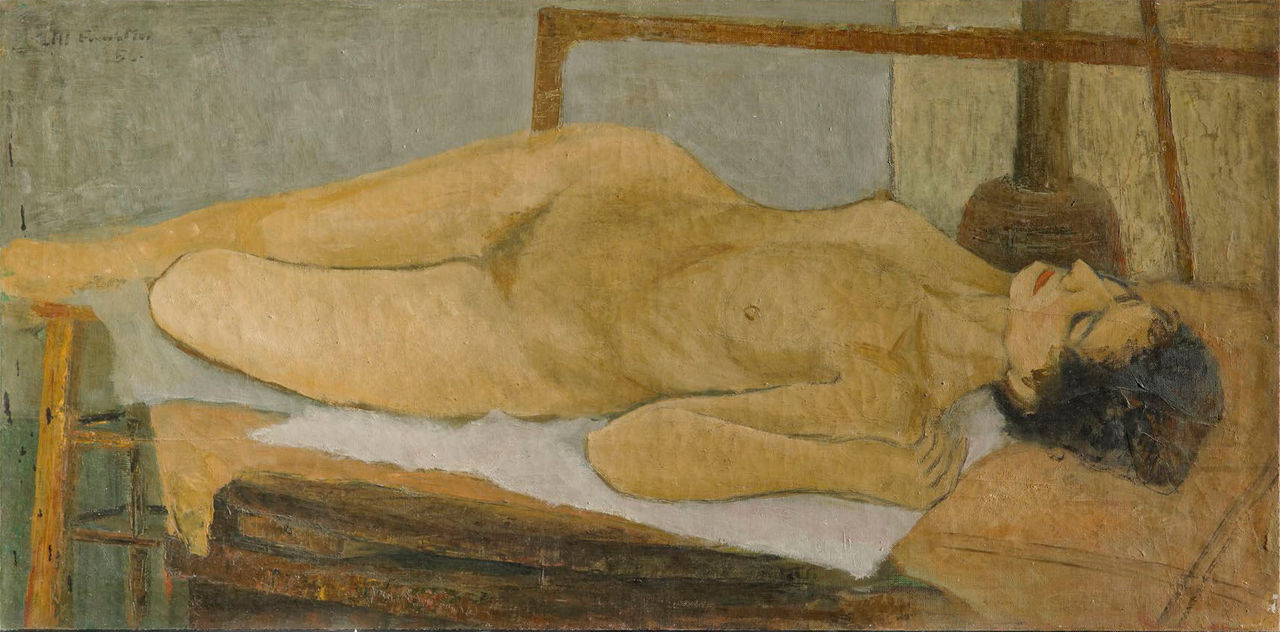
Nude. 1956. Oil on canvas, 100 × 50 cm. Collection of Francis Choo.
Nude
c. 1955–1958
Oil on canvas
Collection of Francis Choo
3 3
Portraits
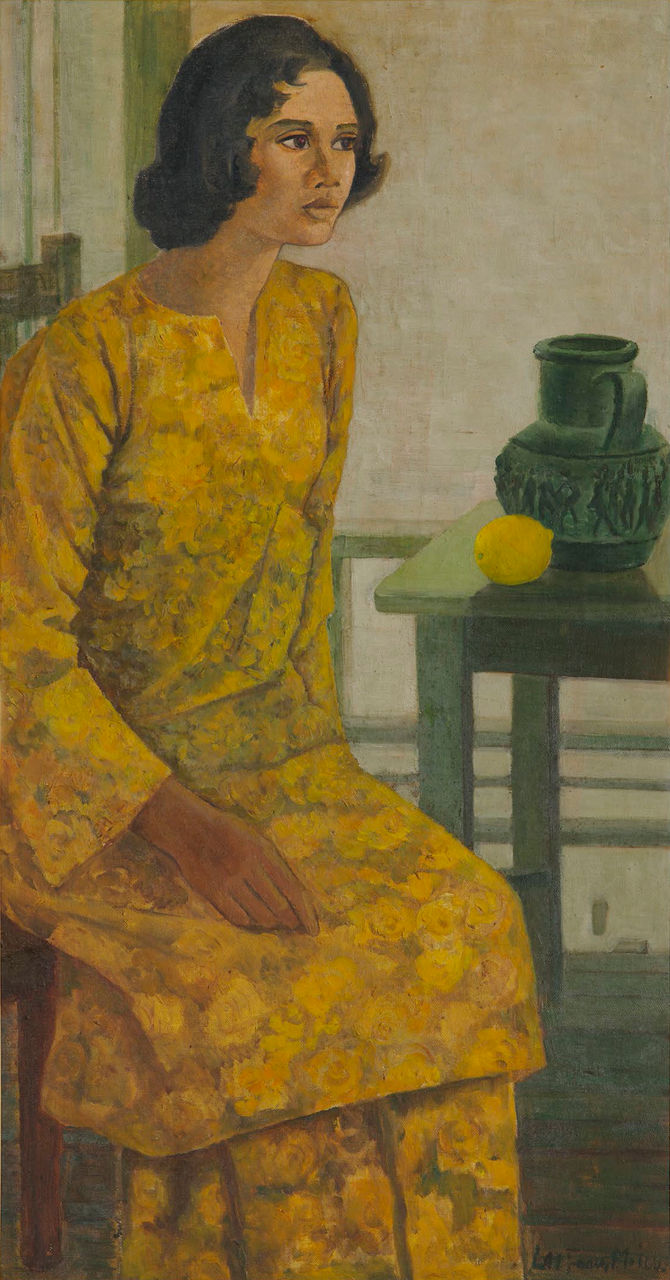
Lady. 1966. Oil on canvas, 100 × 54 cm. Collection of Dr. and Mrs. Tan Chong Guan.
Lady
1966
Oil on canvas
Collection of Dr. and Mrs. Tan Chong Guan
1 2
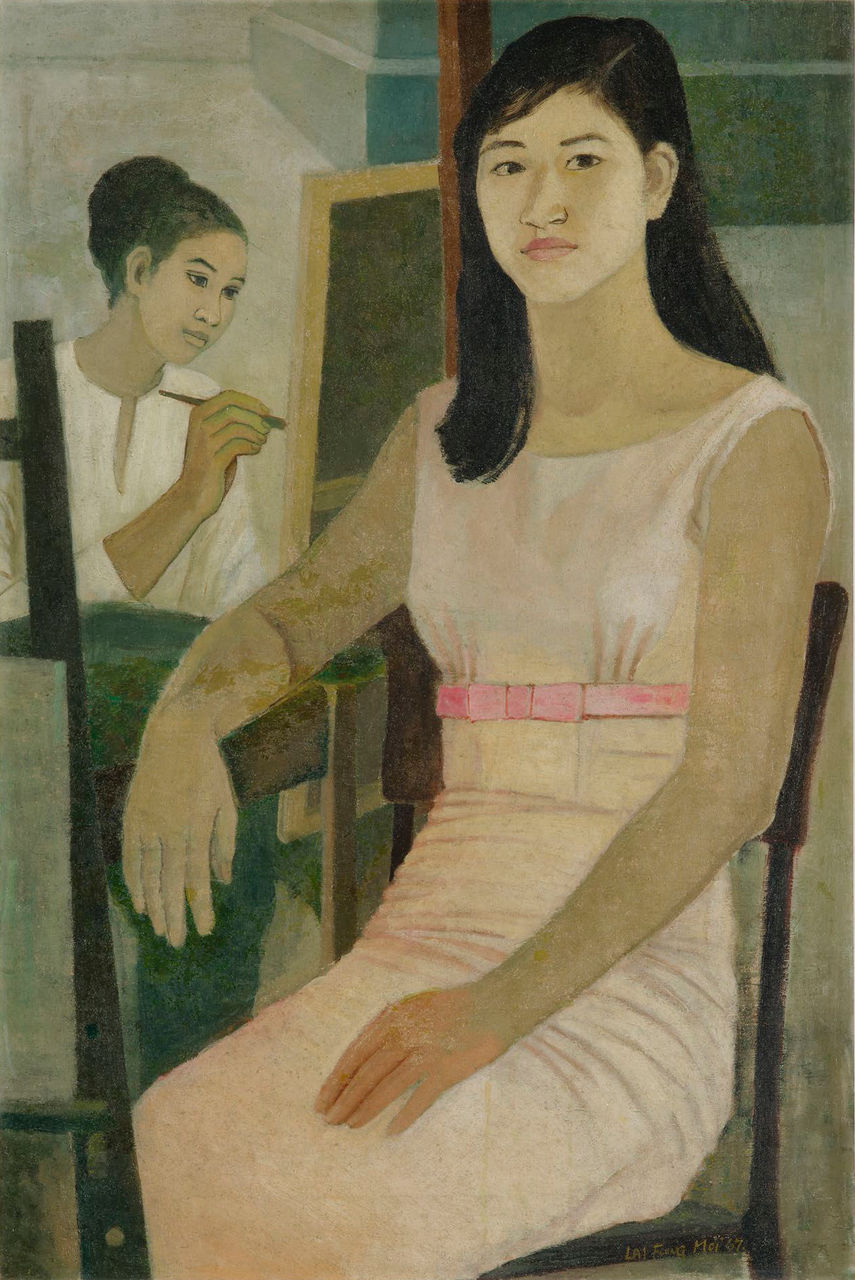
Painting Class. 1967. Oil on canvas, 90 × 60 cm. Private collection.
Painting Class
1967
Oil on canvas
Private collection
2 2
In Lady, a female figure’s quiet presence occupies the entire vertical plane of the canvas. The details of her bright yellow kebaya, complemented by the deep green of a nearby Grecian urn, invite questions about the ideals of beauty. In Painting Class, two figures dressed in contrasting styles are at once creators and subjects of observation. Through dress, posture, and carefully chosen props and settings, Lai’s introspective portraits of women turn questions of identity and representation into painterly ones. Though anonymous, they retain their individuality even as they embody particular characters within Lai’s artistic vision.
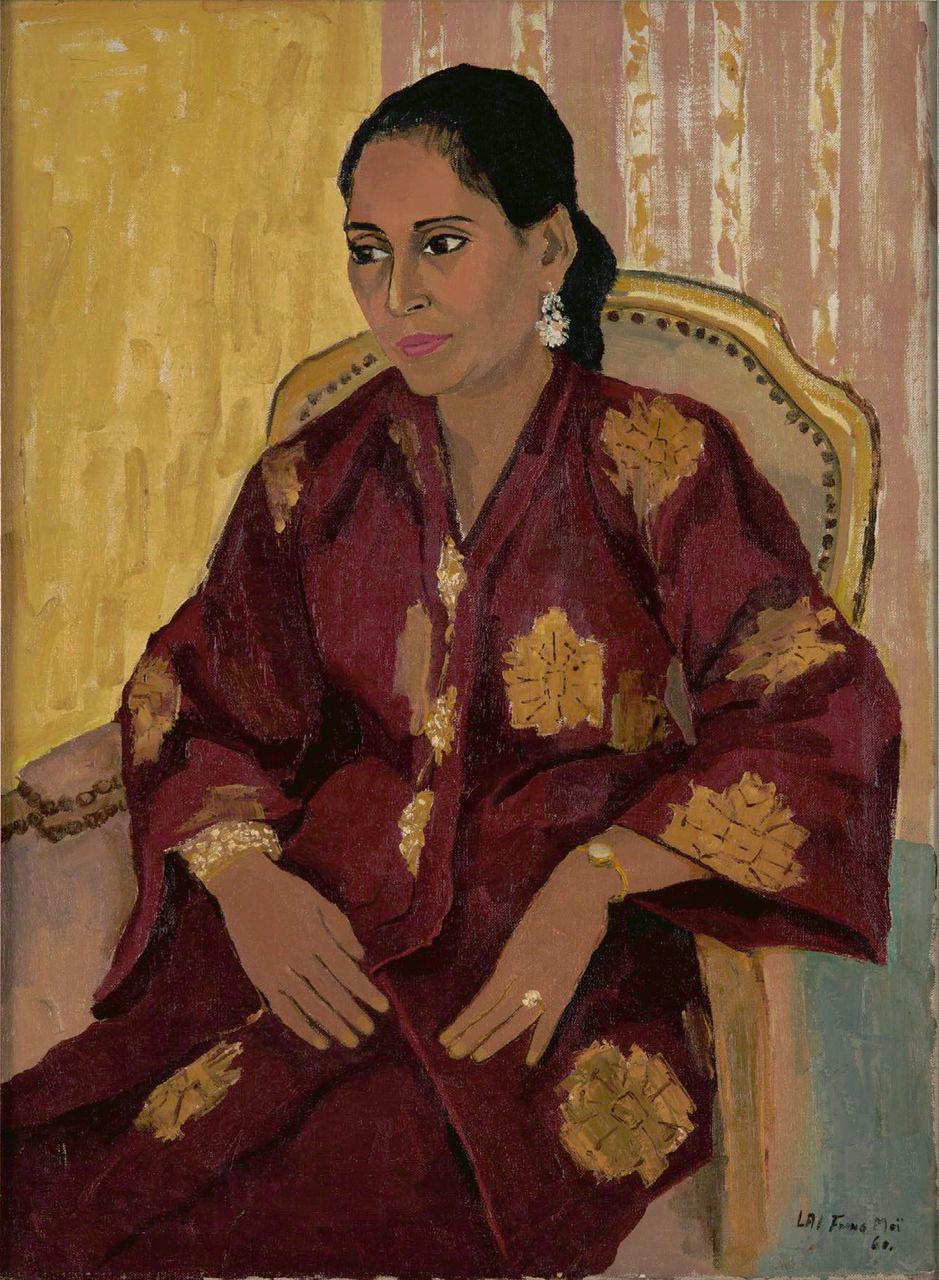
Portrait of YTM Tun Sharifah (Sharifah Rodziah). 1960. Oil on canvas, 88 × 64.4 cm.
Portrait of YTM Tun Sharifah (Sharifah Rodziah). 1960. Oil on canvas, 88 × 64.4 cm.
Lai was commissioned to paint this portrait of Sharifah Rodziah, wife of Tunku Abdul Rahman, the first Prime Minister of the Federation of Malaya. In the early 1960s, Lai experimented with a more stylised approach, as seen in the sitter’s comparatively simplified facial features and the background depicted with rough strokes of colour. Although the sitter's name is known, her identity is absorbed within a painting that seems to focus more on pattern and colour.
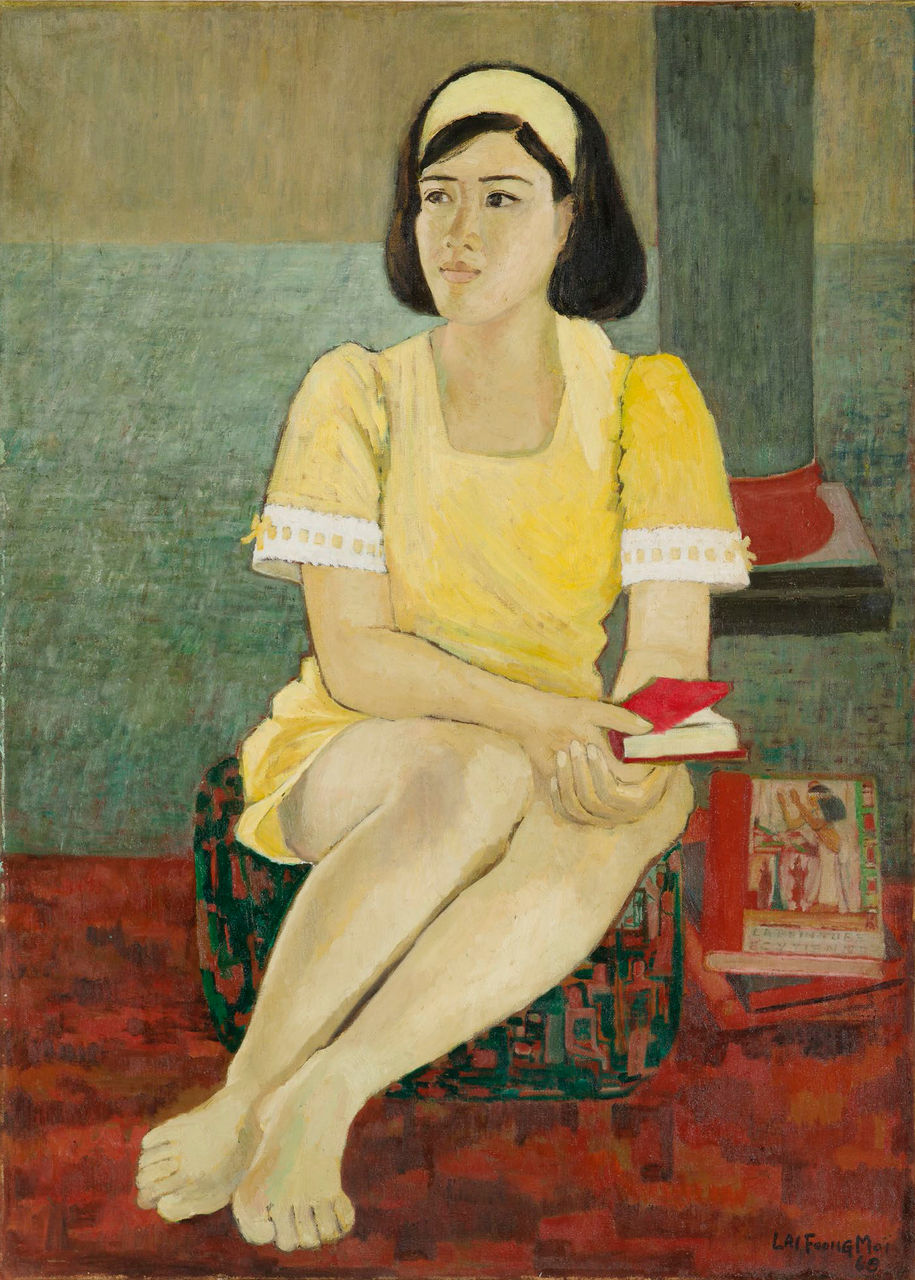
Young Girl. 1969. Oil on canvas, 111 × 81 cm. Private collection.
Young Girl
1969
Oil on canvas
Private collection
1 2
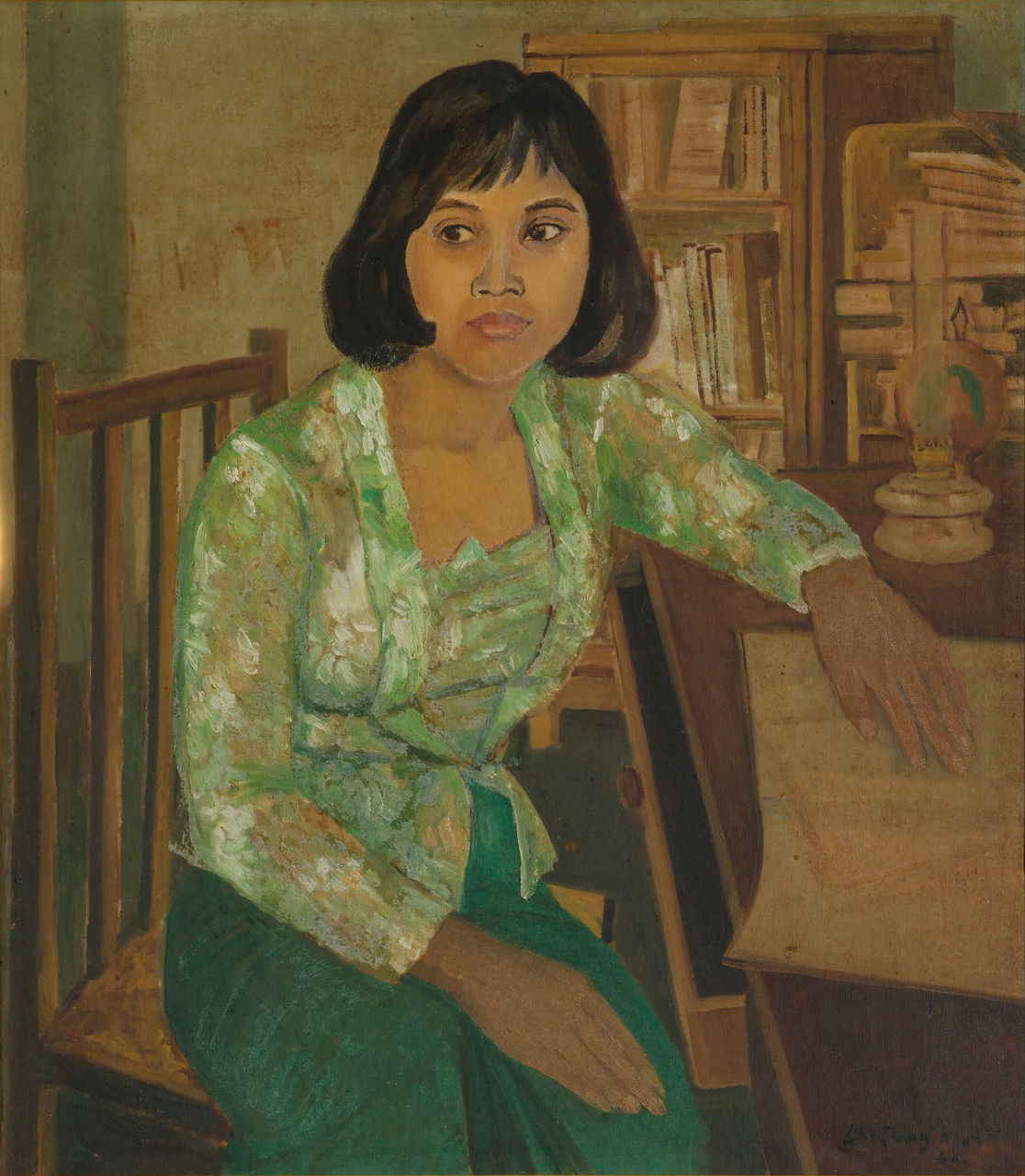
Contemplation. 1966. Oil on canvas, 76 × 65.5 cm. Collection of Dr. and Mrs. Tan Chong Guan.
Contemplation
1966
Oil on canvas
Collection of Dr. and Mrs. Tan Chong Guan
2 2
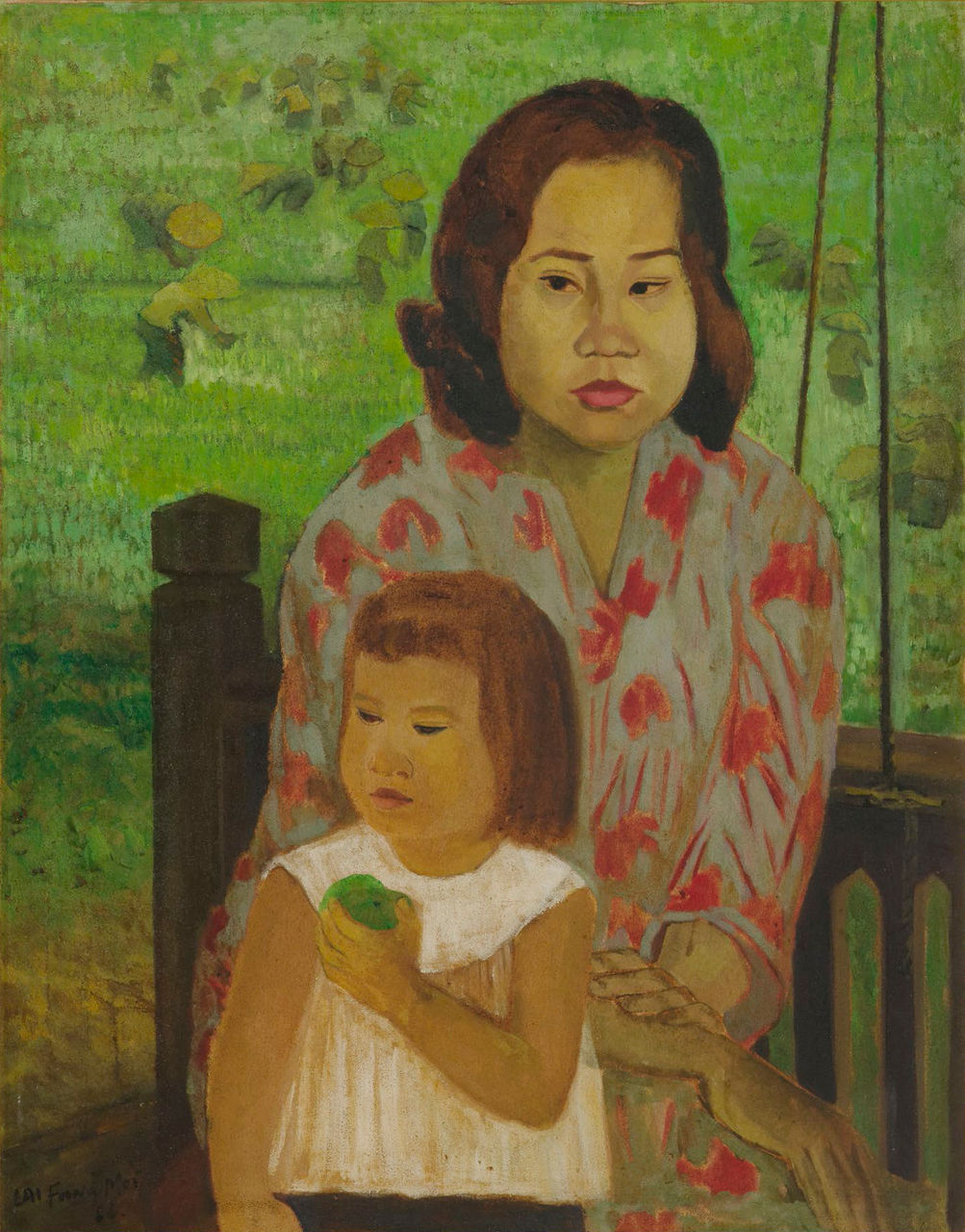
Woman and Child. 1966. Oil on canvas, 83 × 66 cm. Private collection.
Woman and Child. 1966. Oil on canvas, 83 × 66 cm. Private collection.
A familiar symbol of care and belonging, Lai’s painting of a woman and a child resists such sentimentality. Turned away from each other, their postures leave their relationship uncertain. Positioned at the threshold of an interior porch, with their backs to a scene of labourers in a field beyond, the two figures seem absorbed in their own thoughts. The ambiguity of the scene allows us room to consider what separates them across generations and circumstances.
.jpg/_jcr_content/renditions/cq5dam.web.1280.1280.jpeg)
Labourer (Lunch Break). 1965. Oil on canvas, 104 × 67 cm. This work has been collectively adopted by [Adopt Now] supporters.
Labourer (Lunch Break). 1965. Oil on canvas, 104 × 67 cm. This work has been collectively adopted by [Adopt Now] supporters.
In this painting, Lai depicts the worn lines and weathered expression of the male labourer in careful detail. In contrast, the back view of a samsui worker offers little information about her identity. Although presented together in a moment of rest, their diverging postures suggest degrees of invisibility within an already marginal segment of society. By the mid-1960s, forms of manual labour associated with coolies and samsui women were gradually being phased out in a newly independent Singapore. Lai’s attentiveness to each figure in this moment of pause resists their absorption into a larger story of national progress.
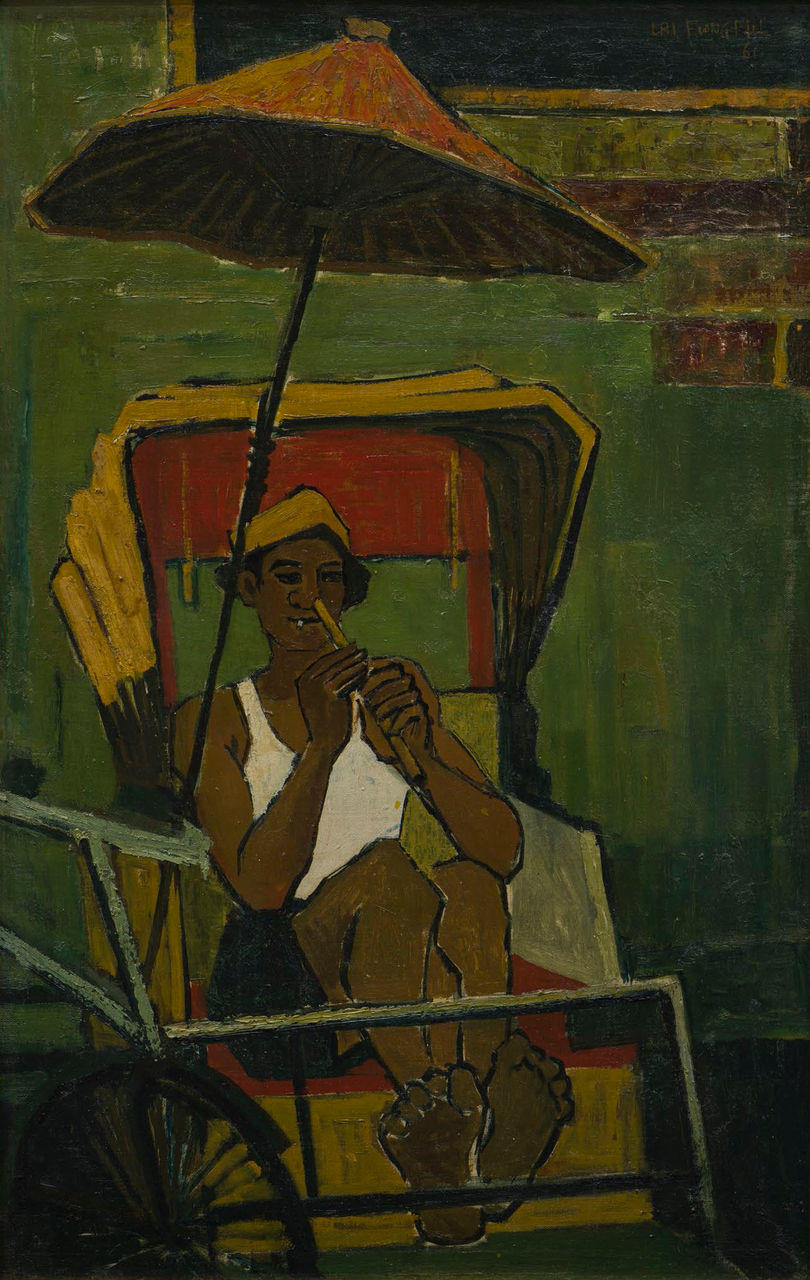
Trishaw Rider. 1961. Oil on canvas, 75.3 × 48 cm.
Trishaw Rider. 1961. Oil on canvas, 75.3 × 48 cm.
Lai animates a moment of rest rather than productivity in her depiction of a trishaw puller. Presenting an unexpected image of creativity and personality, he reclines in his seat while playing a nose flute. This insistence on individual experience was a recurring focus of Lai’s depictions of working life within the context of a rapidly urbanising Singapore.
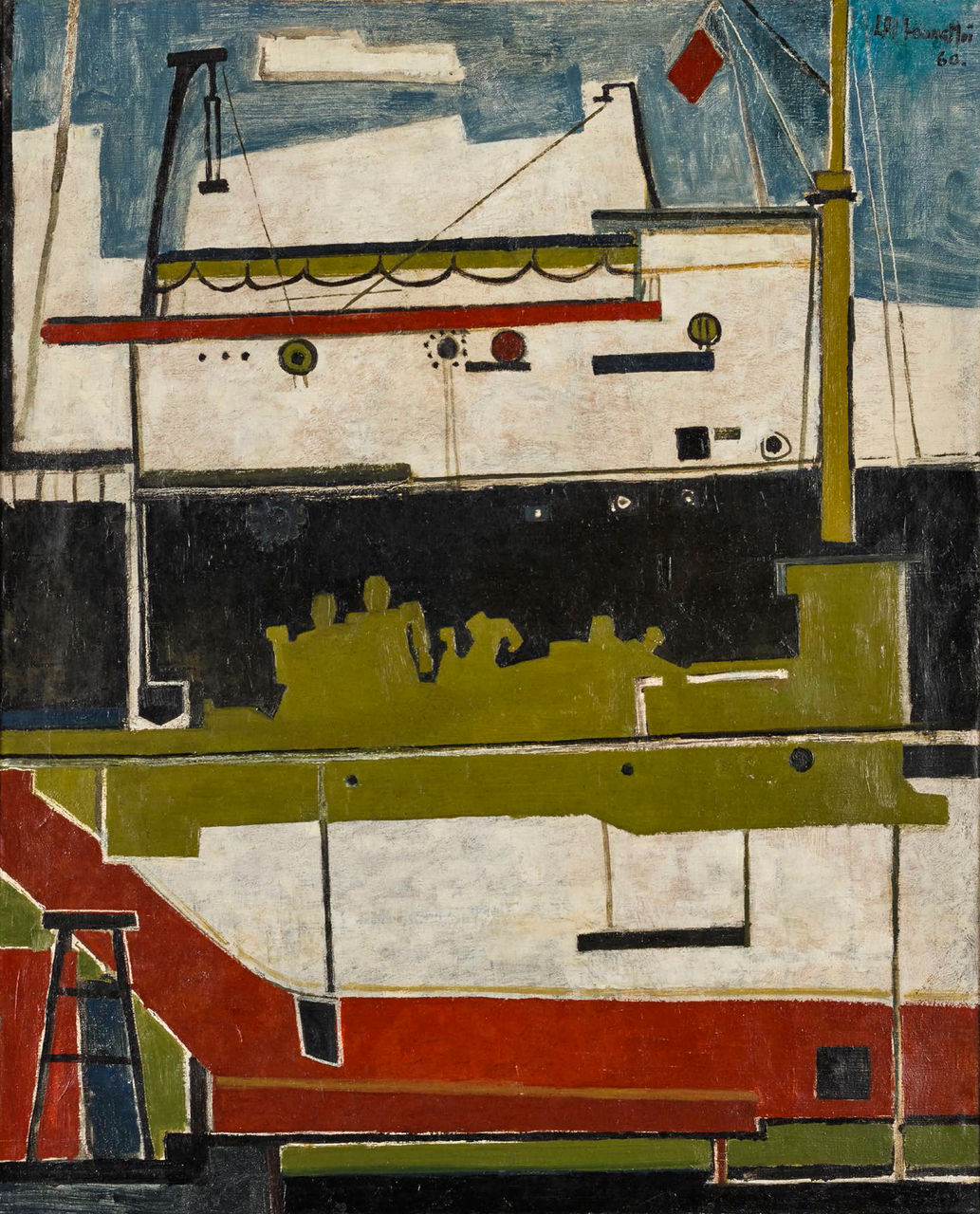
Repairing. 1960. Oil on canvas, 81.5 × 65 cm.
Repairing. 1960. Oil on canvas, 81.5 × 65 cm.
In this stylistically experimental work, a scene of two docked ships is condensed into a single plane. Men working on deck appear as silhouettes absorbed within a striking band of green in the middle of the composition. Although Lai eventually returned to a more realist approach in her paintings after, this work suggests her early interest in representing the individual as a collective symbol shaped by structures larger than themselves.
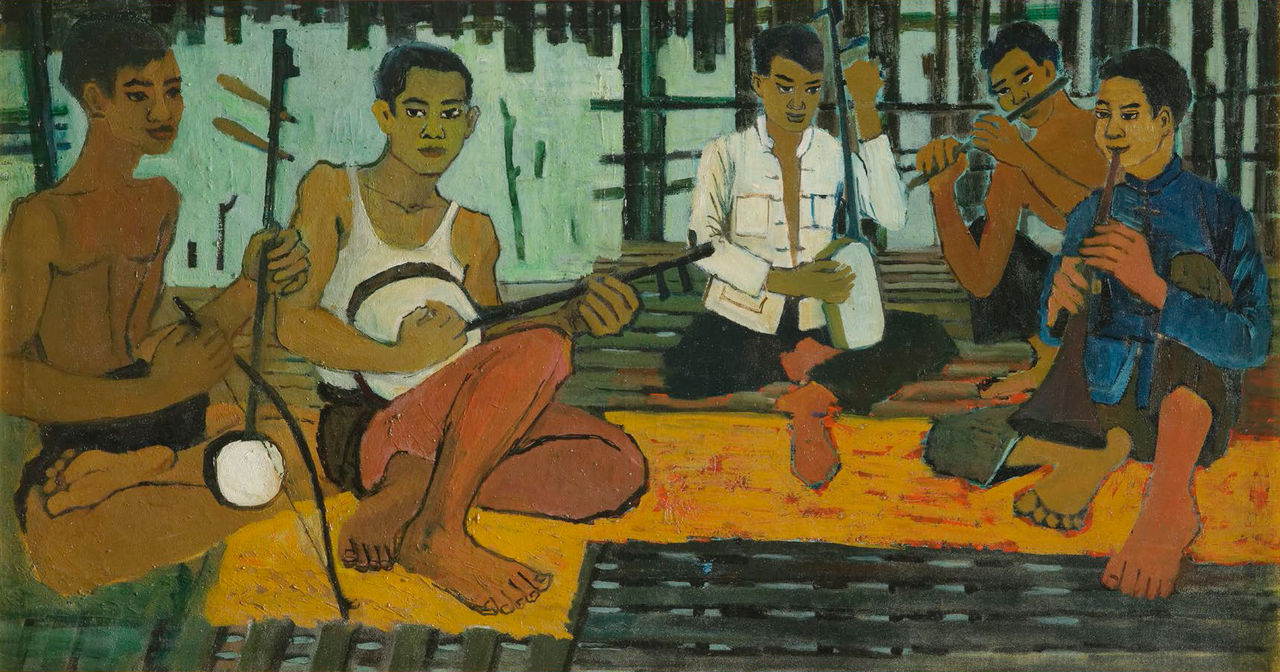
Musicians. c. 1960s. Oil on canvas, 53 × 99 cm. Private collection.
Musicians
c. 1960s
Oil on canvas
Private collection
1 2
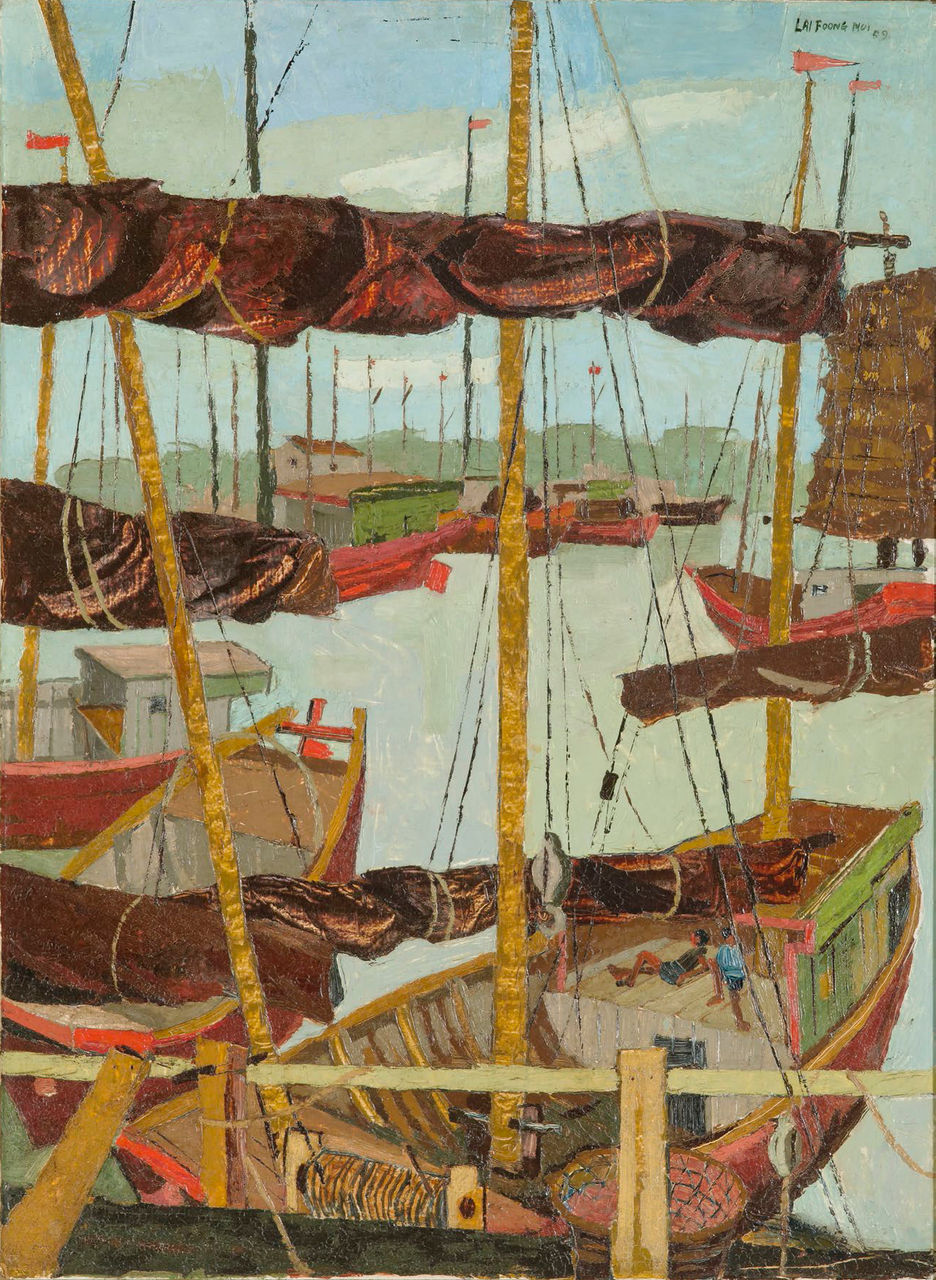
Shipyard Workers Taking a Break. 1959. Oil on canvas, 76 × 56 cm. Collection of Linda Neo and Albert Lim.
Shipyard Workers Taking a Break
1959
Oil on canvas
Collection of Linda Neo and Albert Lim
2 2
Landscape
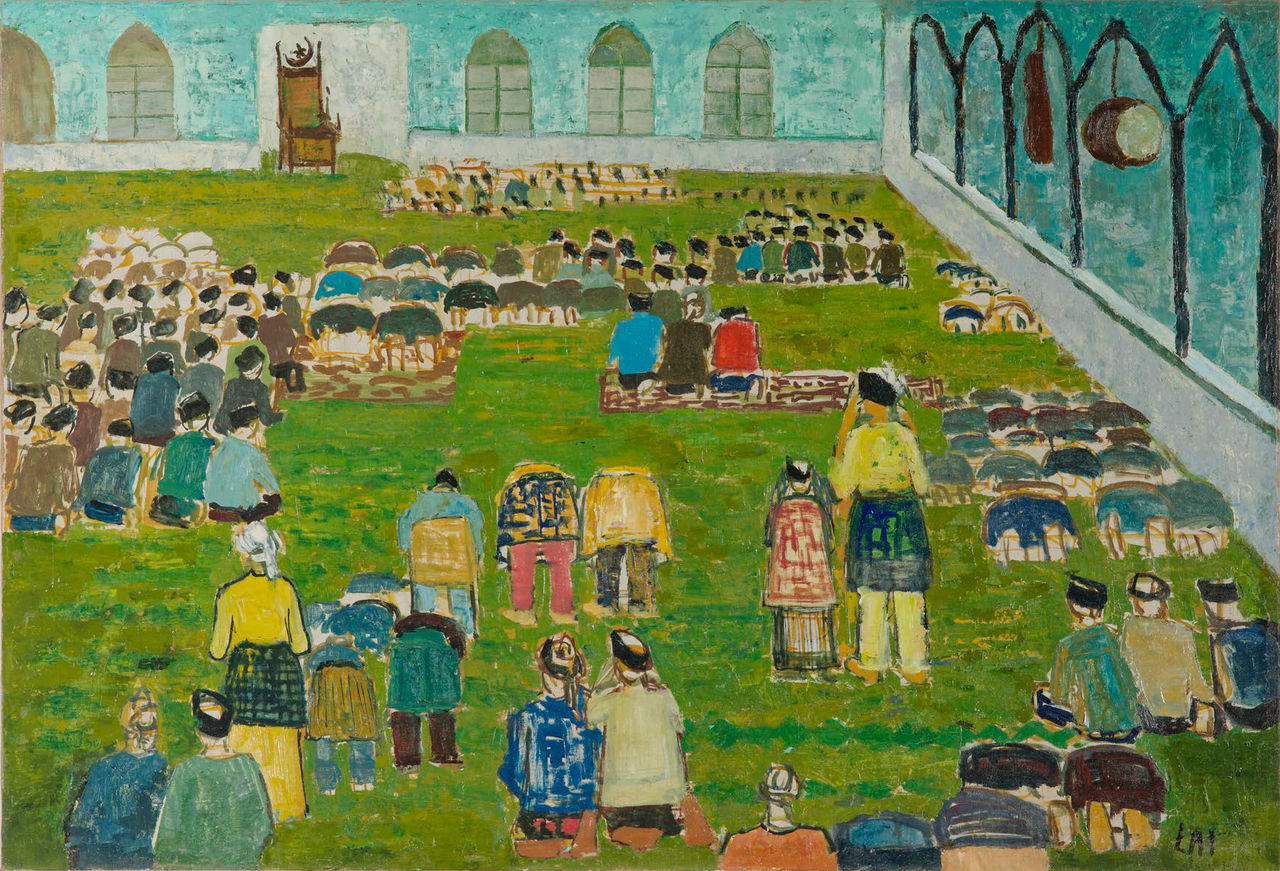
Prayer. c. 1970s. Oil on canvas, 67.5 × 112 cm. Private collection.
Prayer
c. 1970s
Oil on canvas
Private collection
1 2
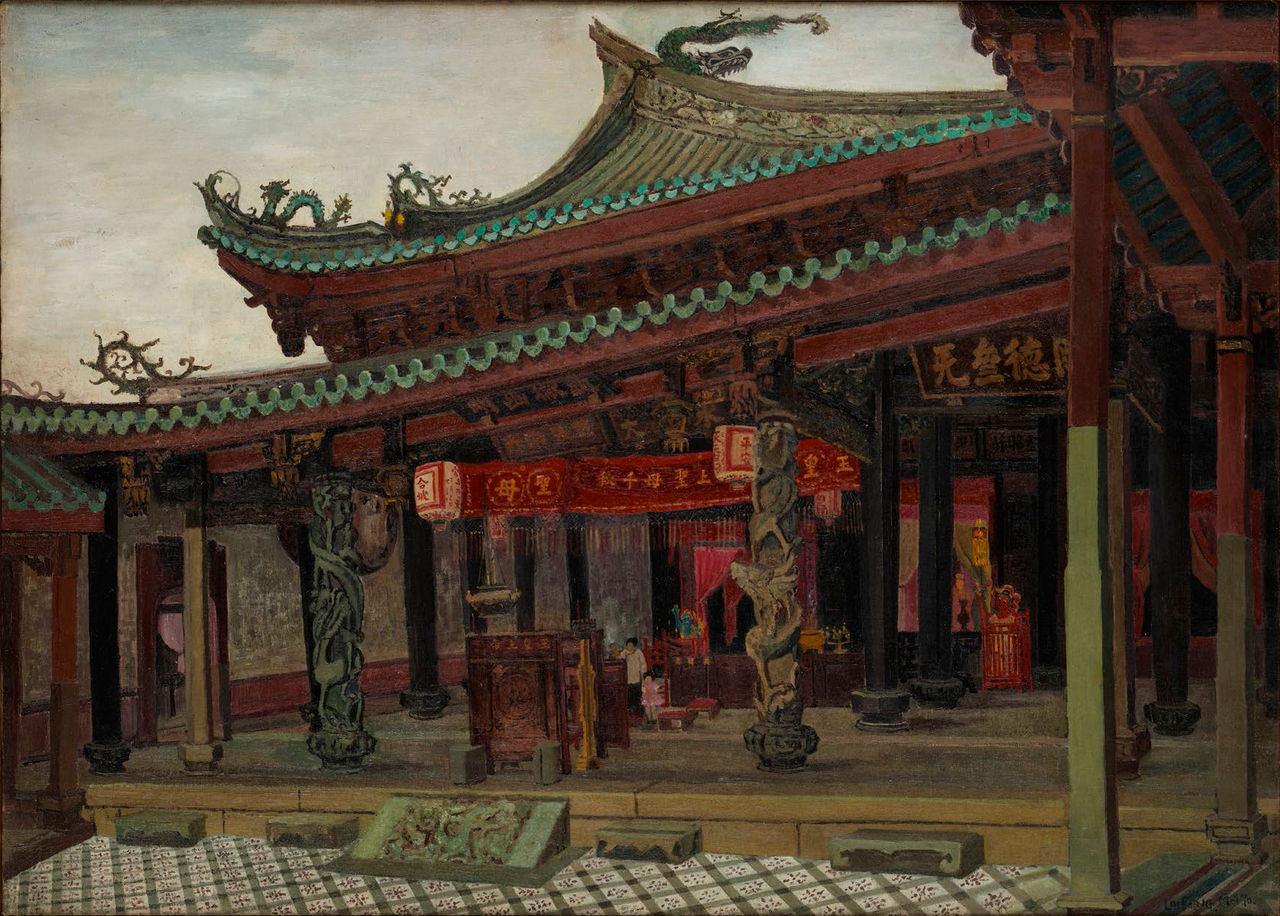
Mha Zhe Temple. 1970. Oil on canvas, 77 × 105 cm.
Mha Zhe Temple
1970
Oil on canvas
2 2
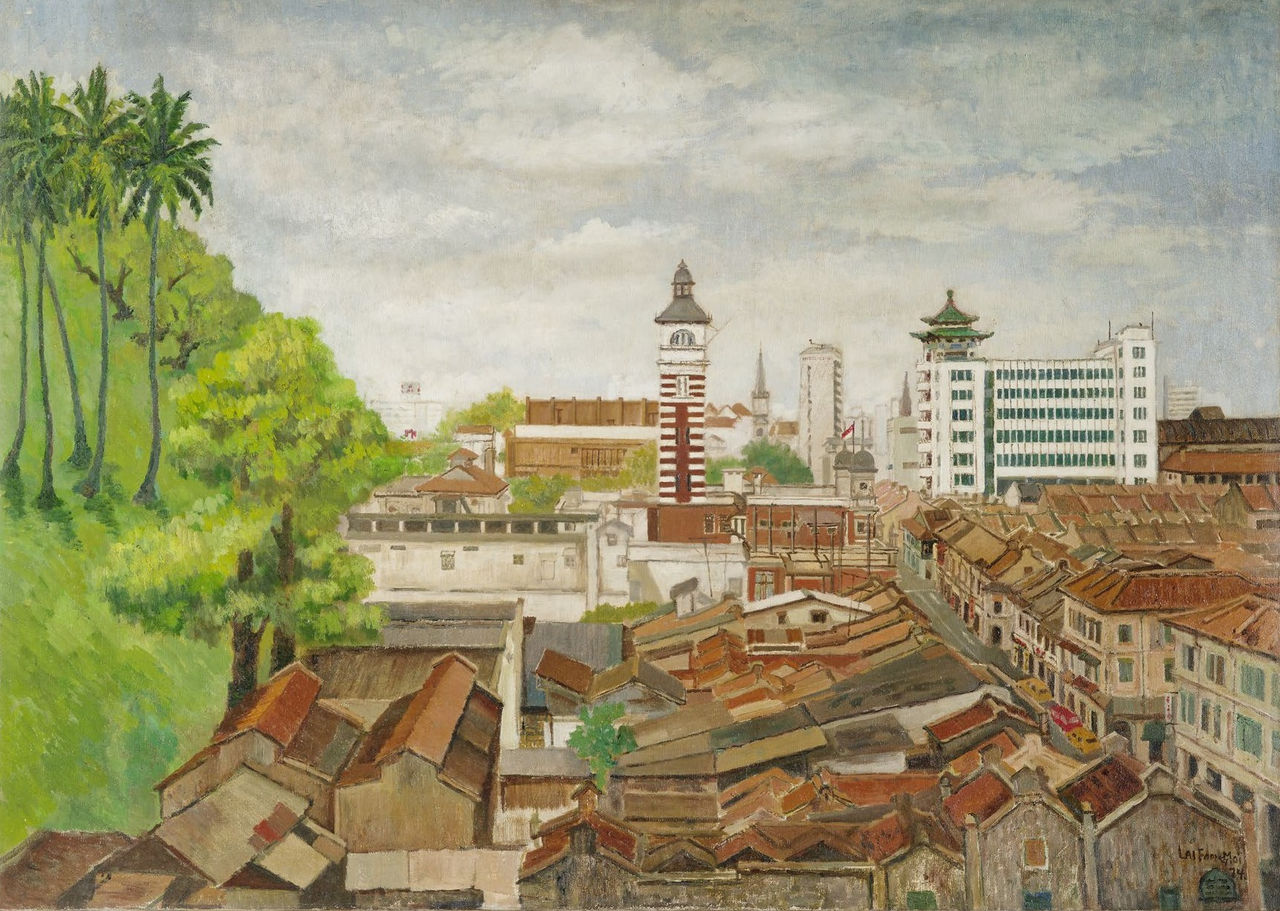
A View of Lion City Singapore (Aerial View). 1974. Oil on canvas, 80 × 110 cm. Private collection.
A View of Lion City Singapore (Aerial View)
1974
Oil on canvas
Private collection
1 3
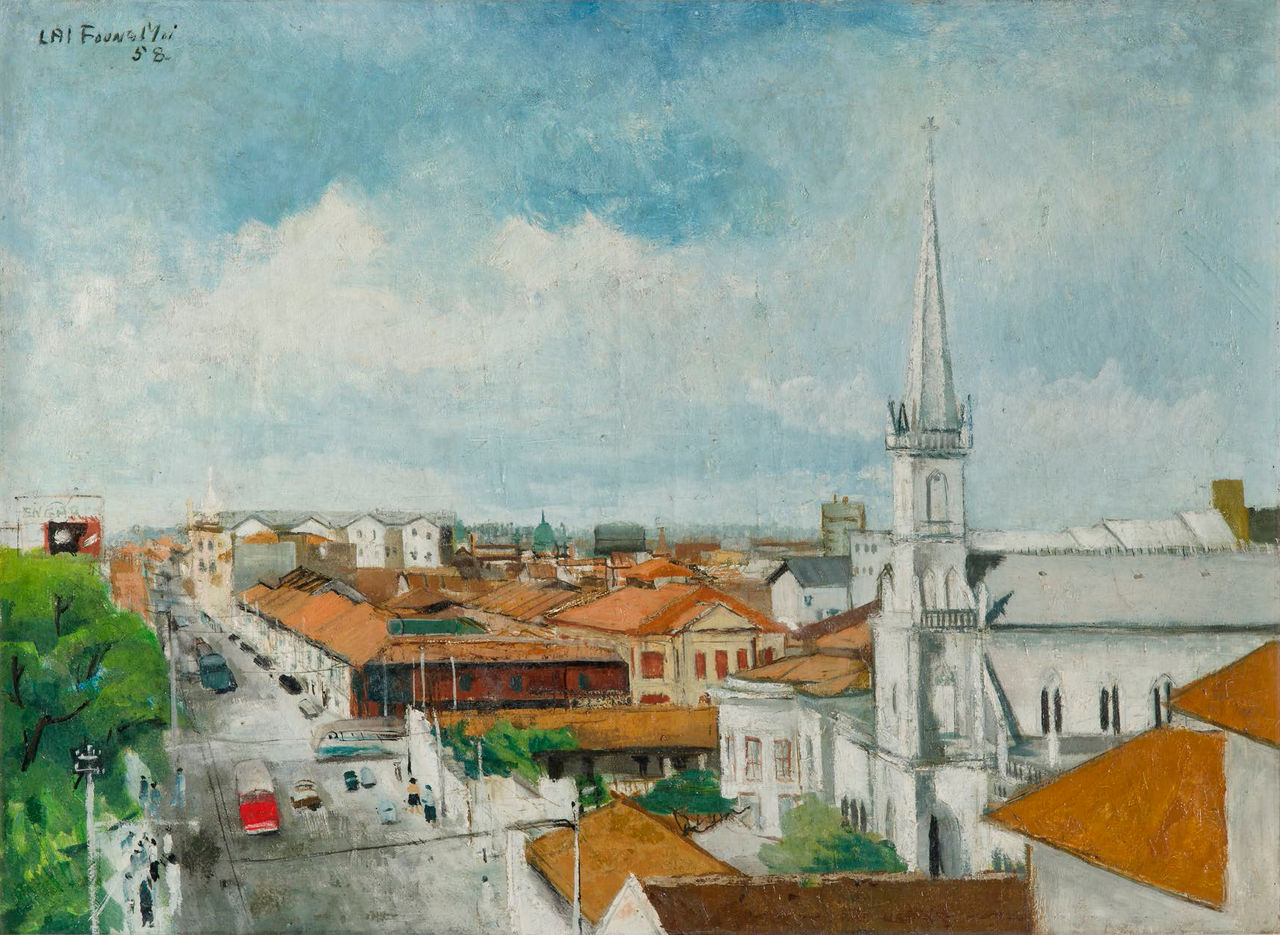
Singapore Street Scene (Looking along Victoria Street with the Convent Chapel in the Corner). 1958. Oil on canvas, 65 × 89.5 cm. Collection of National Library, Singapore.
Singapore Street Scene (Looking along Victoria Street with the Convent Chapel in the Corner)
1958
Oil on canvas
Collection of National Library, Singapore
2 3
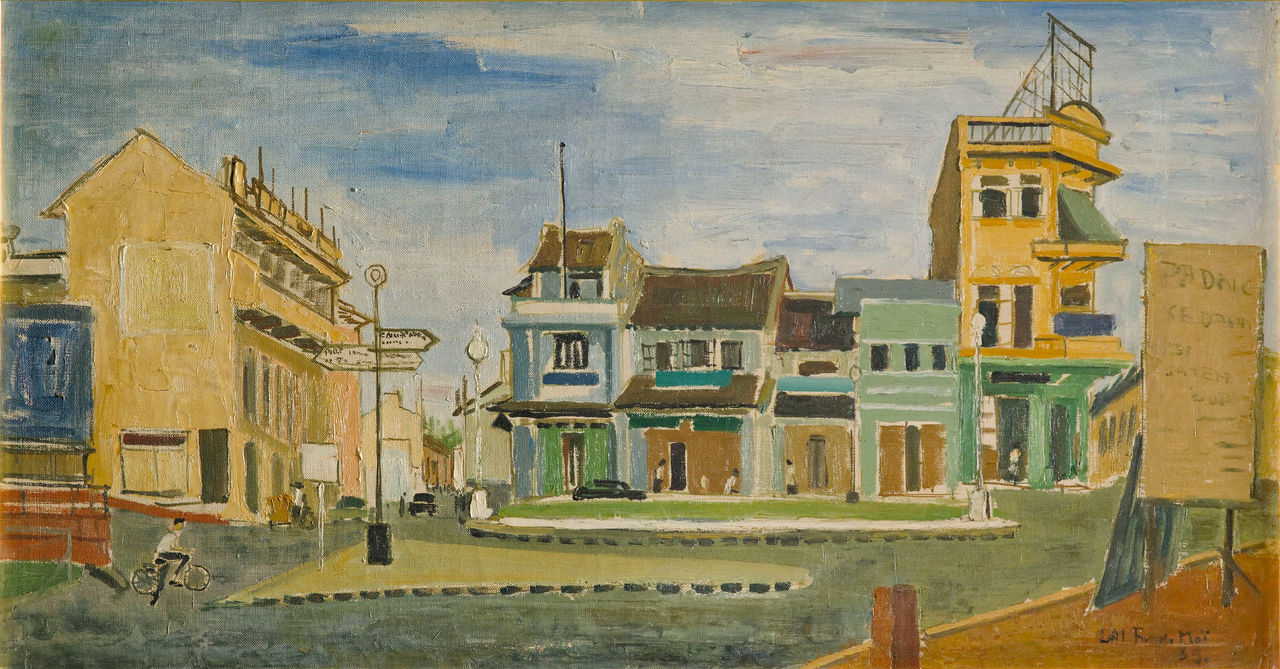
Morning Street, Malacca. 1959. Oil on canvas, 52 × 99 cm. Private collection.
Morning Street, Malacca
1959
Oil on canvas
Private collection
3 3
These scenes of Singapore and Malaysia depart from the more celebratory images of postcolonial and post-independence industrial development. Rather than depicting the city as a symbol of progress, they evoke an atmosphere of ambiguity and distance. Natural and built environments are held in an unresolved tension while people are either conspicuously absent or seen from afar. Like her contemplative portraits, these artworks create space to reflect on questions of belonging and the experience of the individual within society.