



Section 01
Introduction
In April 1965, Lai Foong Moi presented a painting titled Crossing in the Singapore Art Society’s annual group exhibition. The next month, the same work was featured in an exhibition held at the National Art Gallery Malaysia, Seni Lukis Singapura Se-zaman (Contemporary Art of Singapore). In August, a different painting with a similar composition and bearing the same title was shown in the Society of Chinese Artists’ 30th Anniversary Exhibition in Singapore.1 Depicting subtle yet significant variations of a group of figures undertaking a journey by boat, the paintings demonstrate Lai’s careful study of posture and dress. They also invite us to consider why Lai might have returned to the same composition twice and what the differences between the two versions can tell us. Painted and exhibited across Singapore and Malaysia in the year of separation and independence, the paintings and the figures at their centre might allude to this symbolic moment of transition. After all, Lai’s practice emerged at a moment when the ideas of the “Malayan artist” and aspirations towards a “Malayan art” were at the height of cultural currency and active negotiation. Considering Lai’s trajectory, particularly in the absence of a personal archive and with little evidence that she spoke or wrote directly about questions of identity or style, it is her works that reveal and construct conditions of liminality that also extend to her place within art history. The notion of “crossing,” as a state of transition, liminality and becoming, finds fitting resonance across the thresholds visualised in many of Lai’s works, and in the contrast between the early promise and subsequent obscurity of her career.
In setting out to understand Lai’s practice, it is first necessary to acknowledge the frameworks within which her work has been discussed—as a Malayan artist, as a Nanyang artist and as an artist trained within the formal lineage of the School of Paris. While these categories are important historiographic and biographical points of reference, they also tend to limit the ways in which her work has been understood. This essay instead engages directly with Lai’s works, focusing explicitly on the compositional, formal and thematic strategies she deployed. In doing so, it reveals how her works consistently articulate states of transition and reflect the experience of identity in a rapidly changing postcolonial context. Such an approach opens alternative ways of situating Lai’s practice, moving beyond existing categories where she has been largely cast in a supporting, rather than central, role.
Writing about the framework of Malayan art in 1963, the art critic Ma Ge highlighted the deep history of commingling and exchange between the Malay Peninsula and global civilisations. He proposed that this led to the emergence of “indigenous Malayan characteristics,” most keenly observed in paintings after the end of colonial rule.2 Lai’s practice was discussed in a section on artists seeking to synthesise “different imported styles, through which local subject matter is depicted with colours, temperaments and flavours of Malaya.”3 In appraising the artistic trajectories of his selected artists, Ma pointed out achievements in colour (“brilliant”; “bright”), atmosphere (“expressive”; “refreshing”), and stylistic innovation (“unique”; “assimilating eastern and western cultures”). By contrast, his paragraph on Lai was critical, stating that “since her return to Malaya, the nature of her works has taken a turn and the strong atmospheric components somehow disappeared. Her preference for the use of black and white has also caused the painted surface to wane in colour vibrancy.”4 This curt description seemed to frame her work in a state of stylistic decline. Four years earlier, Ma Ge had penned a more complimentary endorsement of Lai’s works, noting how “undoubtedly, she has come to understand her mission as a Malayan painter.”5 What we can glean from this is a seeming disjuncture between Lai’s stylistic approach and that of her peers, as well as the suggestion of an apparent shift in her work by the mid-1960s.
Parallel to this discourse on Malayan art, Lai was considered within the category of the Nanyang artist. This was partly due to her association with the Nanyang Academy of Fine Arts (NAFA) in Singapore, where she graduated in Western Painting in 1954 and was employed as a teacher from 1959 until her retirement. This brought her into proximity with Lim Hak Tai, the academy’s founding principal. During Lai’s time as a student, Lim espoused the need for artists in Malaya to reflect the spirit and aspirations of a diverse society by drawing on different artistic sources.6 At NAFA, Lai studied under teachers such as Cheong Soo Pieng, whose integration of Chinese ink aesthetics with styles of Cubism and Abstraction later became synonymous with an expression of Lim’s ideals. Although her education and teaching position afforded her an adjacency with those identified as Nanyang artists, Lai’s inclusion within the category was rarely reflected in a sustained critical engagement with her work. Whether or not her work can claim the visual and stylistic markers most frequently used to define the category remains an open and productive future field for discussion.
Nevertheless, alongside Lim and Cheong, Lai would be featured in Pameran Retrospektif Pelukis-Pelukis Nanyang (Nanyang Painters Retrospective Exhibition) curated by Redza Piayadasa and held at the National Art Gallery in Kuala Lumpur, Malaysia, in 1979.7 Although she contributed nine works to the exhibition, art historian T.K. Sabapathy’s catalogue essay devoted but a brief sentence to a nude painting by Lai.8 Meanwhile, artists such as Cheong received more detailed accounts. A shared history of migration to the region from China and the formal melding of Chinese painting techniques with those of oil painting were emphasised as markers that qualified inclusion into the category. Lai tended to sit outside these criteria, having been born in Malaysia and her work not obviously displaying such formal experiments. Many of the artists featured in that historic exhibition have had their practices be the subject of extensive solo exhibitions. However, authoritative catalogues, critical reappraisals and any in-depth analysis of Lai’s stylistic and artistic strategies have yet to be undertaken.
Nevertheless, Piyadasa and Sabapathy would later give Lai pride of place as the first artist in their compilation Modern Artists of Malaysia in 1983. Although she had taken up Singaporean citizenship and was primarily residing there at the time, Piyadasa claimed her as “one of the most important woman artists that this country has produced so far,” and “one of the most important of the Nanyang artists.”9 He supported this by praising in particular her paintings of rural Sarawak, which he identified as having the sensitivity of an artist-turned-anthropologist. Coming after the fading relevance of the category of the Malayan artist, this gesture towards inclusion in the Malaysian canon reveals yet another aspect of instability in her framing during her lifetime. Despite Piyadasa’s endorsement, her absorption into the narrative of Malaysian art never fully manifested in the sustained acclaim that her contemporaries received. This could have been due to her strong ties to Singapore, just as her position in Singapore could have been complicated due to the simple fact of her birth in Malaysia.
Following Lai’s passing in 1995, her work was featured in thematic exhibitions variously reiterating her position within the category of the Nanyang artist or as one of several artists from Singapore who had received formal academic training in France.10 While such posthumous framings of Lai have served to affirm her presence within the development of modern art in Singapore and the region, they have largely amounted to a recirculation of biographical information without sustained engagement with Lai’s work itself. Speaking to this dearth of discourse, art historian Yvonne Low offers a reading of Lai’s practice that intersects questions of gender with her positioning as a Malayan artist.11 Low examines how Lai’s return to Singapore and her first solo exhibition held in 1959 came to be cast in local news coverage as the achievement of “the first Malayan-born woman to hold ‘one-man’ exhibitions of her work in Singapore and the Federation.”12 Lai’s achievements were seemingly mobilised within a nationalist narrative, one in which a woman’s success became proof of a nation’s progress toward social parity in the postcolonial period. Low’s analysis provides a crucial consideration of how Lai’s identity as a Malayan briefly aligned within the concerns of the immediate postcolonial period. By foregrounding gender, she draws attention to its latent yet determining condition within earlier accounts of Lai’s practice. This contribution is instructive not only for questioning the terms through which Lai’s success was framed but also in suggesting how Lai’s unique positionality (as female, as between Singaporean and Malaysian) may have allowed for particular attention to the way her subjects might be read within broader narratives of the time.
In Lai’s paintings, figures pause in boats, wait at piers, rest or sit absorbed within interior spaces that suggest both enclosure and possibility. Victor Turner’s concept of liminality, first articulated in relation to ritual subjects in transitional states between more fixed social categories, offers a framework for reading this preoccupation.13 Adapted to a reading of Lai’s practice, it can be argued that liminality is visualised both through her compositional strategies as well as in the portrayal of her subjects. Her paintings do not simply depict transition as subject matter. They construct its phenomenological experience formally through the use of contrasts, ambiguous spaces, withheld gazes and the tensions between the particularity of her sitters and the symbolic demands mapped upon them. Liminality thus becomes a productive lens through which to read Lai’s work, illuminating how she registered identity not as fixed or fully knowable, but as something continuously negotiated within the social conditions of postcolonial modernity.
In adopting this framework of liminality to read Lai’s paintings, this essay also seeks to trace Lai’s trajectory from early success to gradual decline in public exhibition in her later years. Personal circumstances, a deepening commitment to teaching and the changing conditions of the post-independence period, which may have rendered the qualifiers of “Malayan-born woman” less legible than they had been, likely all played their part. Such an interpretation, as this essay will propose, must remain provisional. Many aspects of Lai’s life and practice remain unknown at the time of writing, including finer details about her years in Europe (the artists she may have met, the exhibitions she may have seen) as well as any clear record of her thoughts on the artistic developments of her time, whether in Singapore, Malaysia or among her contemporaries. Should such details emerge, they could shift and deepen our understanding considerably. For now, attention to her surviving paintings held in both institutional and private collections and to the images preserved in the archive, nevertheless allow us to identify certain consistencies across Lai’s practice. Working within a time of profound social and economic transformation, and at a moment when the boundaries of national art were being newly defined, Lai’s distinctive observations of gender, labour and the urban environment were not simply representational subjects drawn from postcolonial Malaya. They offer a perspective into the often unstable experience of identity in transition. In reading these paintings, we too might come closer to a sense of Lai’s own experience of that time.
Section 02
Becoming
A newspaper article from Nanyang Shang Bao announced in July 1958: “Miss Lai Fengmei [Lai Foong Moi], a young woman artist who three years ago graduated with distinction from the Nanyang Academy of Fine Arts, has completed three years of advanced study in France and will be returning to Singapore by ship on the 21st. During her time in France, Miss Lai was awarded a French Government scholarship and held a solo exhibition in Paris, achieving excellent results and receiving widespread praise.”14
It was hence with great attention that the twenty-seven-year-old Lai returned to Singapore, fresh from study at the École des Beaux-Arts (National School of Fine Arts) in Paris. She had established herself as a professional artist—her work selected for prestigious Salon exhibitions and she was reported to have organised solo exhibitions of her work in Paris and Athens.15 Within a year of her return, the Singapore Art Society (SAS) sponsored a solo exhibition presented at the Victoria Memorial Concert Hall. The exhibition comprised 86 works, including eight nude drawings, with the rest being oil paintings that demonstrated Lai’s interest in the academic genres of still life, landscape and portraits. It featured works produced during her extensive travels in Europe (FIG. 1) and also those painted following her return, observing subjects from Singapore and Malaysia.16
Born in Seremban, Negeri Sembilan, Malaysia, in 1931, Lai’s designation as Malayan-born supported her circulation in both Singapore and Malaysia, permitting her to be claimed within these overlapping cultural and national narratives. The category of Malaya bridged the multiple facets of her identity, which encompassed the place of her birth, her education at NAFA in Singapore between 1950 and 1954, and her subsequent employment at NAFA—where she held a teaching position from 1959 until her retirement in 1995. In his foreword to the exhibition brochure, President of the SAS Ho Kok Hoe introduced her as “the first one-man show to be given by a Malayan-born lady artist.”17 Minister for Culture S. Rajaratnam, who inaugurated the exhibition, framed his remarks around the government’s duty to encourage more of “such exhibitions,” likely an implicit reference to state-level interest in forging a unifying Malayan identity at the time.18 These, and other endorsements circulated in news reports, captured the attention of a broad public.19 The exhibition, originally planned to run for two days, was extended by an additional day in response to the strong interest from female visitors.20
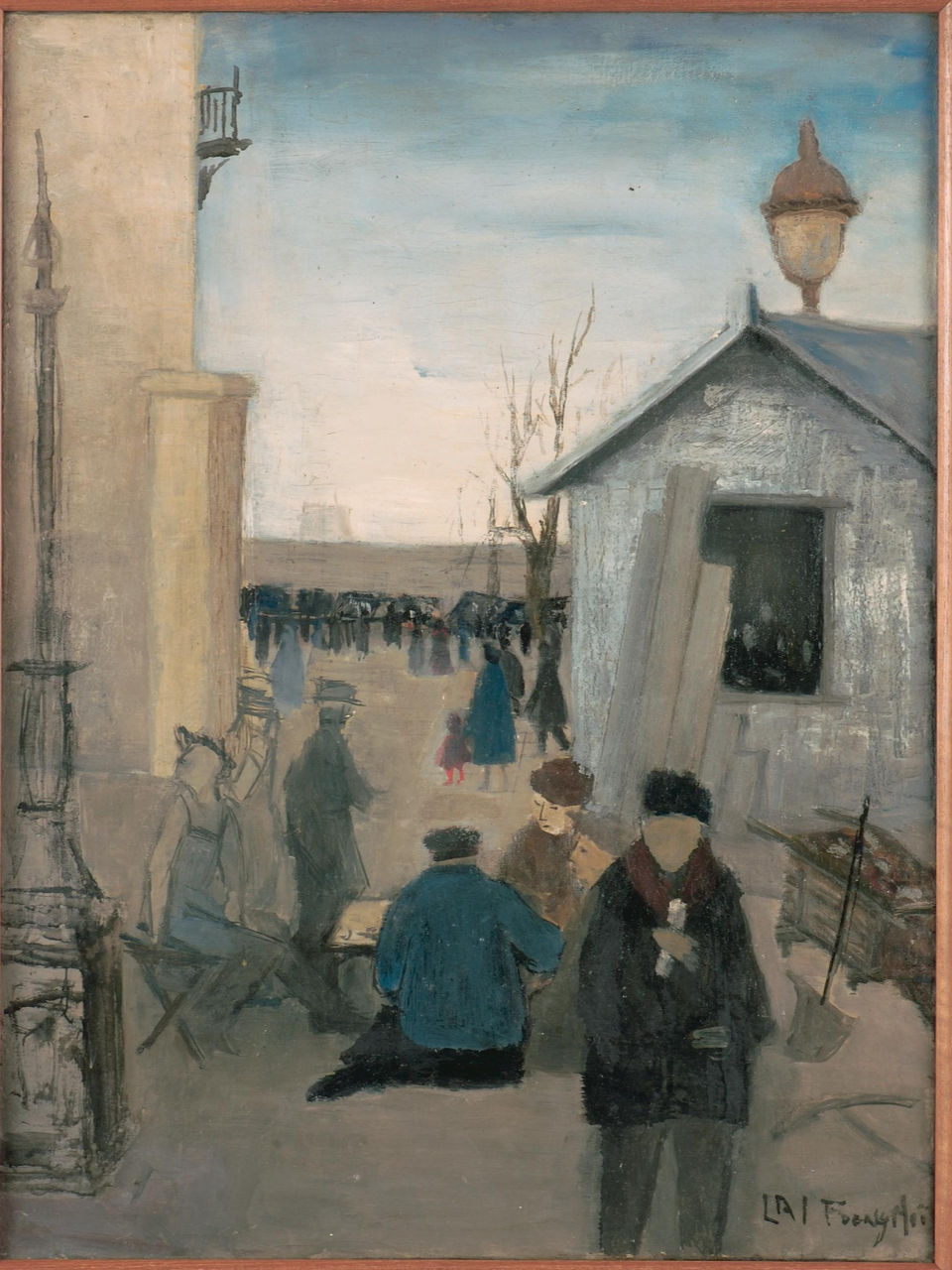
FIG. 1. Street Corner in Paris. c. 1950s. Oil on canvas, 61 × 46 cm. Gift of the Loke Wan Tho Collection.
FIG. 1. Street Corner in Paris. c. 1950s. Oil on canvas, 61 × 46 cm. Gift of the Loke Wan Tho Collection.
Through these accounts, Lai’s exhibition was positioned not only as a significant individual milestone but as evidence of a modern, progressive Malayan society. Her identity as a “Malayan-born woman artist” thus became a site through which artistic achievement, gender and nation might be symbolically aligned.
While Lai’s public reception emphasised her identity as a “Malayan-born woman artist,” her paintings suggest a more complex engagement with the conditions through which such identities were constructed and understood. They reflect her conscious negotiation with the lineages of her artistic formation, shaped by her training in Singapore and Paris and revealed through her interest in playing with the boundaries of established painting genres. Above all, her works demonstrate her capacity to render a plurality of experiences in the subjects she chose to paint.
The title of Still Life (1957) (Seen in Artwork Images) indicates a straightforward adherence to the compositional study of objects in drawing or painting. However, Lai also enfolds the genres of landscape and portraiture into the work. Centred in the composition is a neoclassical male torso—a plaster cast used to teach anatomical precision for portraiture in the absence of a live model. To the right, a wrought iron chair holds three lemons in a loose arrangement that contrasts with the formality of the torso. Behind the torso, Lai renders a Chinese scroll painting of plum blossoms within a landscape, with illegible black lines running vertically down the right edge of the “scroll” suggestive of a colophon. In doing so, Lai embeds her knowledge of Chinese classical painting, which she encountered under teachers such as Goh Teck Sian at NAFA.21 The torso is placed between the scroll and the still life, suspended between two distinct visual and cultural traditions. An easel, conspicuously empty, signals the hand of the artist who is constructing the scene and draws attention to the studio itself as a liminal space. Returning to Turner’s formulation, the liminal can be identified in this precise condition of betweenness, or a transitional state of becoming in which the moment of suspension is essential for the generation of new states. The studio, as Lai has staged for the viewer here, is one where the neoclassical torso, the Chinese scroll and the genre of still life can be held within a single view. The empty easel reveals the canvas as the site for this mediation, where these different sources and approaches can be brought into relation.
This reflexive quality extended to her paintings of nude models as well. Rather than treating the genre of the nude as purely exercises in anatomical observation, Lai chooses to embed her subjects in relation to the environment of the life drawing session, foregrounding the site of their formation.
In one example, an otherwise classically posed model stands in contrapposto, with one hand resting on her hip (FIG. 2). The model’s raised elbow frames the back view of a female student who is in the act of drawing. This fellow student mirrors Lai’s own act of creation and sets up a contrast with the loose stack of painted canvases leaning against the back wall. The studio is once again identified as a site of formation. While Still Life presents this transitional state through different genres and styles of painting, in this instance, it is the model herself that is suspended between the state of being painted and becoming a completed image. It is here that a second register of liminality beyond compositional arrangement becomes legible. Through the model’s contemplative gaze which slides beyond the left edge of the canvas, Lai draws attention to the subjectivity of the figure herself. The model not only occupies a liminal space but also inhabits a liminal condition within the composition. Her averted gaze registers an inner life that is neither fully offered to the viewer nor concealed but held somewhere between the two. This resists more voyeuristic conventions of the academic female nude while simultaneously drawing attention to the role of the artist in constructing the painting.22 Such examples prefigure the attention that Lai would afford to her later subjects, female or otherwise.
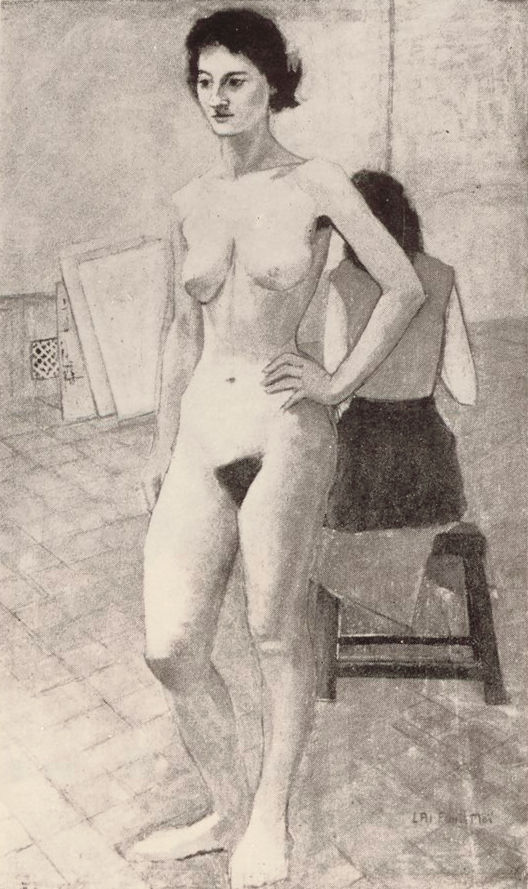
FIG.2 Model. c. 1955–1958. Oil on canvas, 129.5 × 79 cm. Reproduced from Lai Foong Moi (Self-published catalogue, 1960), unpaginated.
FIG.2 Model. c. 1955–1958. Oil on canvas, 129.5 × 79 cm. Reproduced from Lai Foong Moi (Self-published catalogue, 1960), unpaginated.
These examples from Lai’s time in Europe were among those exhibited in her 1959 exhibition and in subsequent solo exhibitions in 1960 and 1963.23 Although no illustrated records of the works shown in these exhibitions survive, Lai published a compilation of 66 works, including black-and-white and selected colour plates, in 1960 to commemorate her return to Singapore. Cross referenced against the list of works from her 1959 exhibition, the publication provides our most reliable guide to her artistic practice up to this point.24 From these images, a consistency can be observed across the genres she painted (still lifes, landscapes, portraits). However, key distinctions between certain genres also become apparent. The realist tendencies of her still life and portrait paintings give way in her landscapes to a post-Impressionist expressiveness—possibly a function of a plein-air approach more attuned to the contingencies of travel. This can be seen in works such as Athens (c. 1955–1958) and Lambili, Greece (c. 1955–1958) where loose, atmospheric brushstrokes contribute to a sketch-like quality (FIGS. 3–4). Above all, however, Lai’s preoccupation with the figure remained central and would continue to be the defining strength of her practice even after her return to Malaya. Even within her landscape paintings, her varying treatment of figures, where present, provides an indication of Lai’s differing relationship to her subjects: at times stylised as types and at others depicted as comparatively realist renderings.
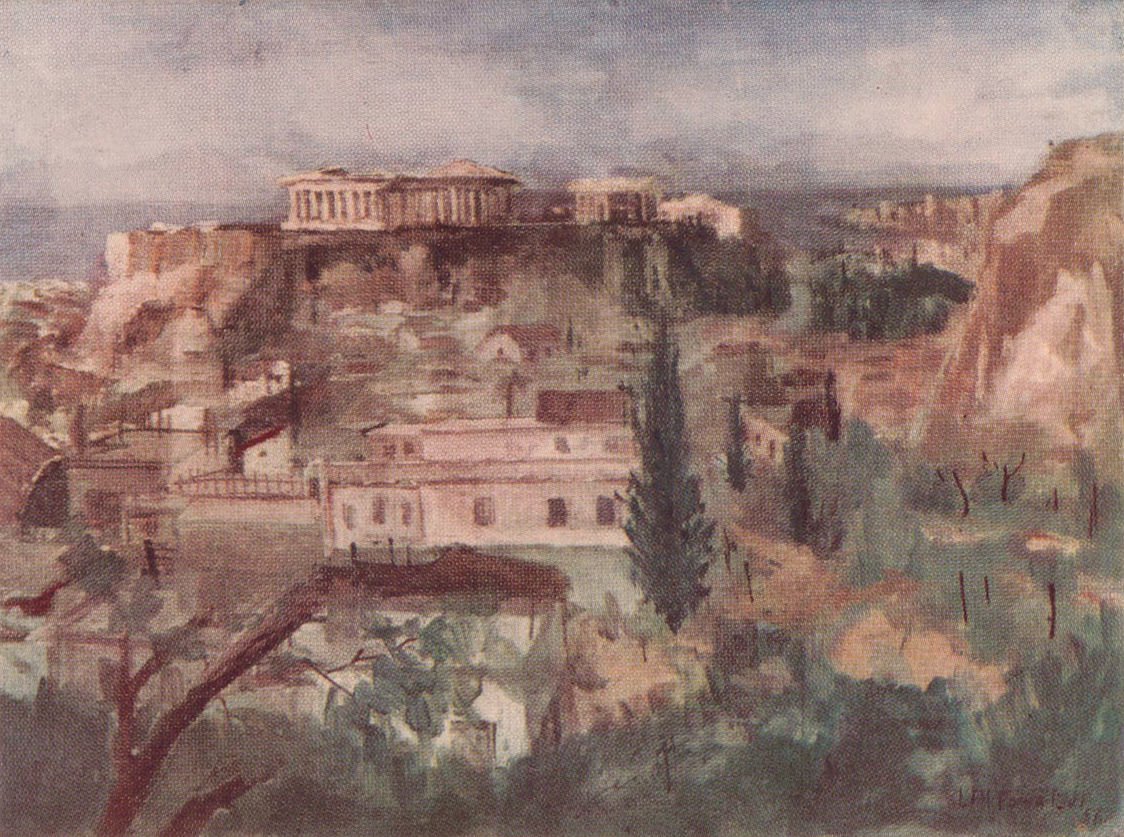
FIG.3 Athens. c. 1955–1958. Oil on canvas, 45.8 × 61 cm. Reproduced from Lai Foong Moi (Self-published, 1960), unpaginated.
FIG.3 Athens. c. 1955–1958. Oil on canvas, 45.8 × 61 cm. Reproduced from Lai Foong Moi (Self-published, 1960), unpaginated.
1 2
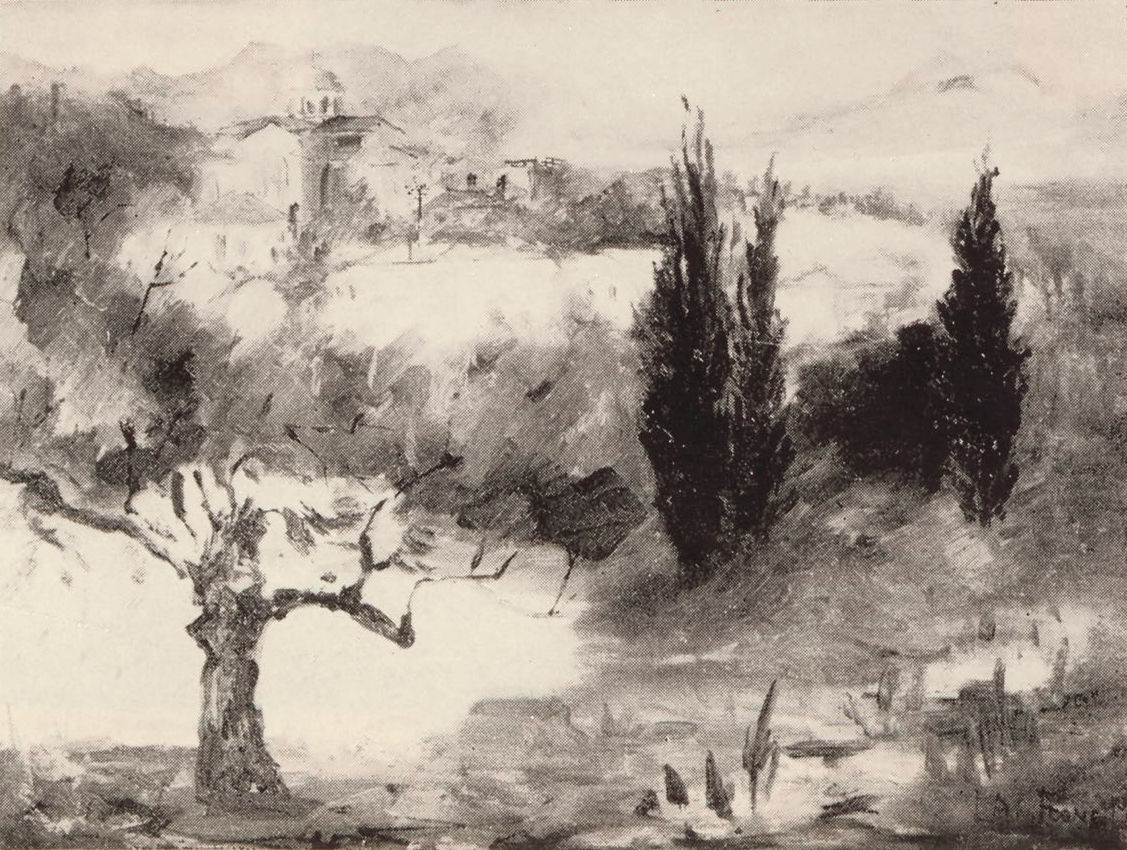
FIG.4 Lambili, Greece. c. 1955–1958. Oil on canvas, 45.8 × 61 cm. Reproduced from Lai Foong Moi (Self-published, 1960), unpaginated.
FIG.4 Lambili, Greece. c. 1955–1958. Oil on canvas, 45.8 × 61 cm. Reproduced from Lai Foong Moi (Self-published, 1960), unpaginated.
2 2
In Malaya New Year (1959) (FIG. 5), Lai presents a clearing in a kampong framed neatly by attap huts, where villagers gather for festivities amongst tall coconut trees. The scene is perceived from a distance and the central figure is rendered without distinct facial features, her form composed of outlined blocks of colour. A child at her side and figures further into the background are portrayed with the same economy of detail, their bodies and heads evoked through daubs of paint. Another work, Pounding Rice (originally published as Indian Curry Workers) (1959) (FIG. 6) , offers a closer perspective of a group of women at work.25 Here too, despite proximity, facial features are denoted by simple lines, emphasising the communal focus of the scene over individual differentiation. Attention, however, is given to the patterned details and bright colours of their saris, further privileging pattern and stylisation in this composition.
Lai’s approach to these subjects of rural Malaya resonates with strategies employed by other artists engaged within discourses surrounding Malayan and Nanyang art. Working from Malaysia, Patrick Ng, for instance, distilled his sustained engagement with batik into complex compositions, deploying its patterns as a shorthand for the ideals of nationalism and regionalism that were being actively constructed in this period.26 In parallel, artists such as Cheong Soo Pieng and Liu Kang had, by the time of Lai’s return to Singapore, been similarly invested in vernacular subjects as a source for their development of stylised visual languages. Emphasis on stylisation and the referencing of local sources were hence important markers of these emerging visual languages over an adherence to realism in both colour and subject. In this light, works such as Malaya New Year and Pounding Rice can be framed within the expectations placed upon Lai as a “Malayan-born” artist, for whom the depiction of vernacular life functioned as a marker of artistic and national belonging. They can also be read as a possible response to the ongoing discourse advanced by figures such as Ma Ge and Lim Hak Tai at the time.
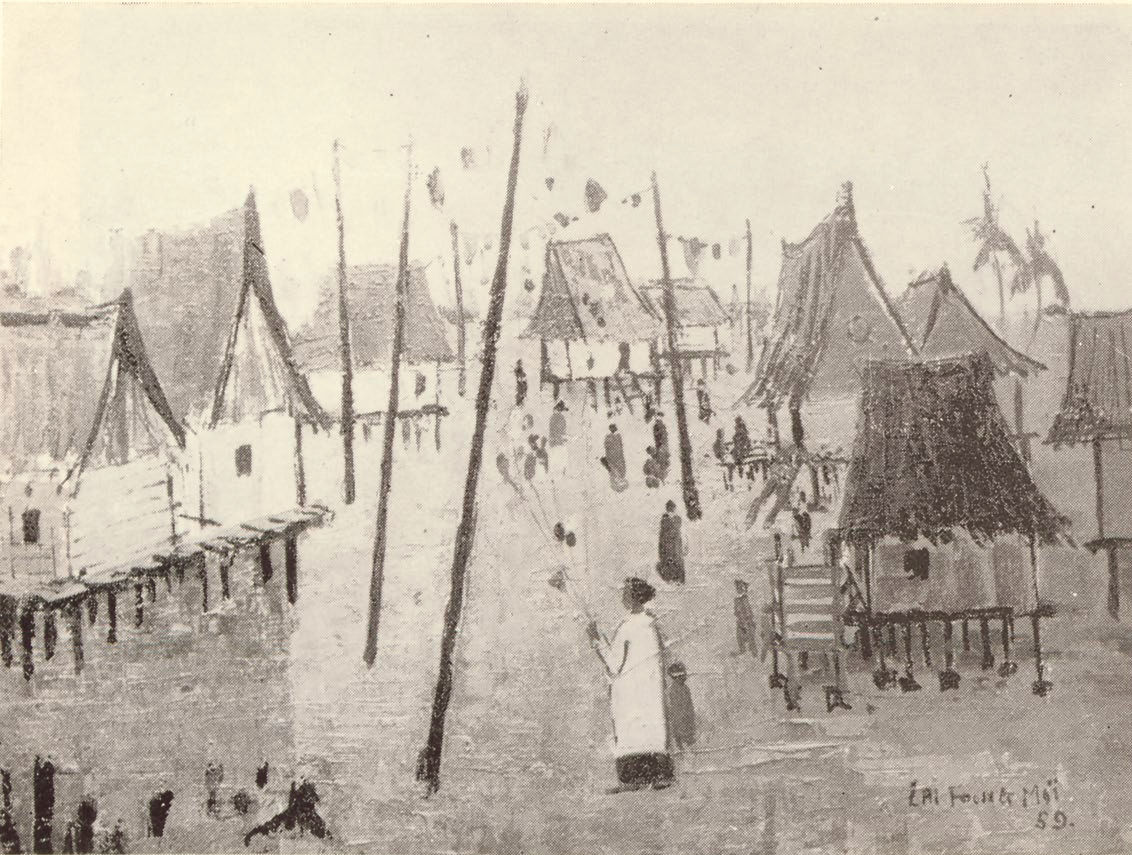
FIG.5 Malaya New Year. 1959. Oil on canvas, 35.5 × 45.7 cm. Reproduced from Lai Foong Moi (Self-published catalogue, 1960), unpaginated.
FIG.5 Malaya New Year. 1959. Oil on canvas, 35.5 × 45.7 cm. Reproduced from Lai Foong Moi (Self-published catalogue, 1960), unpaginated.
1 2
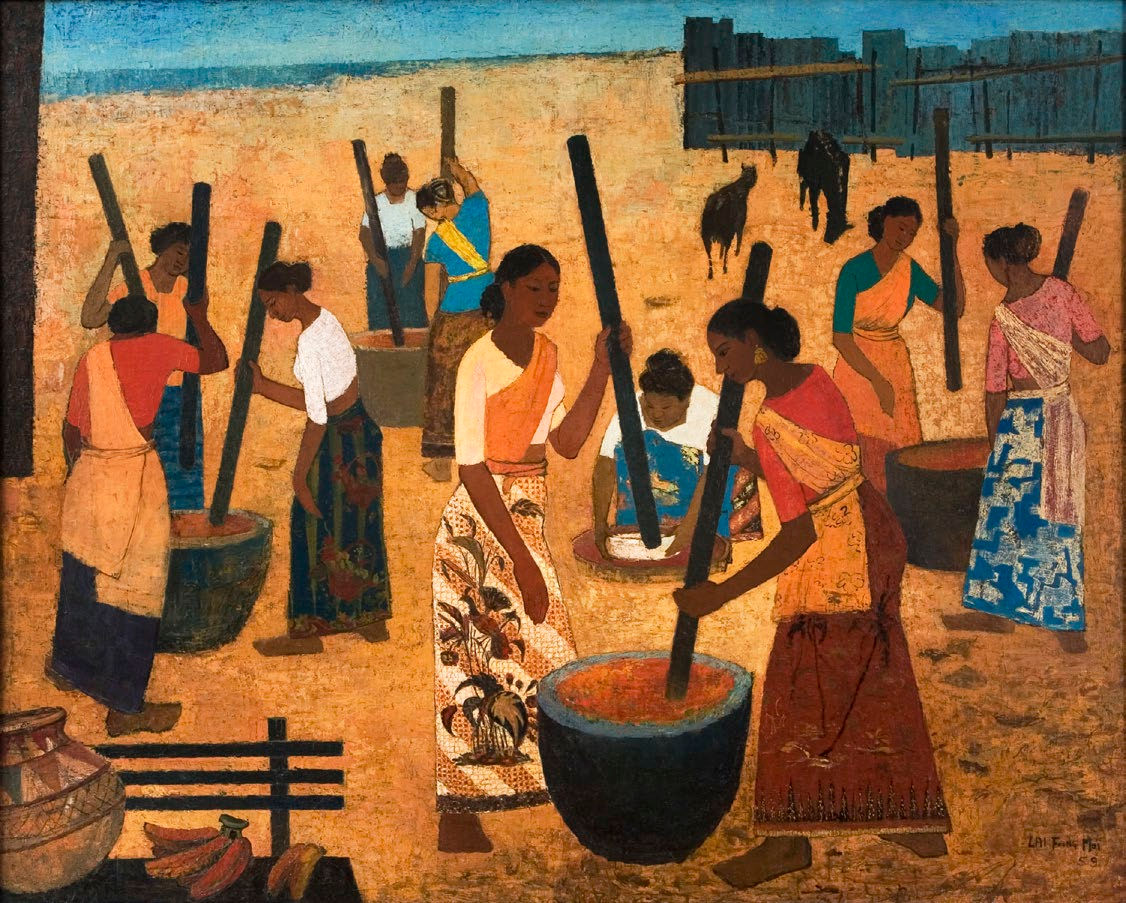
FIG.6 Pounding Rice (originally published as Indian Curry Workers). 1959. Oil on canvas, 201 × 250 cm. Collection of NUS Museum, National University of Singapore.
FIG.6 Pounding Rice (originally published as Indian Curry Workers). 1959. Oil on canvas, 201 × 250 cm. Collection of NUS Museum, National University of Singapore.
2 2
Lai’s engagement with this model of representation somewhat continued in works produced during her travels across the region, such as those painted during the Ten Men Group to the East Coast of Malaysia in 1963 (FIG. 7), as well as her own journeys to Bali and Borneo. However, the mid-1960s also saw Lai develop a more sombre palette and a return to her attentive approach to figuration aligned with her academic training in France. This seeming contradiction in Lai’s practice at the time, between more impressionistic and expressive visions of a bright and idyllic Malaya and more sobering and ambiguous representations of identity, returns us to Ma Ge’s criticism of the waning vibrancy of her works in the mid-1960s. In this way, it is possible that Lai’s penchant for figuration and its attendant concerns placed her outside the prevailing expectations of Malayan and Nanyang art.
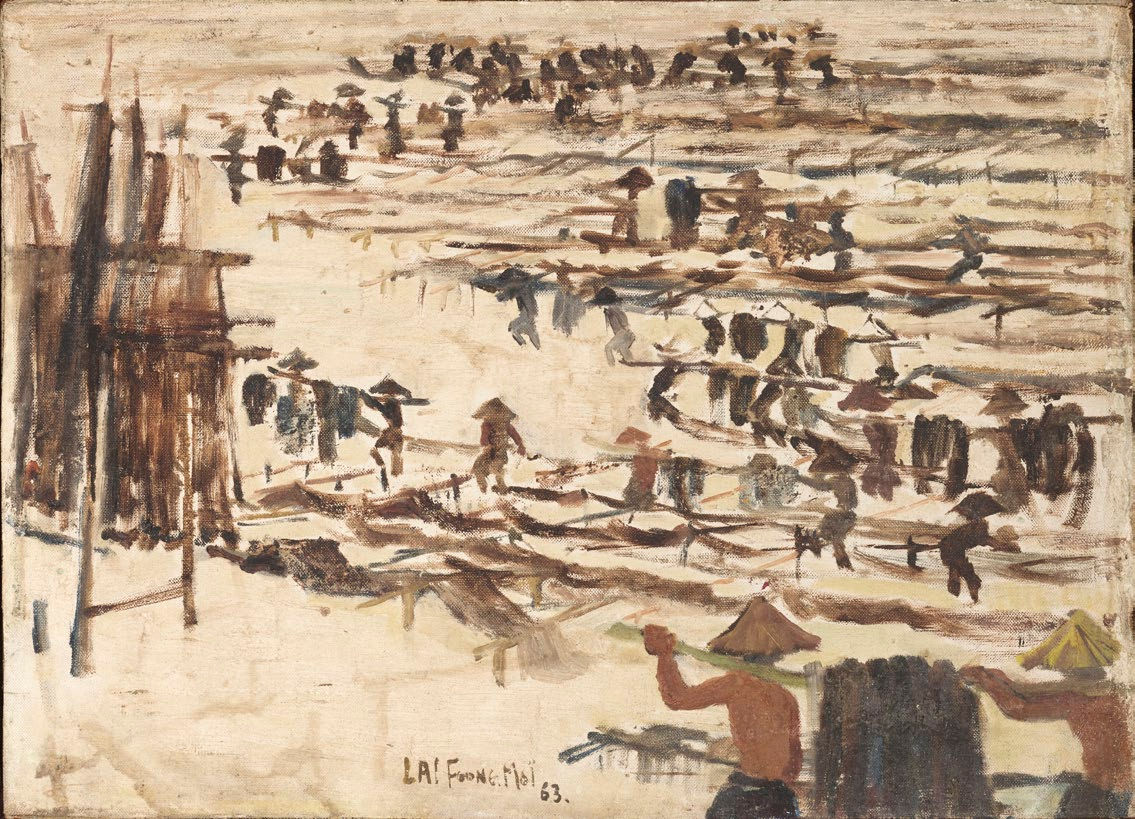
FIG.7 [Not titled] Pulling Fishing Nets. 1963. Oil on canvas, 39.5 × 54.7 cm.
FIG.7 [Not titled] Pulling Fishing Nets. 1963. Oil on canvas, 39.5 × 54.7 cm.
It is precisely this instability within stylistic and categorical frameworks that becomes most apparent upon closer attention to the stylistic variation in works produced in this period. In 1960, Lai received a commission to paint the portrait of Sharifah Rodziah (wife of Tunku Abdul Rahman, first Prime Minister of Malaysia) (Seen in Artwork Images). Lai paints the gold embroidery of her sitter’s kebaya with great care, while choosing to resolve the background into two planes of colour—using their meeting to suggest the corner of the room without further detail. The facial features of her sitter, while more defined than the suggestion of lines seen in Pounding Rice, do not approach the realism of her earlier portraits completed in Europe. Yet there is a sense, in her outward gaze and in the deliberate placement of the figure at the exact threshold where the two background colours meet, that aspects of Lai’s earlier approach to imbuing her subjects with agency and context, sustain. A second work painted in the same year, Perempuan Melayu (1960) appears as a companion to the commissioned portrait.27 It shares similar compositional logic, using a two-toned background to delineate space and ground the subject who also gazes beyond the confines of the canvas. Yet where the commissioned portrait bears the sitter’s name and shows her seated upon a chair, Perempuan Melayu identifies her as a type rather than an individual, also placing her in a more deferential posture on the floor. Considered alongside the work’s title, it leans toward the construction of a general and idealised representation of the Malayan girl, emphasised through her dress and comportment. Indeed, the sarong kebaya and its many iterations had by this time become an important symbol of cultural identity and nationhood in Malaya, a sort of national dress worn on both significant and everyday occasions and prominently featured in new styles and designs in popular fashion magazines.28 In both works, Lai appears to negotiate, to different degrees, the tension between the depiction of her subject as a symbol and as an individual, perhaps echoing the very terms through which Lai herself had been framed in public discourse. These works can also be seen as markers of a transitional moment in which her exploration of the symbolic power of more stylised modes of representation would come to meet the realism and agency that so animated the irreducible particularity of her subjects.
Budak India (Indian Boy) (1960) (See Selected Archives) proposes an integration of these two registers, in which Lai confidently returns to earlier-established strategies of liminality applied to both composition and subject. Displayed in the context of the Third National Exhibition held at the National Art Gallery of Malaysia, the painting exemplifies the realist techniques that defined Lai’s European period while being simultaneously inflected with the symbolism of national frameworks.29 As in her European studio works, Lai positions her subject surrounded by the tools of painting, making the construction of the scene evident. This time, however, the subject himself holds a charcoal stick loosely in his left hand. Behind him is a sketch-like drawing of figures and indecipherable motifs in a somewhat naïve style (a glimpse perhaps of a work in progress), and under him, a stack of canvases whose contents are concealed from us.
Further activated through a reading of liminality, his position becomes one of potential, between what is in the process of making and what has yet to be made. At the same time, he is also the subject of Lai’s observation as seen in his clearly defined features and pensive countenance rendered with a distinct realism. She allows him to withhold something as he looks away from both her as a painter and us as viewers. This assertion of his individuality challenges the period’s frequent depictions of Malay, Indian and Indigenous communities as visual markers of cultural diversity within an ideal Malayan identity while continuing to designate him within those very categories as a nameless “Indian Boy.” The work presents a complex amalgamation of individual identity and symbolic potential with Lai herself at its centre. It was this ability to hold the possibility of her subject’s interior worlds while attending to the negotiations of their social realities that came to distinguish Lai’s practice in the years to come.
Section 03
Crossing
Already in motion and with little indication of their surroundings, the passengers in the first version of Crossing (Home Coming) (1964) (seen in Artwork Images) are depicted in a state of transition between arrival and departure: the focus of their disparate gazes remains unclear. We are drawn most immediately to the leftmost figure whose bright red and orange attire stands out amid the predominantly cooler tones of the composition. She is the only one whose body is positioned frontally, allowing a view of her precisely folded hands and upright posture with her legs tucked neatly under. The broad collar and structured silhouette of the figure’s red tunic-jacket reflect the newer styles of the sarong kebaya, incorporating so-called “Western” fashion elements such as tailored suits for women that had become increasingly popular by the 1960s in Malaya.30 The woman seated across from her wears another style of kebaya accessorised with a draped selendang and sits with her back to us, a white flower visible behind her ear. Through the contrasts between them, Lai presents the choices of self-fashioning, presentation and agency that were accessible in the period (Fig. 8). In some ways, the leftmost figure appears to embody an ideal image of the modern Malayan woman through her choice of attire and her confident posture, which evokes the emergence of newer forms of self-expression and opportunities for self-determination. And yet, her sober expression and sideways glance convey a complex inner world. Between them, a young boy looks outward—the difference in his age and gender raising questions about the nature of the relationship between the three figures. Despite their physical proximity and shared status as passengers, they appear to be strangers. The tight framing of the composition offers us no clues as to where they have come from or where they might be going. They are in the midst of crossing—a liminal state of suspension—but one which Lai depicts not through motion or activity. Around them, the water is still. Theirs is a crossing presented through the anticipation of the journey rather than a moment of departure or arrival.
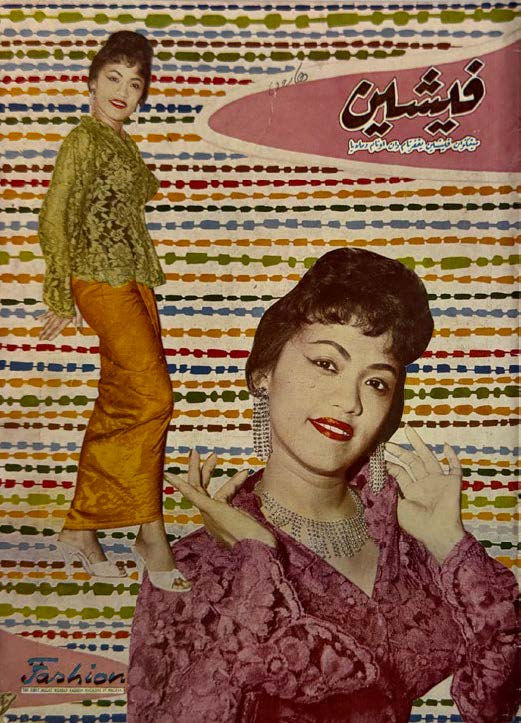
FIG 8. Fashion, 6 December 1959, issue 304. Published by R.M. Yusoff on behalf of HARMY and printed by Al-Ahmadiah Press.
FIG 8. Fashion, 6 December 1959, issue 304. Published by R.M. Yusoff on behalf of HARMY and printed by Al-Ahmadiah Press.
A second version of the painting, Crossing (c. 1965) (seen in Artwork Images), offers a variation on the scene. A woman is positioned as the central subject of the painting between two figures with their backs turned. She is clothed in another style of kebaya, this time loose-fitting and with a bold geometric pattern. The detailed attention afforded to her fashion and facial features is distinguished against the comparative obscurity of her companions. Their forms rendered with rougher brushstrokes, their sarongs lacking attention to material and pattern. They are also shown bare-chested—Lai seemingly aligning them with an almost primitive and stereotyped notion of tradition to emphasise the modernity of the central figure. This more binary presentation contrasts with the first version of the painting, which allows for a more equal distribution of subjecthood across the three figures.
As her self-published catalogue and exhibition history reveal, Lai rarely provided titles for her works beyond describing their genre or subject. That these two works shared a title, Crossing, then, bears a particular significance that is worth considering in relation to Lai’s artistic production and the historical moment of their creation. It is evident that Lai was actively engaging with questions of style, representation and symbolism. The first version of the painting was exhibited in both Singapore and Malaysia, its circulation across these two countries enacting the very negotiation of identity explored in the paintings and resonating with the experience of transition in a moment of social and historical transformation. The liminal nature of their crossing, betwixt and between arrival and departure, combined with the socio-political timing of their production could have been mere coincidence. And yet, their pointed observations of gender, self-presentation and modernity are tantalising in what they suggest about Lai’s own response to a moment where ambiguities and uncertainties were ones she experienced as much as she observed.
These two versions of Crossing marked not only a culmination of Lai’s success as an artist but also, as it would transpire, the beginning of a decline in her previously regular exhibitions and a gradual withdrawal from the more public dimensions of artistic life. Within the five years since her first solo exhibition in Singapore, she had staged another two in 1960 in Kuala Lumpur and in 1963 in Penang. She had been included in at least ten group exhibitions organised by local art societies in Singapore, and a further six organised by the National Art Gallery of Malaysia, including their annual National Exhibition series.31 However, over the next three decades until her passing in 1995, Lai’s work would be featured in group exhibitions fewer than ten times and she would not stage another solo exhibition—a stark contrast to the intensity that had come before. Lai could not have known that Contemplation (1966) (seen in Artwork Images), a poignant portrait of a young woman with a modish haircut seated at a writing desk and posed against an overflowing bookcase, would be one of the last works she would publicly exhibit until 1973. When that moment came in a group exhibition organised by the art society Angkatan Pelukis Aneka Daya (APAD), a reviewer remarked upon Lai’s painting of a scene of Singapore as an opportunity to see the artist’s work after an absence of over five years.32 Lai’s apparent retreat saw her dedicating her time to her role as a teacher at NAFA. Recollections from former students and peers recall a quiet and dedicated teacher whose fluency in Malay and limited English particularly endeared her to her non-Chinese students.33 Her overwhelming legacy at the time of her passing focused on her dedication as an educator, alongside lamentations about a career whose public trajectory seemed to fall short of the promise with which it had begun.
Nevertheless, Lai had in fact continued to paint, and her extant works together with her continued, if sporadic, presence at exhibitions allow us to trace the strategies that persisted and developed throughout her practice.
Across Lai’s portraits from 1965 onward, certain formal consistencies become evident, including her sustained attention to fashion and dress, and the recurrence of postures in her sitters: raised elbows, angled bodies and averted gazes. As with the charcoal stick held by the sitter in Indian Boy, her female subjects were often depicted with instruments of knowledge and agency, from books to a paintbrush. Many of these portraits also continue Lai’s use of carefully staged contrasts to convey nuances in identity, perspective and personhood (FIG. 9).
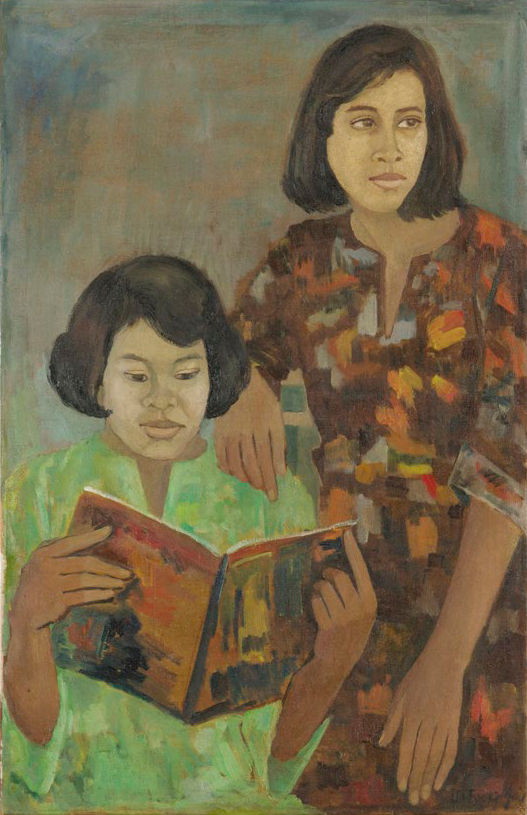
FIG 9. Different Thoughts. c. 1960s. Oil on board, 104 × 67 cm. Collection of Francis Choo.
FIG 9. Different Thoughts. c. 1960s. Oil on board, 104 × 67 cm. Collection of Francis Choo.
These strategies also extended to her portrayal of labourers—another category of individuals within society that held her attention. Trishaw Rider (1961) (seen in Artwork Images) depicts a trishaw puller playing a nose flute. Lai animates a moment of rest rather than productivity, foregrounding an aspect of his individuality beyond his occupation. This insistence on the particular and personal within the context of a rapidly urbanising Singapore runs across her depictions of working life. In Labourer (Lunch Break) (1965) (seen in Artwork Images), the worn lines and expression of the central male figure are carefully rendered in contrast to the flatter depiction of a samsui worker whose back view and featureless side profile refuse access to any part of her individuality. Although both figures occupy the same eyeline within the composition, their diverging postures allow Lai to suggest a hierarchy of anonymity within a marginal segment of society.
Lai gives her full focus to the samsui worker in the painting Pekerja-Pekerja Sun Sui (1967), also published as Rest. (FIG. 10)—the close detail given to the sitter’s gnarled hands and weathered features provides evidence of her life of labour even as she is pictured in a moment of reprieve and contemplation.34 The figure takes on a monumental presence within the proportions of the foreground, Lai seeming to offer a tribute through scale, attention and dignity found through stillness. The robust bamboo shoots in the background evoke, as in classical Chinese painting, associations of strength and resilience, as Lai places her sitter within an imagined landscape of ancestral memory far removed from the place of her work. A version of the painting, Samsui Woman (FIG. 11), places what appears to be the same sitter against that very landscape of her labour through a recognisable view of the Singapore waterfront. Through these two iterations of the composition, Lai could have been considering two different ways of honouring her subject: representing her through the product of her labour or within a more introspective manifestation of what home could mean for her. From the mid-1960s, such figures were themselves becoming increasingly marginal within newly independent Singapore, as the forms of manual labour embodied by samsui women were being phased out with the introduction of new labour regulations, changing work conditions and new industrial practices. Rather than depicting labour and labourers as a symbol of collective progress, she reflects on the uncertain place of the individual within societal change.
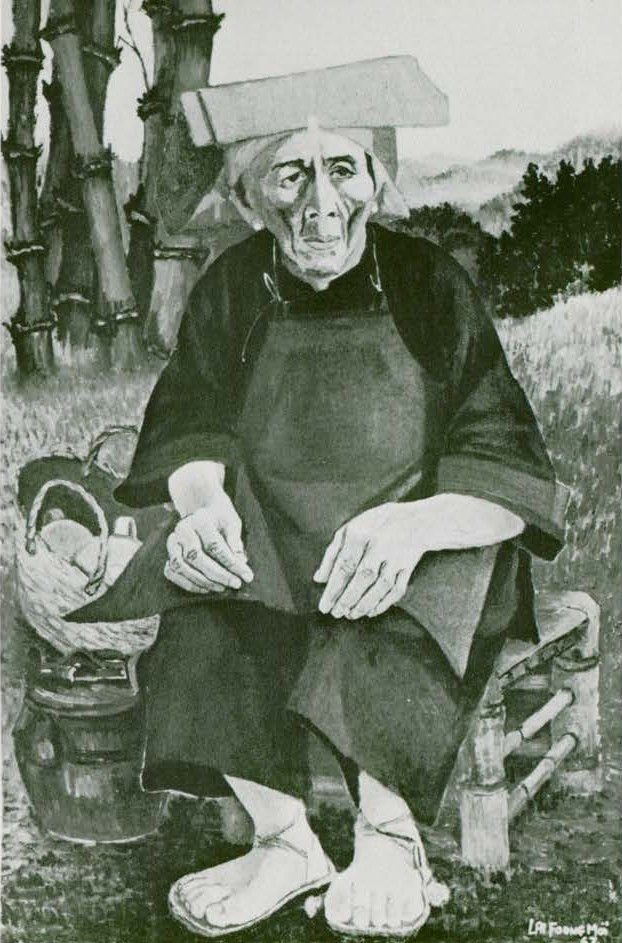
FIG. 10. Pekerja-Pekerja Sun Sui (Samsui Worker) (1967) also published as Rest. Oil on canvas. 90 × 69.5 cm. Collection of National Art Gallery Malaysia. Reproduced from Nanyang Academy of Fine Arts 29th Graduation Magazine.
FIG. 10. Pekerja-Pekerja Sun Sui (Samsui Worker) (1967) also published as Rest. Oil on canvas. 90 × 69.5 cm. Collection of National Art Gallery Malaysia. Reproduced from Nanyang Academy of Fine Arts 29th Graduation Magazine.
1 2
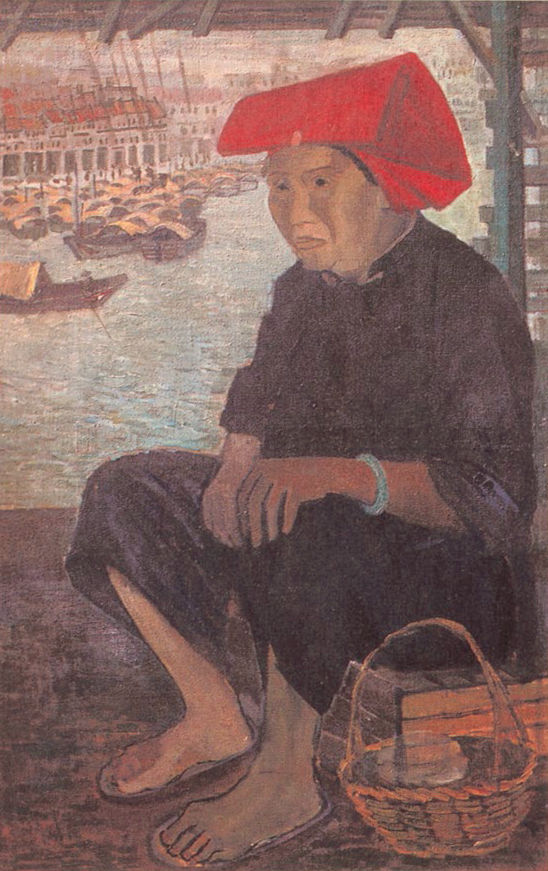
FIG. 11. Samsui Woman. c. 1960s. Oil on canvas, 103 × 64.5 cm. Private collection. Reproduced from Nanyang 1950–65: Passage to Singaporean Art (Fukuoka Asian Art Museum, 2002), 14.
FIG. 11. Samsui Woman. c. 1960s. Oil on canvas, 103 × 64.5 cm. Private collection. Reproduced from Nanyang 1950–65: Passage to Singaporean Art (Fukuoka Asian Art Museum, 2002), 14.
2 2
Such representations ran counter to the prevailing approach of artists such as Chua Mia Tee, whose work as part of the Equator Art Society foregrounded the act of labour as a way to attend to the social conditions of working life (FIG. 12).35 Where those works made visible the collective circumstances of the labouring class, Lai’s depictions maintain an ability to focus on the interior worlds of her subjects while considering their place as individuals within larger society.
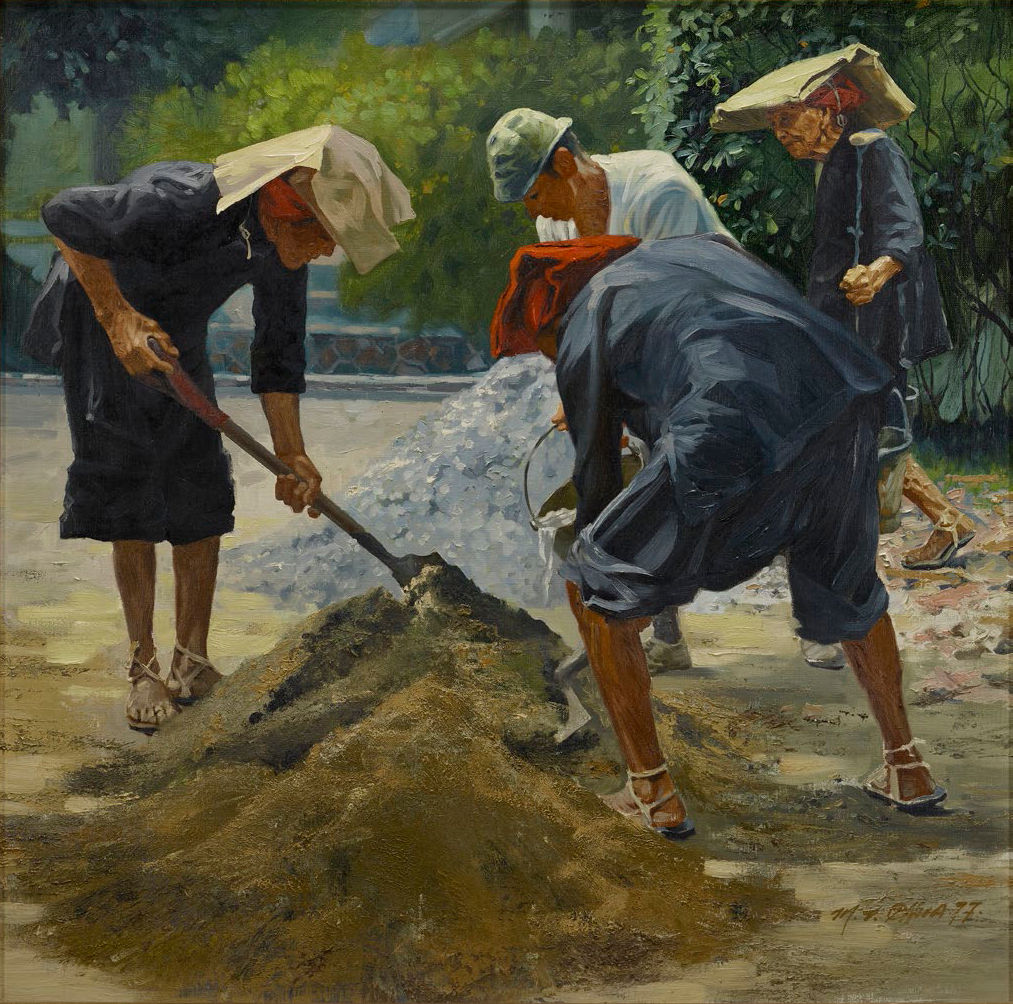
FIG. 12. Chua Mia Tee. Samsui Women. 1977. Oil on canvas, 78.2 × 79.6 cm. Gift of Times Publishing Limited.
FIG. 12. Chua Mia Tee. Samsui Women. 1977. Oil on canvas, 78.2 × 79.6 cm. Gift of Times Publishing Limited.
This attentiveness to the differentiated experiences of her subjects, even as she sought to convey something symbolic about their role in society, can be seen in the complex spatial and social configurations realised in Clifford Pier (c. 1960s) (FIG. 13). Using the building’s distinctive arched trusses to create successive frames for observation, Lai constructs a scene of workers waiting for their day of work to begin. Three figures occupy a bench in the foreground, their hunched, curled, leaning forms bear varying expressions of exhaustion as Lai allows them a reprieve from the comparatively posed postures of her other portraits. Further back, figures lean against the pier’s balustrade, their forms handled with greater economy as they observe the landscape that recedes into the middle distance. Here, it is not only their state of rest which is presented as a space for attention. The urban environment itself—the pier as a site of arrival and departure, and the framed view of the waterfront—is presented as a liminal space within which these individual lives unfold.
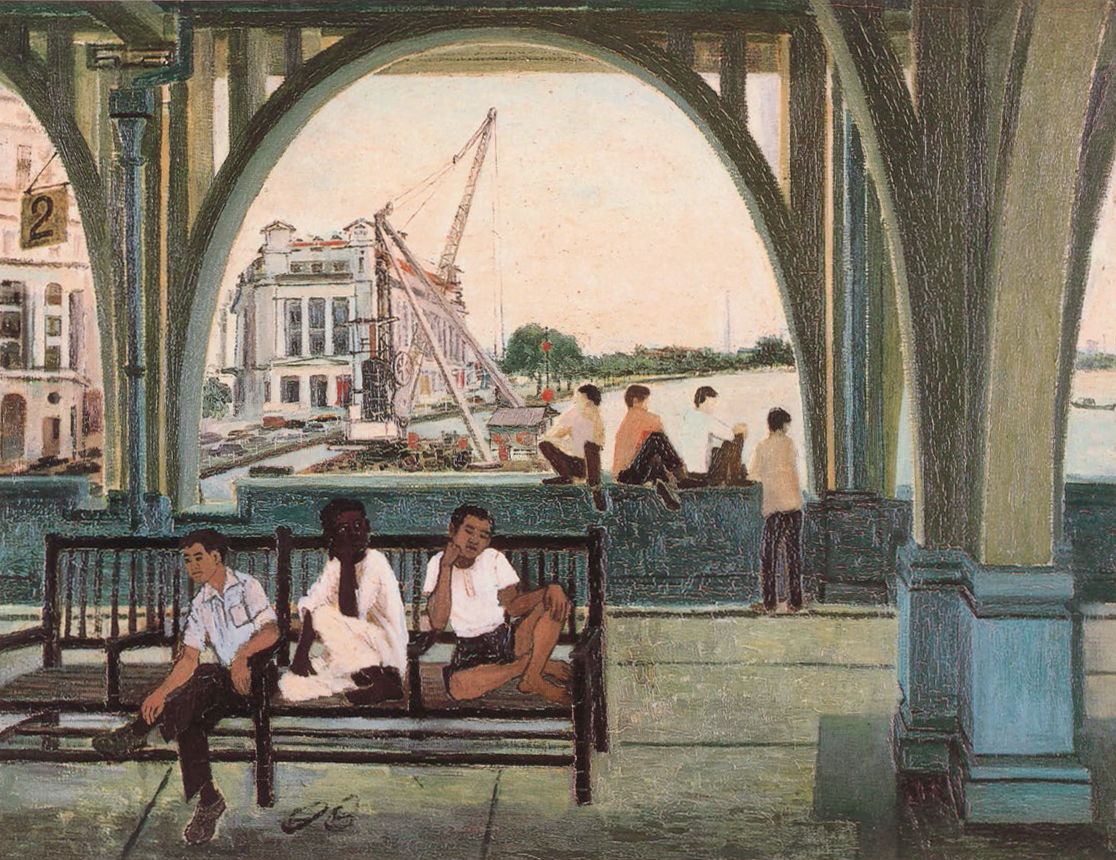
FIG. 13. Early Morning Clifford Pier (Hong Deng Jetty). c. 1960s. Oil on canvas, 107 × 67 cm. Private collection. Reproduced from Six Artists (Six Artists, 1994), 67.
FIG. 13. Early Morning Clifford Pier (Hong Deng Jetty). c. 1960s. Oil on canvas, 107 × 67 cm. Private collection. Reproduced from Six Artists (Six Artists, 1994), 67.
In this way, Lai’s attention to the liminal as a compositional strategy and as an assertion of individuality in her subjects also extended to the environments they inhabited. Her urban landscapes, through contrasts and angled perspectives, present liminal spaces and generate a palpable ambiguity about the unfolding development of the modern city. In A View of Lion City Singapore (c. 1970s) (Seen in Artwork Images), an aerial view traces a progression from low-rise shophouses to new concrete constructions rising in the distance. And yet, Lai includes on the left side of the composition an expanse of forest whose exaggerated proportions exceed the height of the tallest building in the painting, pressing insistently against the sides of the buildings without relief. Presenting a tension between the natural and built environment, Lai’s forest crowds into the city and cannot be neatly contained. In contrast to more conventional images of Singapore’s cityscape that the immediate post-independence period typically evokes—bustling street scenes, a lively Singapore River—Lai articulates an almost unsettling atmosphere of absence. Her city is almost devoid of life and scenes from across Singapore and Malaysia portray pronounced emptiness. Even paintings of religious sites such as temples and mosques suggest a stillness that is more unsettling than devotional, and where collective experience can equally translate anonymity as it does community. One might understand Lai’s expression of moving through a rapidly changing landscape as one that comprises solitude and even alienation.36
When read alongside her representation of labourers and her intimate portraits of female sitters, these distant views of the city indicate Lai’s attunement to how marginal identities at the intersection of gender and labour might be experienced and negotiated within broader social narratives of progress and development. If the passengers in Crossing inhabit a moment of anticipation in the face of ossifying national boundaries, the samsui worker is caught between the place of her labour and the ancestral home of her memory. Lai’s carefully staged scenes produce spaces within which the questions raised by these complex positions can be held and untangled, if not resolved.
Section 04
Belonging
Lai Foong Moi’s withdrawal from the art world after 1965 is often interpreted as a decline. Yet such readings largely depend on the frameworks that initially enabled her visibility. For instance, the privileging of the figure of the “Malayan-born woman artist” after the term lost relevance, the conditions of a newly independent Singapore and when her circulation, as a “woman” artist or as a professional artist more generally, would have required the cultivation of networks and relationships that she may not have been inclined towards. Although her work was collected in her lifetime by national institutions across Singapore and Malaysia, she was not inducted into the canon of “Pioneer Artists” in the same way as many of her peers despite taking on Singaporean citizenship after the country’s independence.37
While it is difficult to truly pinpoint a reason for Lai’s withdrawal from public life, a moving tribute from a NAFA colleague, Tan Tee Chie, suggested her focus on teaching as a main reason, but also Lai’s apparent lack of interest in following the perceived markers for artistic success: “Sacrificing personal fame, gain and much of her own creative time, she painted less so that she could teach more. Withdrawing from the public eye within the art world, she channelled her entire focus into instruction and quiet creation...Onlookers unaware of the reality misconstrued her retreat from public exhibitions as a total abandonment of her brush. She merely scoffed at such superficial gossip, deeming it unworthy of investigation or response, for she truly had no time to waste on idle chatter.”38
Rather than fixating on the relative success of her artistic career and the categories that have defined her, this essay proposes how Lai’s practice and biography can be more productively understood through the lens of liminality. Across her paintings, these figures, spaces and compositional structures are held in states of suspension, resisting resolution and refusing stable categorisation.
In doing so, Lai’s works complicate the very terms through which her practice has been historically interpreted, unsettling the categories of Malayan, Nanyang and School of Paris that have sought to contain it. Her sustained attention to her subjects offers a distinctive perspective on the formation of identity during the uncertain and transformative postcolonial and pre-independence period in Singapore and Malaya. The thresholds and moments of crossing in her paintings register how identity is shaped not only by shifting borders and official designations but also through the continuous negotiation of belonging. In constructing visual representations of liminality, Lai’s paintings provide space for the exploration of identity, reflecting the broader social and historical conditions of her time.