

National Gallery Singapore presents first major exhibition offering fresh perspectives on Singapore’s influential ink master Fan Chang Tien
Featuring over 80 works and archival materials, the exhibition looks beyond Fan’s well-known legacy as the “Gardener” to reveal a multifaceted scholar-artist whose art, values, and dedication to community left an enduring mark on ink art in Singapore.
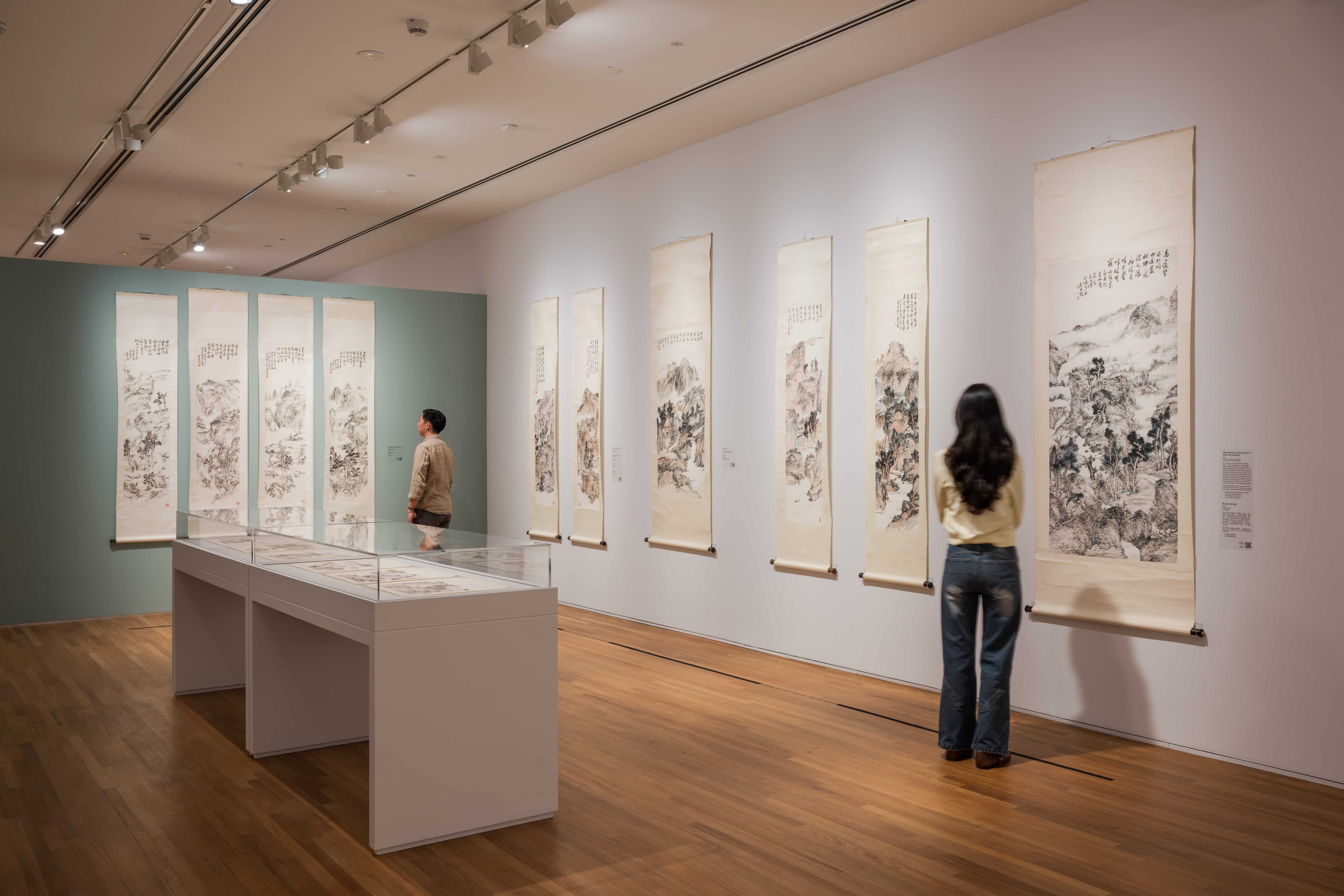
SINGAPORE, 13 October 2026 – National Gallery Singapore presents Fan Chang Tien: Rhythm of the Southern Brush, the first major exhibition to offer a holistic perspective on the life, values, and enduring legacy of one of Singapore’s most influential ink artists. Opening on 16 October 2026, the exhibition features over 80 works and archival materials spanning painting, calligraphy, poetry, and seals, bringing into focus Fan’s artistic and intellectual pursuits and how values of self-cultivation, integrity, and generosity shaped a life dedicated to art, learning, and community.
Expanding the story of Fan beyond his years in Singapore, the exhibition traces his artistic development across Guangdong, Shanghai, Bangkok, and Singapore, exploring how his movement across these different cultural contexts informed his artistic practice and identity. Throughout his life, Fan remained dedicated to both his artistic practice and to education, nurturing a generation of Singapore artists, including Ling Cher Eng, Nai Swee Leng, Tan Oe Pang, Chen KeZhan, and Chua Ek Kay.
The “Southern Brush” reflects Fan’s movement southwards, as well as the circulation of ideas and practices across Asia. His artistic foundations lay in the Shanghai School tradition, known for its expressive brushwork grounded in traditional Chinese ink practice. Across five thematic sections, Moving South, Nurturing the Self, Rejoicing in the Everyday, Wandering through Nature, and Tending the Garden, the exhibition brings together Fan’s artistic practice, intellectual pursuits, personal philosophy, and legacy as an educator.
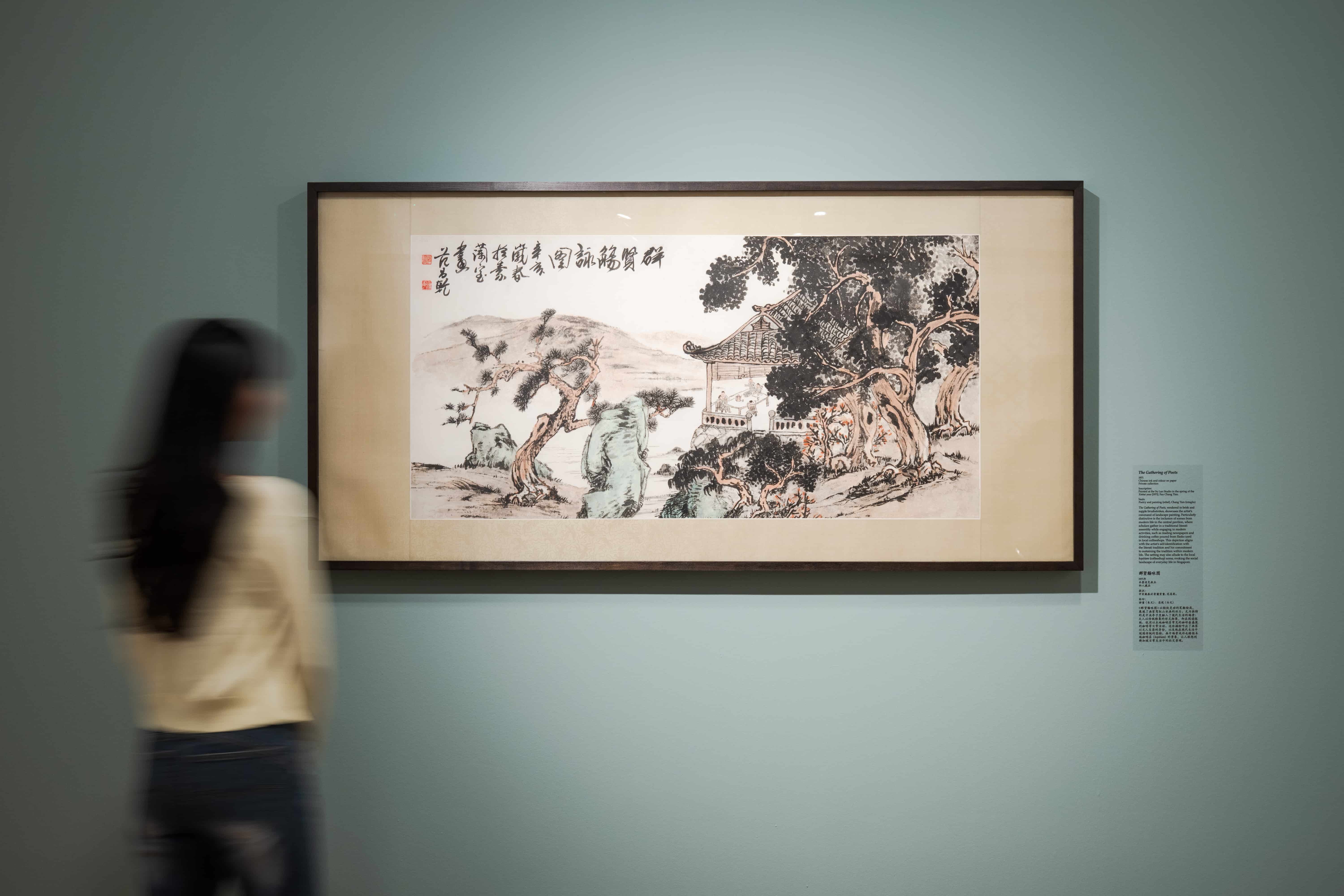
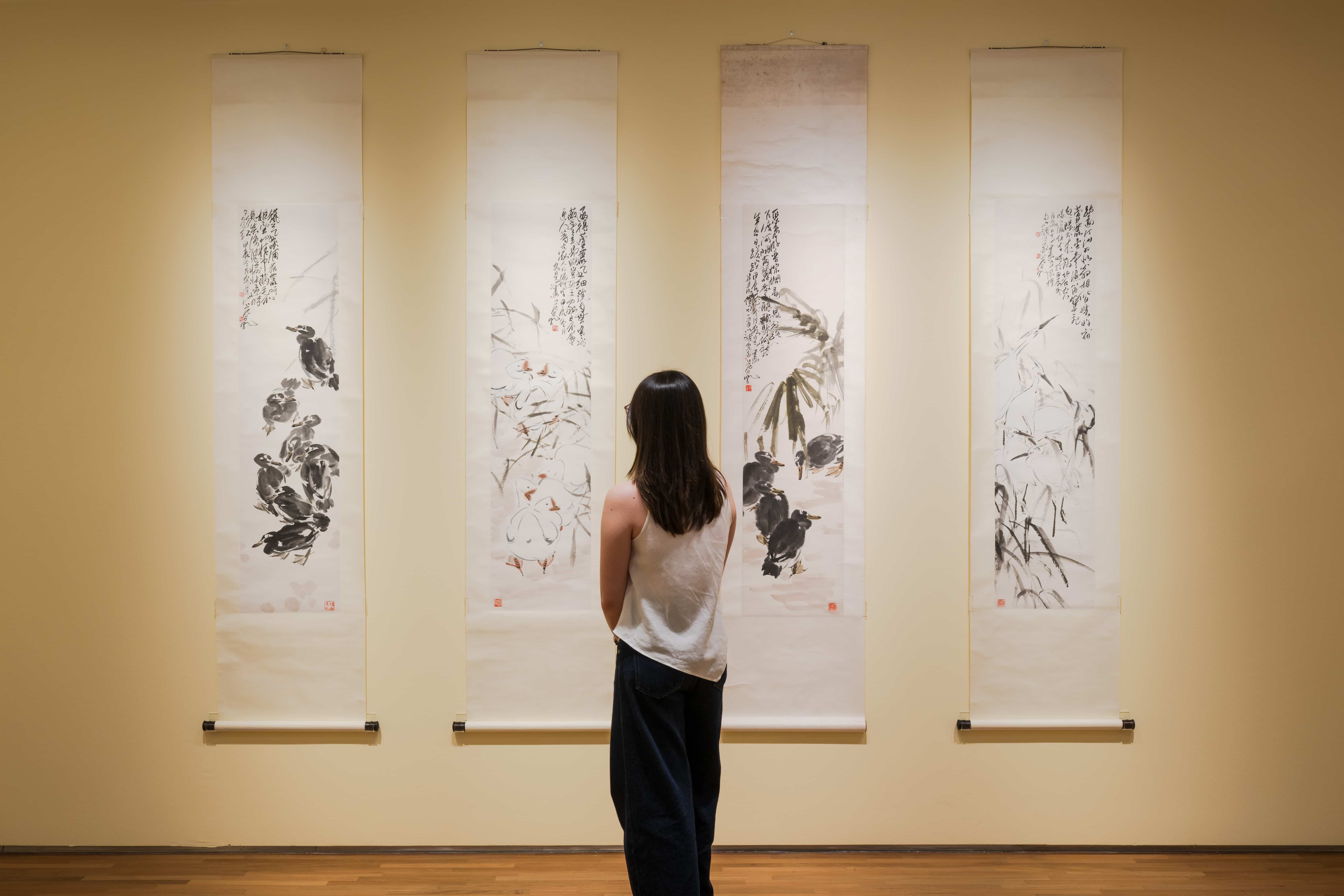
Dr Cai Heng, Project Director and Senior Curator, National Gallery Singapore, says, “The values of self-cultivation, integrity, and generosity shaped Fan’s artistic practice, and offer an important lens through which to understand his work. By bringing together different facets of his practice, the exhibition reveals the breadth of his artistic achievements and the enduring legacy he left through both his work and the students he nurtured. The exhibition also reflects the Gallery’s ongoing commitment to deepening understanding of ink art in Singapore and Southeast Asia, and the artists, networks and exchanges that shaped its development.”
Tracing the many facets of Fan’s life and legacy
The exhibition opens with Moving South, which explores Fan’s artistic training at Shanghai’s prominent schools in the 1920s and his early recognition as a promising young artist. He trained under Zhu Wenyun and Wang Geyi, both disciples of Wu Changshuo, a leading figure of the Shanghai School. The works in this section trace the foundations of Fan’s artistic practice and his subsequent journey southwards across Asia, including his years in Bangkok before he settled in Singapore in 1956.
Nurturing the Self examines how Fan’s commitment to artistic discipline and self-cultivation shaped his identity as a scholar-artist. It focuses on Fan’s most favoured subject, bamboo, which is associated with Confucian virtues such as integrity, humility, and resilience. Inscriptions accompanying his works further illuminate the values that guided both his art and way of life.
Rejoicing in the Everyday celebrates Fan’s growing connection to Singapore and its surroundings through paintings of local flora and fauna. Mynahs, sparrows, and ducks appear amid lush tropical landscapes and palm trees, alongside rare depictions of kampong life that offer glimpses of the community around him. Inscriptions accompanying these works offer poetic observations on the human experience, further conveying Fan’s appreciation of everyday life.
Wandering through Nature shows how Fan’s shanshui (landscape) paintings became spaces for contemplation and imaginative escape beyond his immediate surroundings. Rooted in traditional Chinese ink practices, these landscapes offered Fan a source of reflection and inspiration. His poetry adds another dimension to the works, evoking seasons, rain, flowing waters, and greenery while expressing a deep respect for nature and the traditional ideal of harmony between humanity and its surroundings.
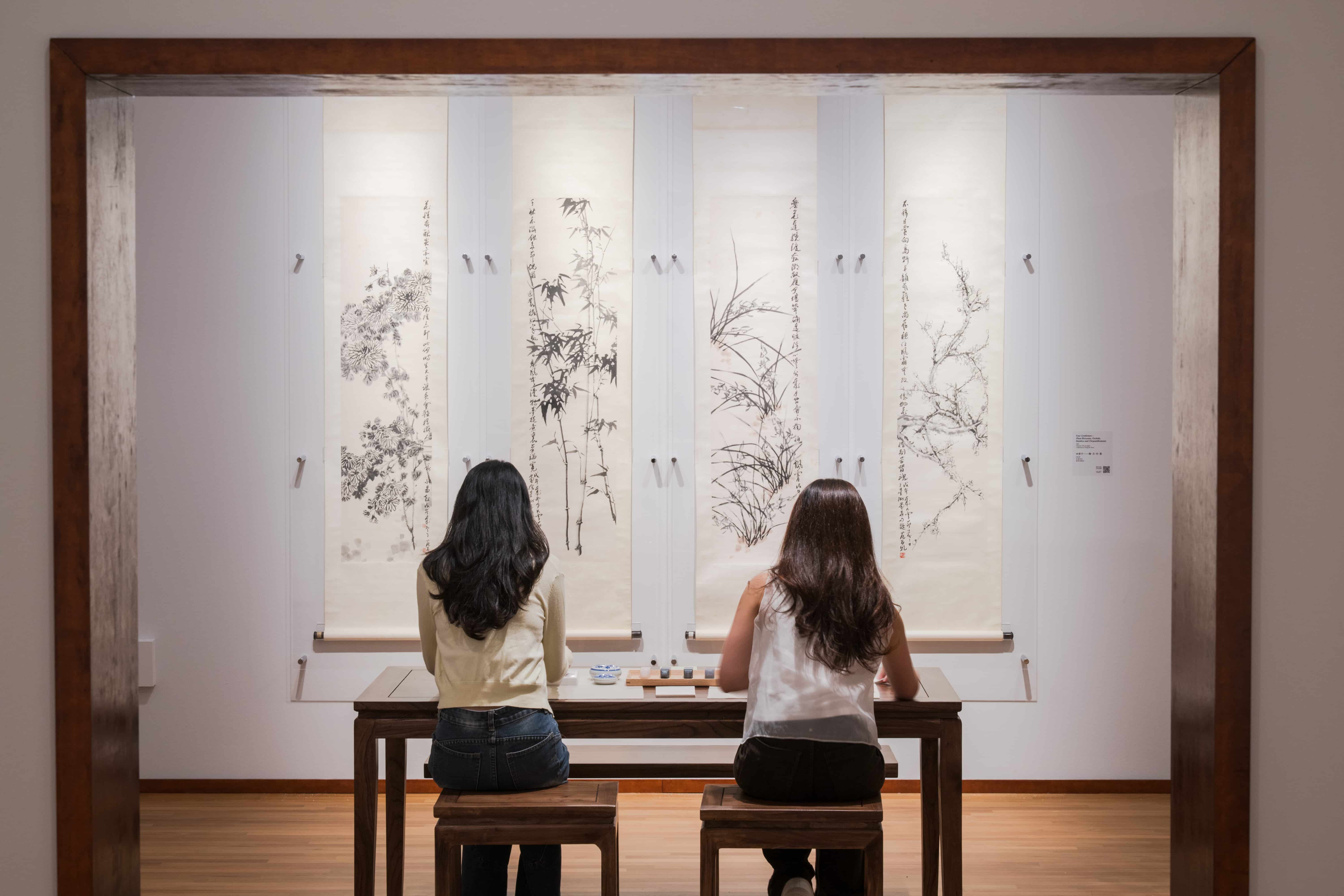
Visitors can also step into a dedicated scholar-artist room that offers insight into the contemplative world of the literati and the practice of self-cultivation. The space also features a stamp station with a contemporary twist, where visitors can create their own composition using seals inspired by motifs from Fan’s works, including mynahs, ducks, cockerels, and a coffee flask, and take home their creation.
The exhibition's concluding section, Tending the Garden, explores Fan’s lifelong commitment to nurturing a generation of artists through his teaching, as well as philanthropic work and contributions to the community. The section features works by Fan’s students, including Cultural Medallion recipient Nai Swee Leng, alongside video interviews with Nai and Tan Oe Pang that offer insights into Fan’s legacy as an educator and mentor. The students’ works show how they built on a shared foundation in traditional Chinese ink painting to develop distinct artistic approaches.
Fan Chang Tien: Rhythm of the Southern Brush at National Gallery Singapore
Fan Chang Tien: Rhythm of the Southern Brush runs from 16 October 2026 to 31 January 2027 at the Wu Guanzhong Gallery at National Gallery Singapore. A General Admission pass is required, and entry is free for Singaporeans and Permanent Residents. For more information, please refer to the attached annexes or visit https://www.nationalgallery.sg/FanChangTien.
Media assets are available via this link.
- Annex A: Fan Chang Tien: Rhythm of the Southern Brush Sections and Key Artworks
- Annex B: Fan Chang Tien: Rhythm of the Southern Brush Curatorial Programmes
– END –