3 Artworks to See at National Gallery Singapore
Discover some visitor-favourite works from National Gallery Singapore’s collections and explore Singapore and Southeast Asian art through three much-loved highlights.
5 mins read
Share
Summary
- Discover visitor‑favourite artworks at National Gallery Singapore, highlighting artwork from Singaporean and Southeast Asia.
- Perfect for first-time visitors looking for must-see experiences in the Gallery.
- Artist and Model by Liu Kang (1954) – a pioneer Nanyang artwork exploring the blend of Eastern and Western artistic traditions; on view at City Hall Wing, Level 2.
- National Language Class by Chua Mia Tee (1959) – one of the most recognisable works in the collection, depicting a pivotal moment in Singapore's post-war cultural history; on view at City Hall Wing, Level 2.
- Red Morning Glory and Rotten Gun by Pratuang Emjaroen (1976) – currently not on view while Between Declarations and Dreams is temporarily closed until October 2027.
Not sure where to start? These three works are a good place. Spanning the 19th century to the present, the Gallery's permanent collection is vast — but certain pieces stop visitors in their tracks every time.
The National Gallery Singapore’s permanent collections feature a rich range of artistic voices from Singapore and Southeast Asia. While every visit reveals something different, certain artworks consistently capture visitors’ attention. Whether you’re an art enthusiast or visiting for the first time, these three visitor-favourite artworks offer an accessible way into the region’s artistic stories — from early masterpieces to contemporary works that continue to spark curiosity and conversation.
Artist and Model by Liu Kang
.jpg)
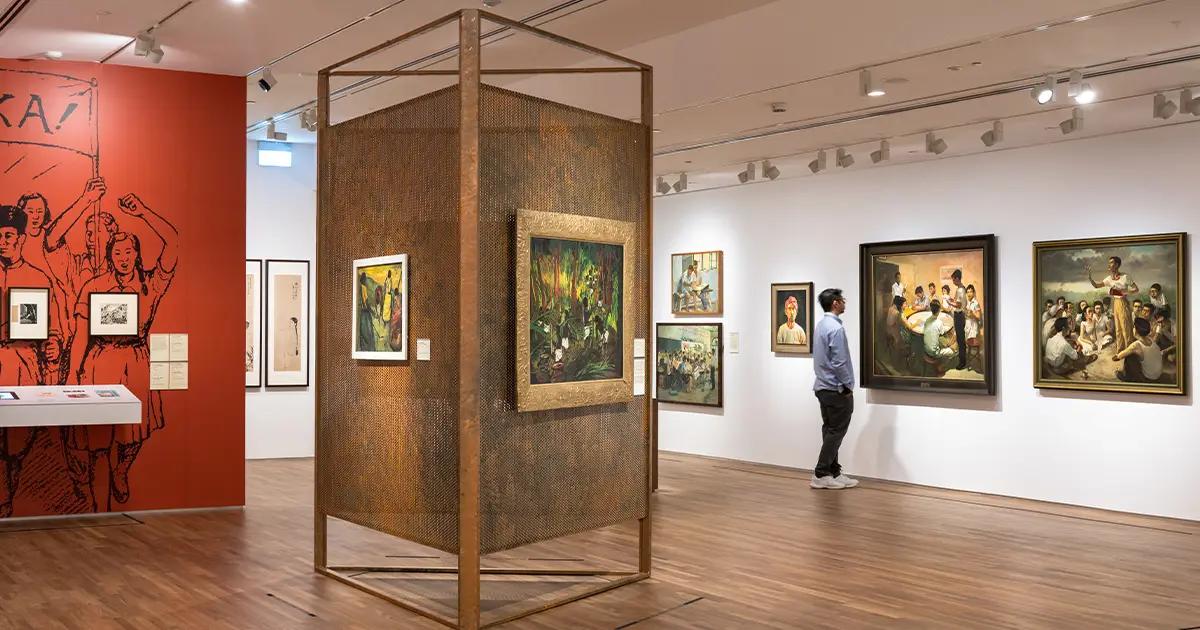
Where to see it: City Hall Wing, Level 2, DBS Singapore Gallery 1
A pioneer of the Nanyang art movement, Liu Kang captures a quiet, thoughtful moment in Artist and Model. The painting shows fellow artist Chen Wen Hsi sketching a model during their travels in Indonesia, revealing the dynamic between artist, subject, and setting.
In this artwork, Liu Kang employs bold outlines and solid colours reminiscent of batik, reflecting his experiments with the technique and his vision of blending Eastern and Western artistic traditions – a distinctive visual language that continues to influence Singapore’s art landscape today.
National Language Class by Chua Mia Tee
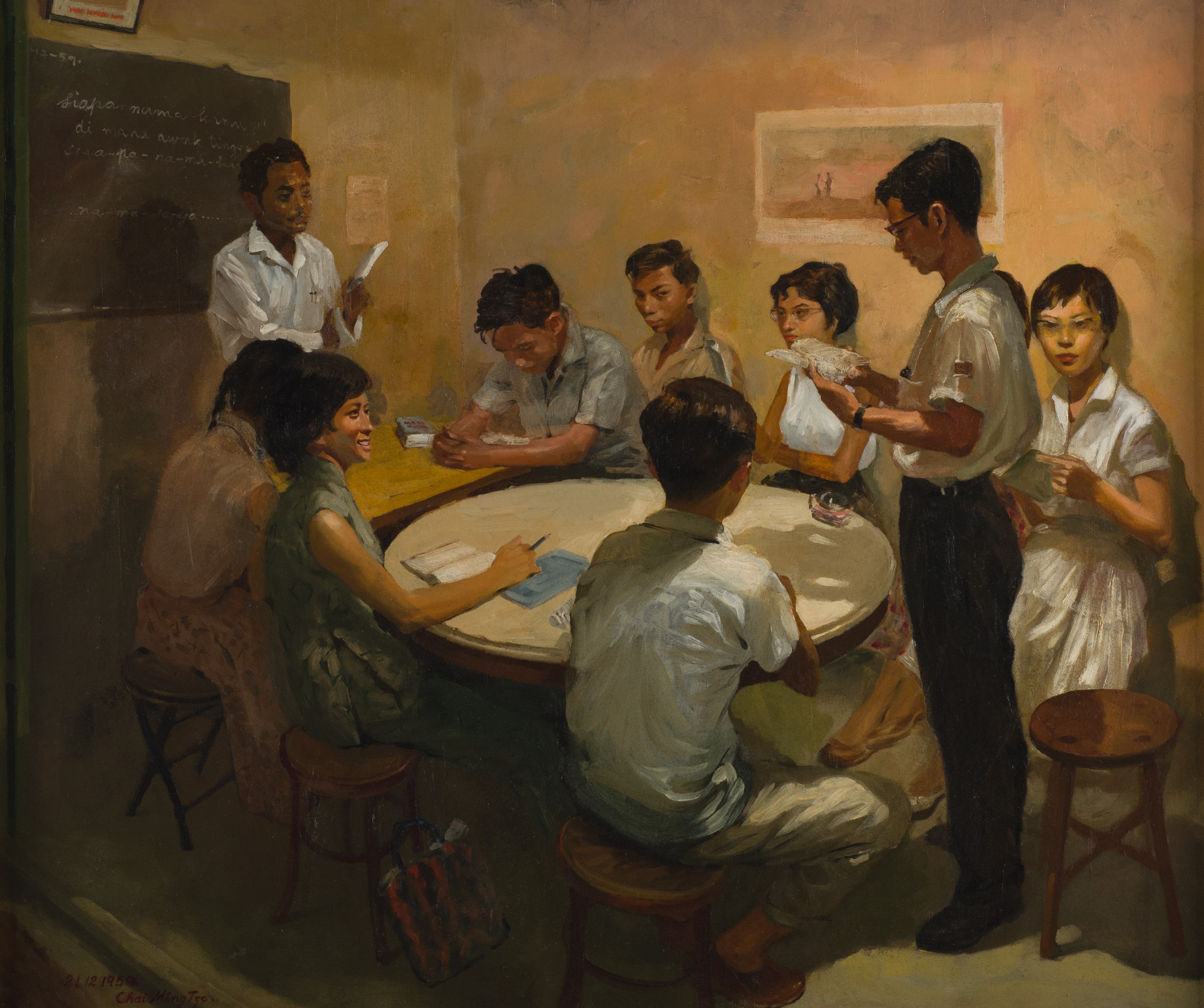
Where to see it: City Hall Wing, Level 2, DBS Singapore Gallery 1
One of the most recognisable works in National Gallery Singapore, Chua Mia Tee’s National Language Class captures a pivotal moment in the nation’s cultural history. The painting reflects post-war hopes, identity-building, and the everyday people shaping Singapore’s future. The painting depicts a Malay language lesson, with the blackboard asking “Siapa nama kamu?” (“What is your name?”). In a newly independent nation, language played a key role in shaping identity and fostering unity.
Chua Mia Tee was a leading figure in Singapore’s social realist art movement, co-founding the Equator Art Society in 1956. His work often highlighted the lives of the working class and the overlooked, using art as a tool to reflect social realities. This piece, with its detailed, empathetic portrayal of students during post-war times continues to resonate with visitors across generations.
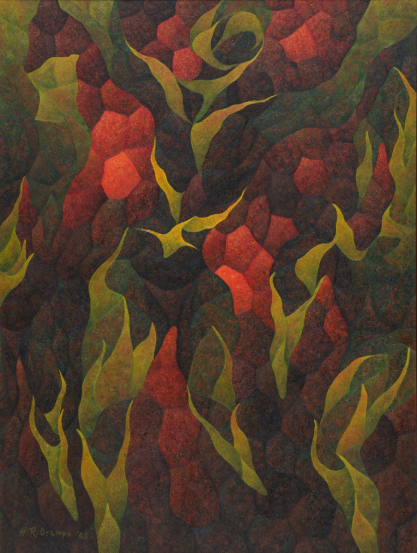
Red Morning Glory and Rotten Gun by Pratuang Emjaroen
.jpg)
Where to see it: This artwork is currently not on view
This artwork is currently not on view as Between Declarations and Dreams: Art of Southeast Asia since the 19th Century has ended. The UOB Southeast Asia Gallery is temporarily closed and will reopen in late 2027 with a new exhibition offering fresh perspectives on art from Southeast Asia. While the exhibition will not be on view during this period, visitors can continue to encounter significant works from the National Collection across the Gallery’s other exhibitions. You can also explore the exhibition through our audio guide.
Thai artist Pratuang Emjaroen delivers a haunting, emotionally charged scene in Red Morning Glory and Rotten Gun. Filled with decaying rifles, skulls, and a crying Buddha, the painting is his response to the violent crackdown on student protests at Thammasat University in 1976.
The surreal imagery — from limp weapons to a lone glowing flower — reflects both devastation and resilience. Pratuang’s work reminds us of the profound ways in which artists confront history and politics, translating complex events into unforgettable visual narratives. Using this dreamlike landscape to comment on political unrest and human suffering, the artist creates a powerful statement that lingers with viewers long after they leave the gallery.
See It With a Guide
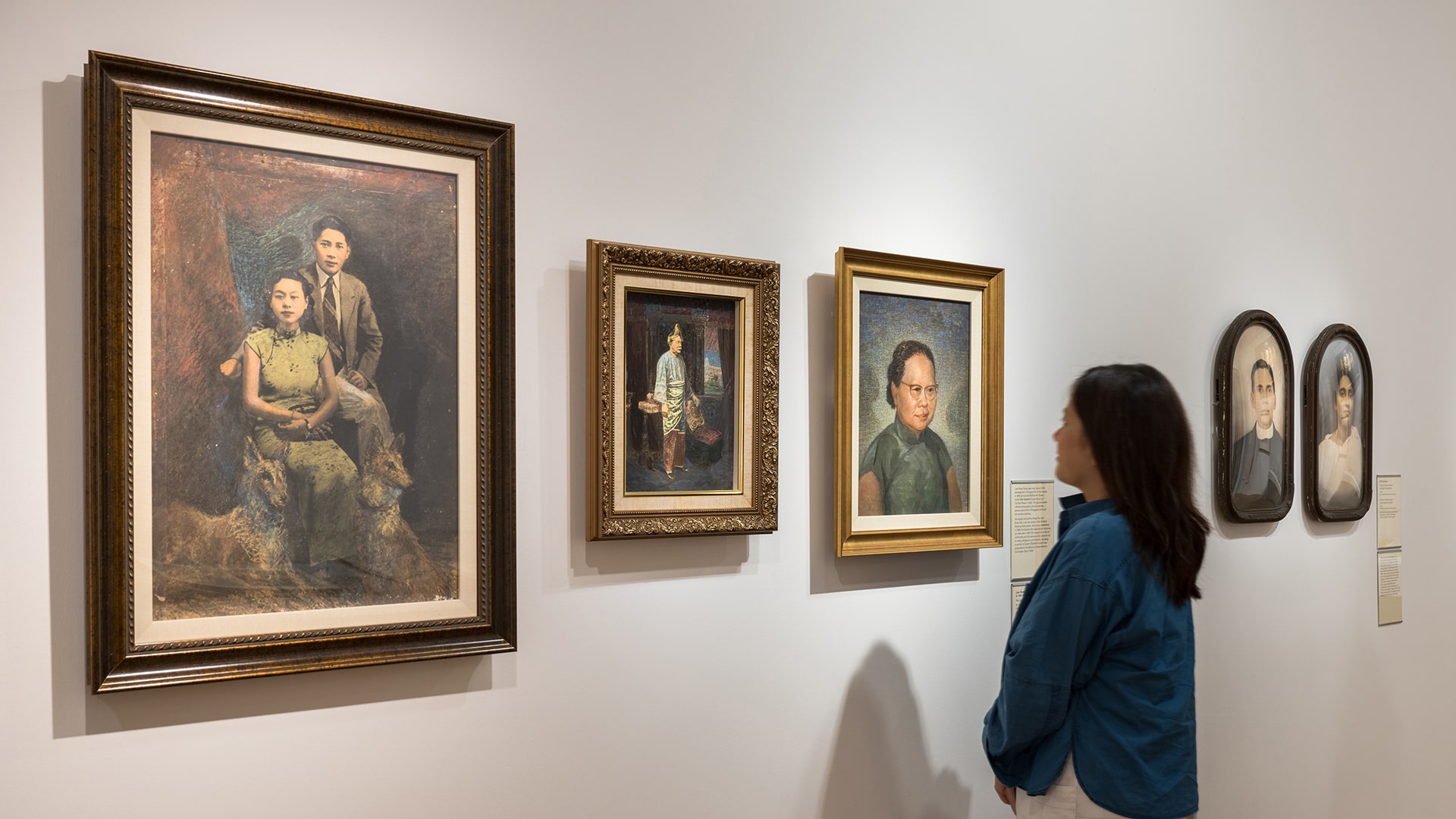
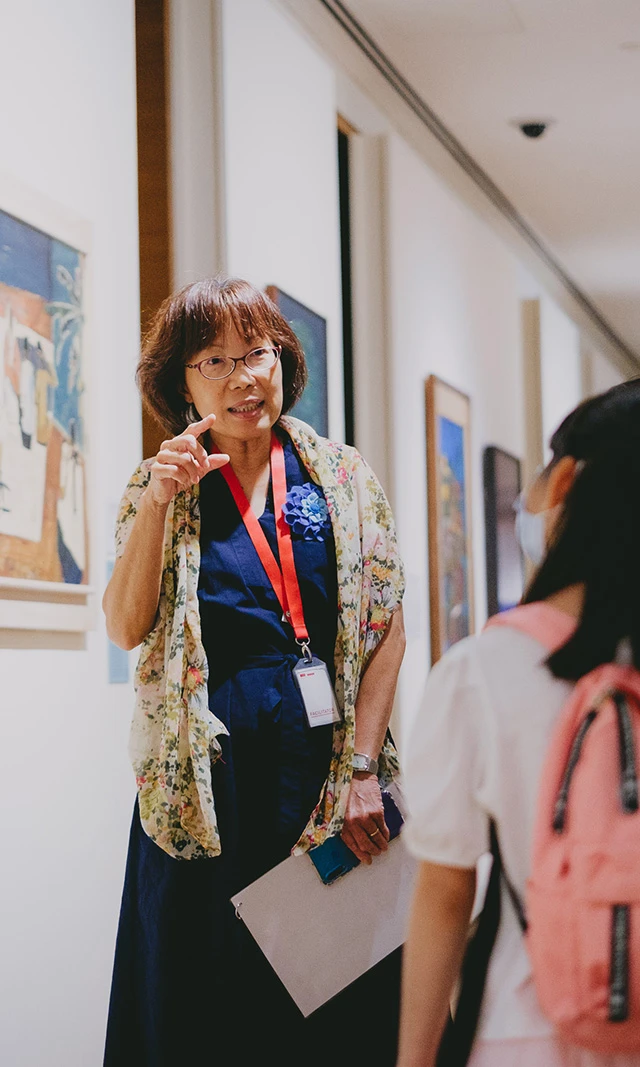
Want someone to bring these works to life? Join these free guided tours and see the artworks from a different perspective.
The Highlights of the Gallery tour covers key architectural features and selected masterpieces from the permanent collection – a broad, accessible introduction to the Gallery running approximately 1 hour 30 minutes. English tours run Mon–Fri at 11am and Mon–Wed at 2pm; Mandarin tours run Sat–Sun at 11am. Register at the Visitor Services Counter or Tours & Programmes Counter at least 30 minutes before.
For a more focused look at Singapore art specifically, the DBS Singapore Gallery Highlights tour explores iconic works from the National Collection – including works by Liu Kang and Chua Mia Tee featured in this article. Both tours are free with an admission pass, on a first-come, first-served basis.
Ticketing and visit information
General admission to see these highlights is free for Singaporeans and PRs, while international visitors can purchase tickets for SG$20. For the full experience, consider joining as a Gallery Insider – members enjoy unlimited access to all ongoing exhibitions, exclusive previews, and special events.