

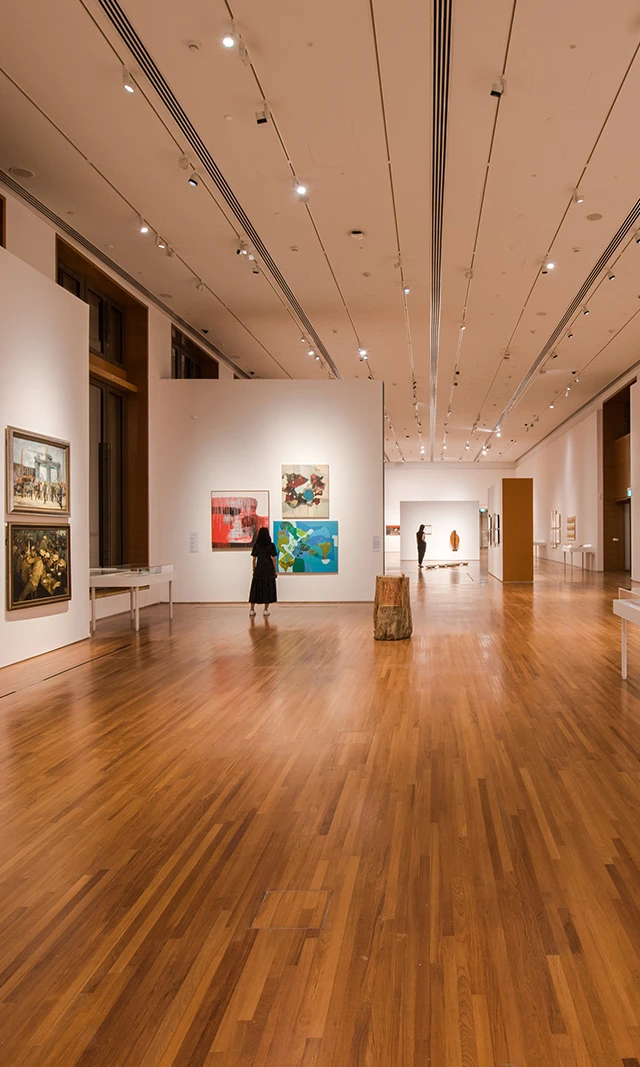
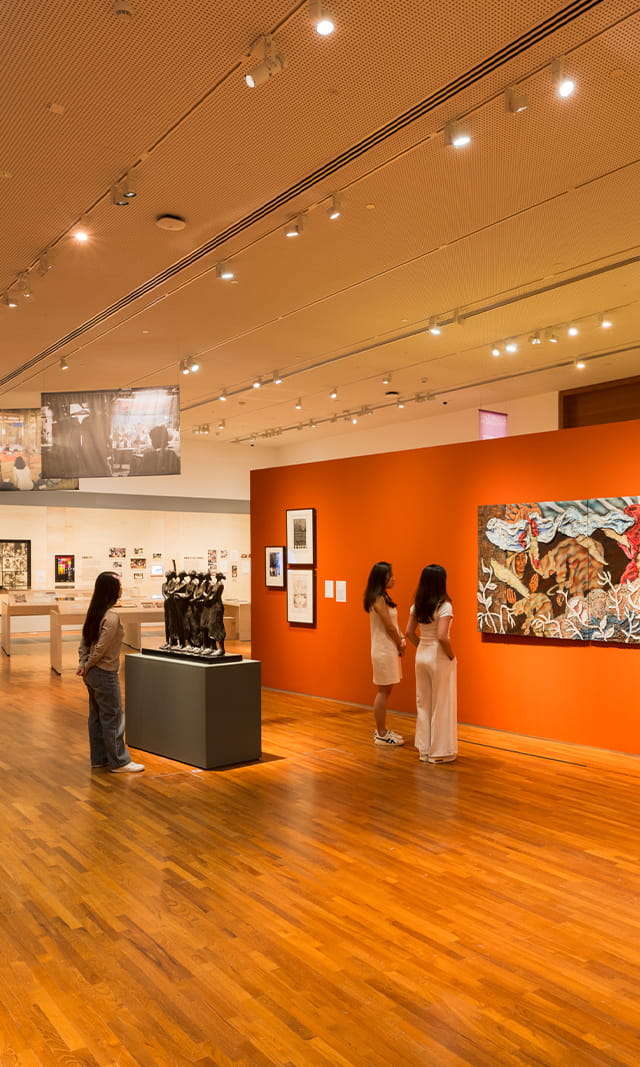
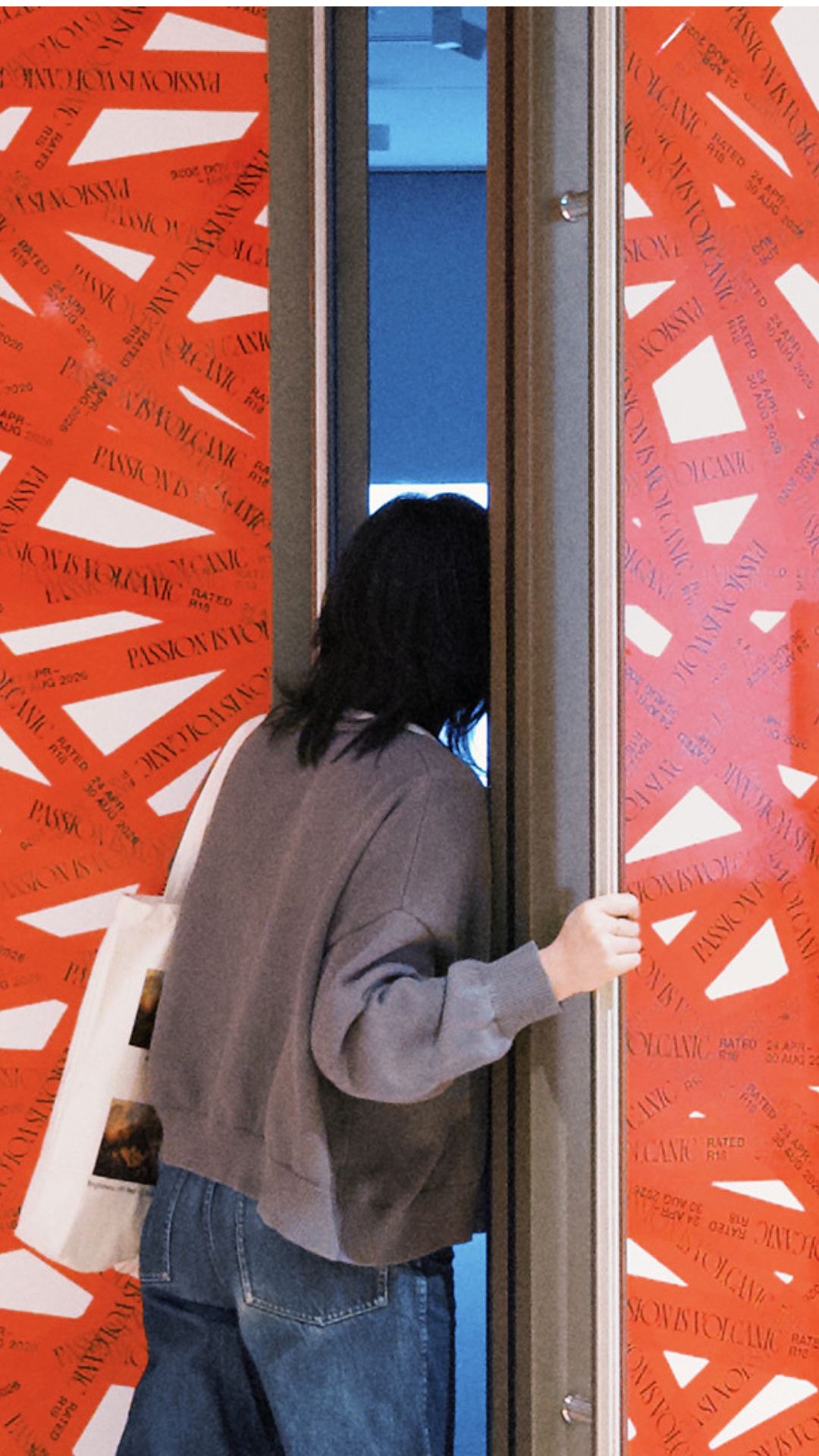

Fear No Power: Women Imagining Otherwise highlights the lives and practices of five artists from Southeast Asia for whom art, life, kinship and community are inseparable. Featuring Amanda Heng, Dolorosa Sinaga, Imelda Cajipe Endaya, Nirmala Dutt, and Phaptawan Suwannakudt, the exhibition honours their multi-faceted roles – not only as artists, but also as educators, writers or community organisers.
-
When: 9 Jan – 15 Nov 2026 - Suitable For: All
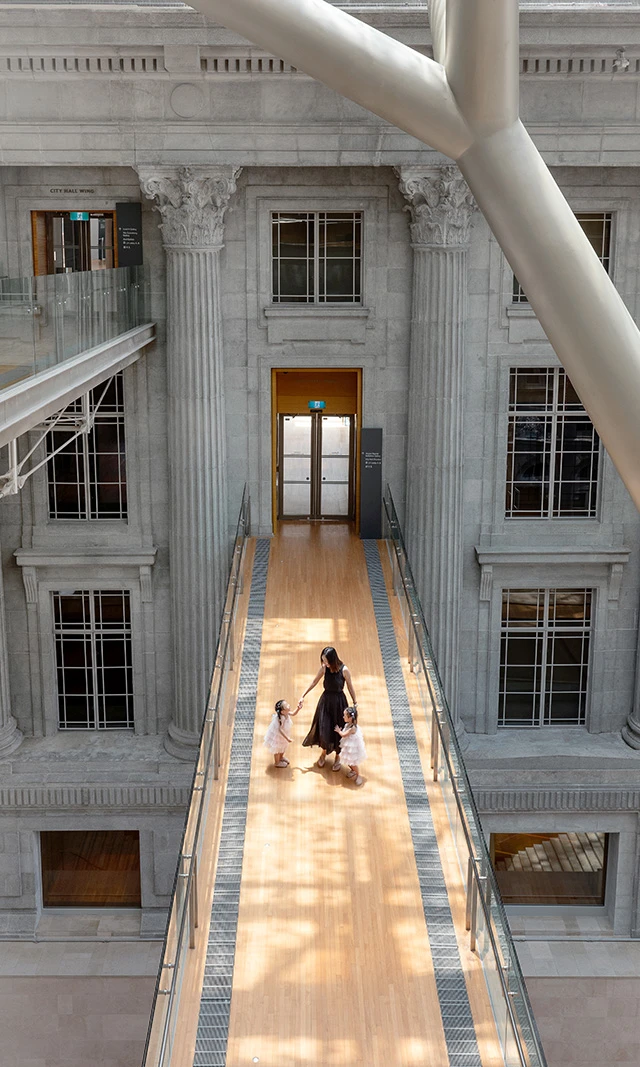
- Where: City Hall Wing, Level B1, The Ngee Ann Kongsi Concourse Gallery
- Ticket Information: Free admission
Five fearless women. One unified vision of art & empowerment from Southeast Asia.
Featuring works from the 1960s to the 2020s – decades marked by decolonisation, developmentalism, Cold War tensions, and sweeping social change – the exhibition illuminates how these artists forged paths that were as personal as they were political.
Their practices reflect their enduring commitment to conceiving more equitable worlds through personal, political, and collective expression. Through diverse and situated strategies, these artists refused the containment of labels and a one-size-fits-all feminism, offering nuanced insights into the gendered dynamics of power from their perspectives.
Featured artworks
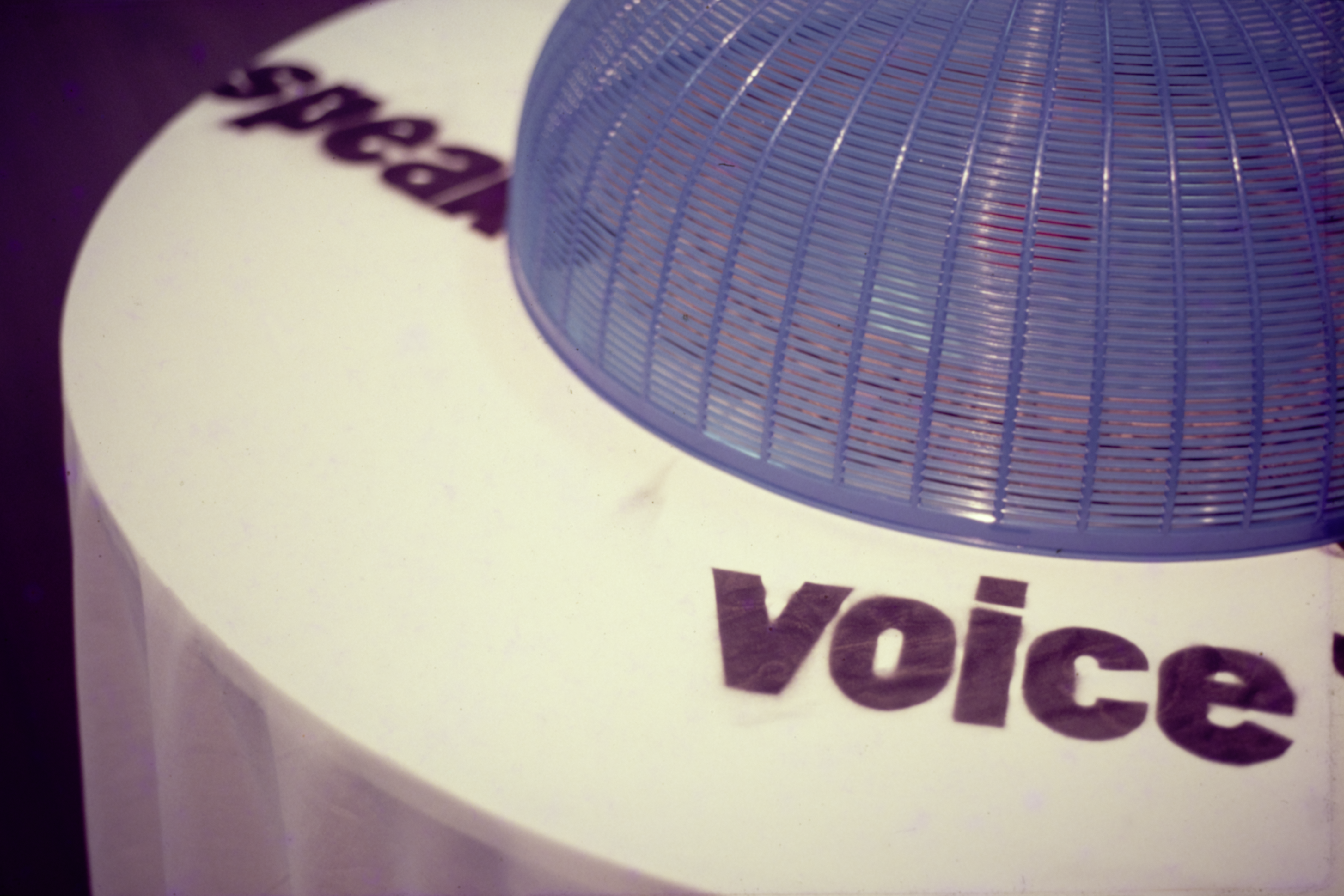
Detail of She and Her Dishcover
Amanda Heng
1991. Table, tablecloth, mirror, dishcover, moon blocks and spray-paint, 96 × 105 × 105 cm. Collection of National Gallery Singapore. Digitised by National Gallery Singapore Library & Archive with kind permission from Amanda Heng. © Amanda Heng.
1991. Table, tablecloth, mirror, dishcover, moon blocks and spray-paint, 96 × 105 × 105 cm. Collection of National Gallery Singapore. Digitised by National Gallery Singapore Library & Archive with kind permission from Amanda Heng. © Amanda Heng.
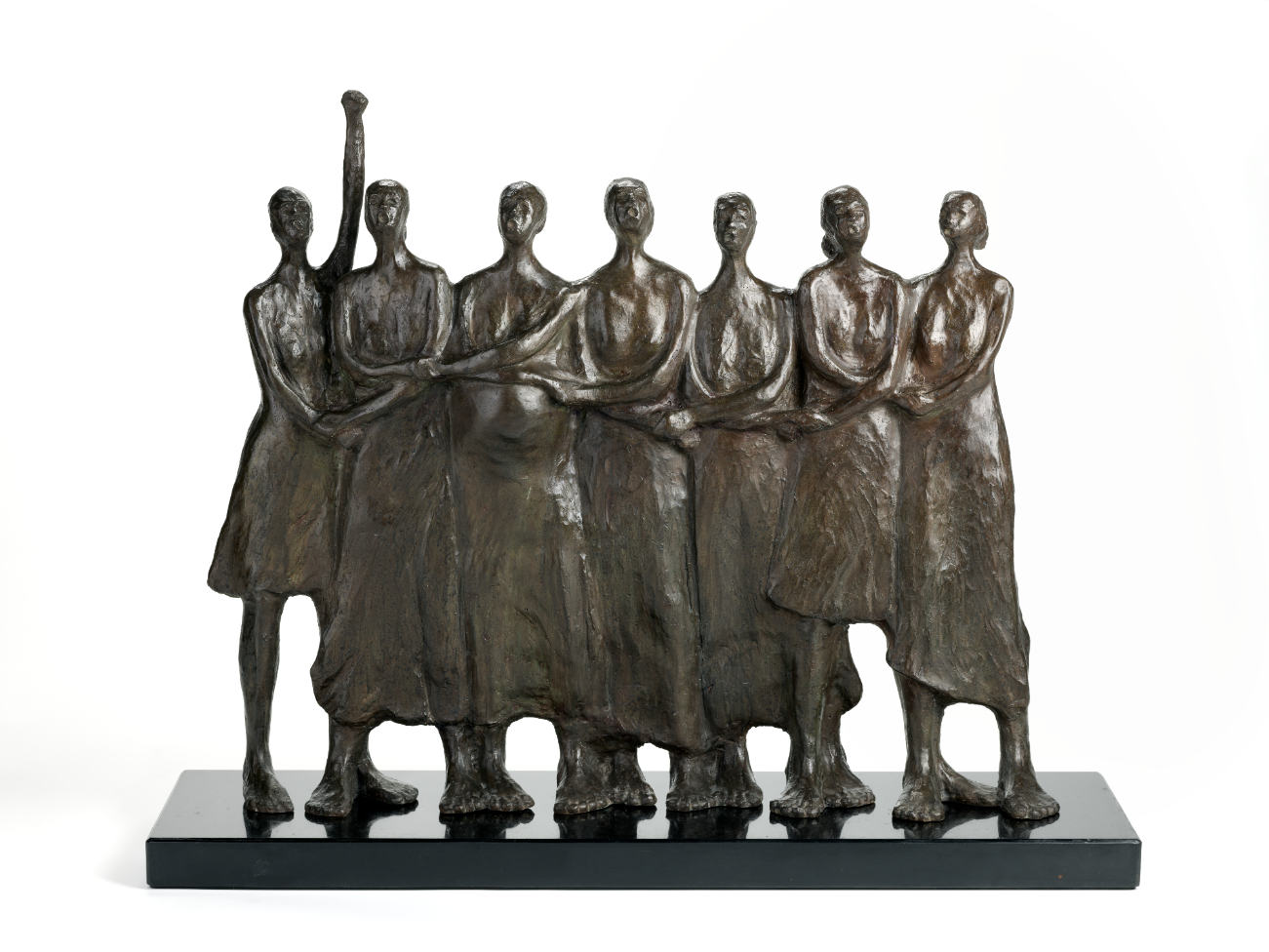
Solidarity
Dolorosa Sinaga
2000/2025, open edition. Bronze, 78.5 × 96.5 × 20 cm, base: 5.5 × 106 × 32.5 cm. Collection of National Gallery Singapore. © Dolorosa Sinaga.
2000/2025, open edition. Bronze, 78.5 × 96.5 × 20 cm, base: 5.5 × 106 × 32.5 cm. Collection of National Gallery Singapore. © Dolorosa Sinaga.
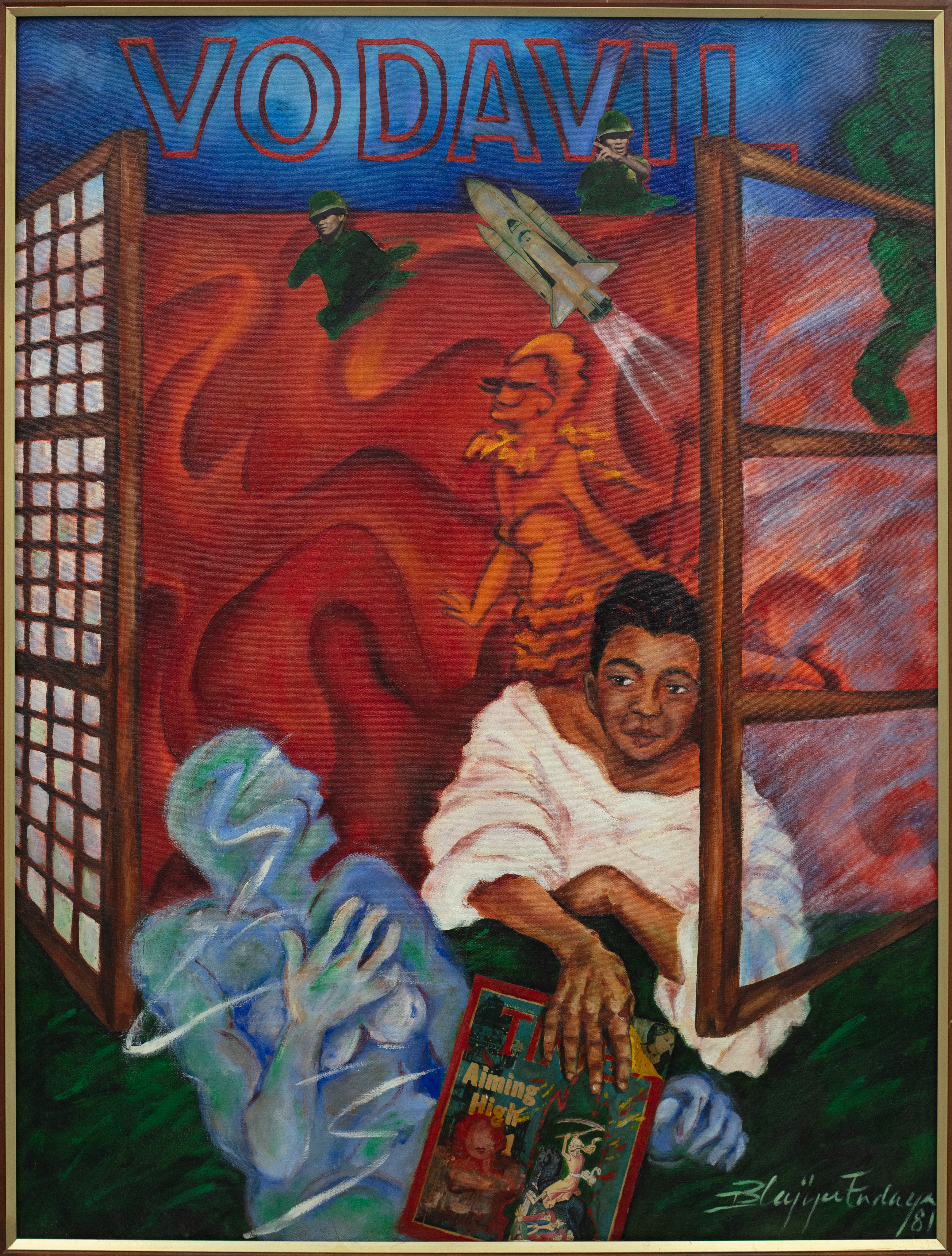
Buhay ay Vodavil Komiks (Life is a Vaudeville Comic Book)
Imelda Cajipe Endaya
1981. Oil and collage on canvas, 121 × 90 cm. Collection of National Gallery Singapore. © Imelda Cajipe Endaya.
1981. Oil and collage on canvas, 121 × 90 cm. Collection of National Gallery Singapore. © Imelda Cajipe Endaya.
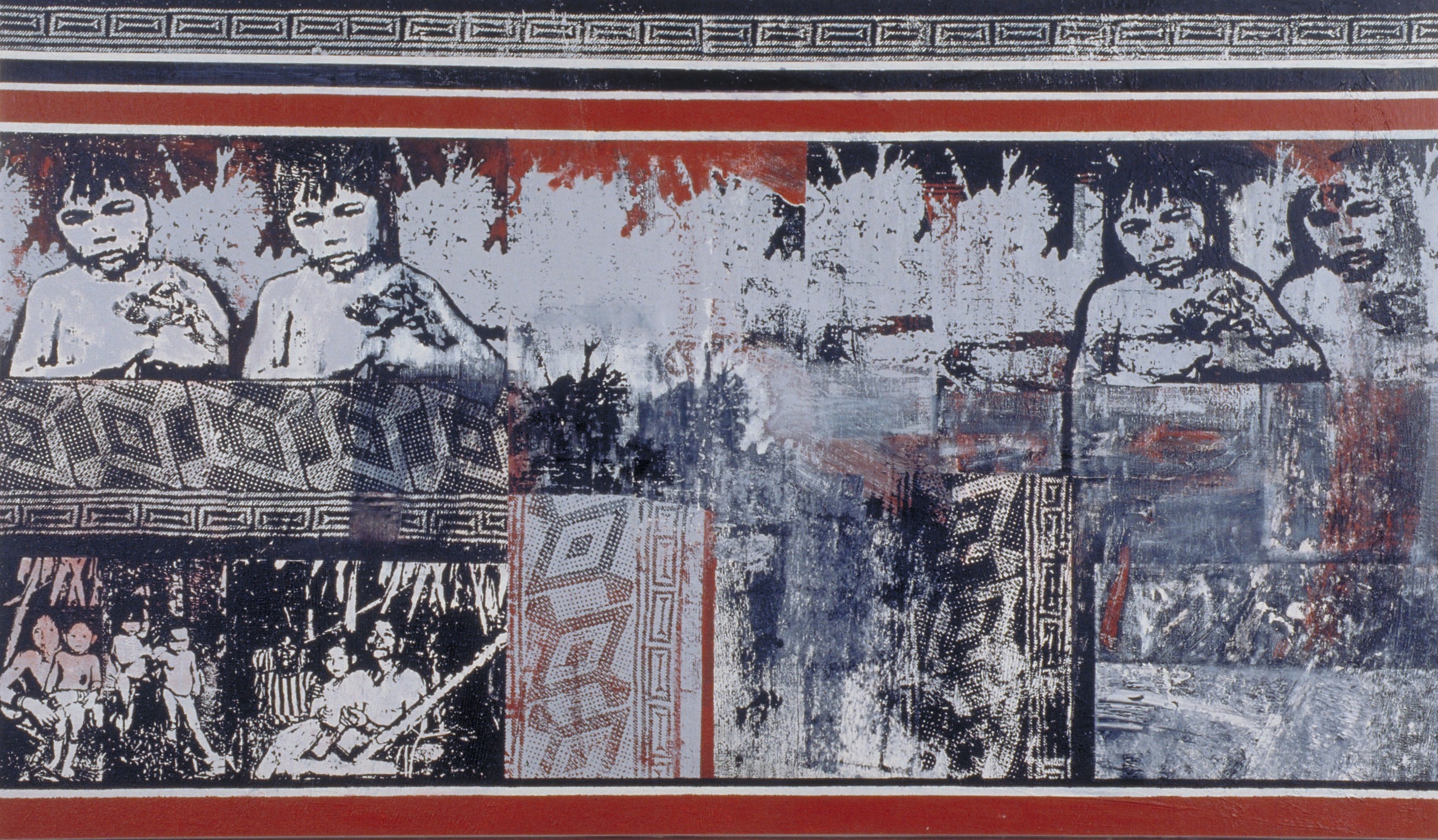
Do Not Log Carelessly Lest Misfortune Befall You
Nirmala Dutt
1990. Acrylic on canvas, 121 × 205 cm. Collection of Singapore Art Museum.
1990. Acrylic on canvas, 121 × 205 cm. Collection of Singapore Art Museum.
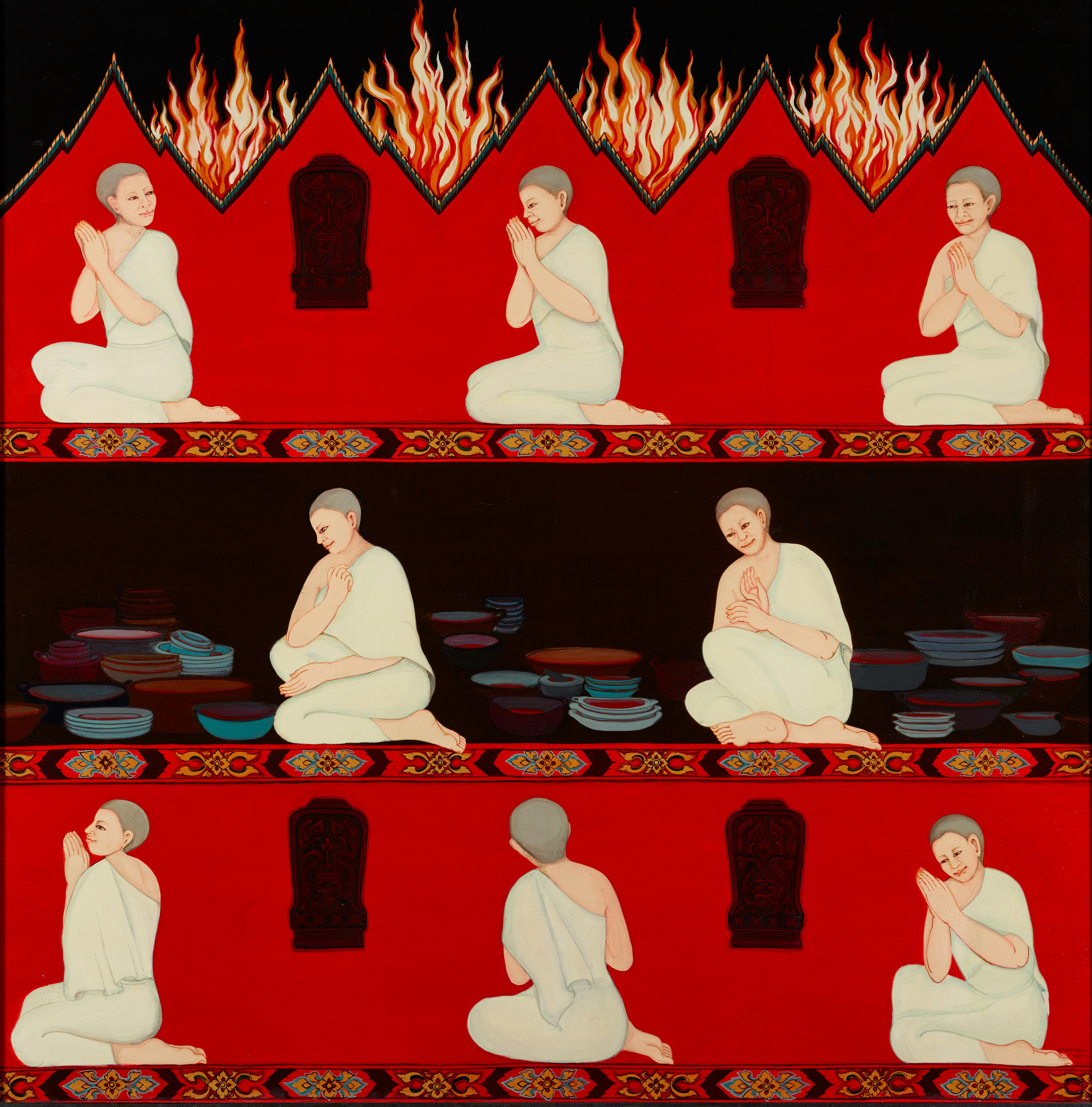
My Mother Was a Nun I
Phaptawan Suwannakudt
1998. Acrylic on canvas, 121 × 120 cm. Collection of National Gallery Singapore.
1998. Acrylic on canvas, 121 × 120 cm. Collection of National Gallery Singapore.
The Artists
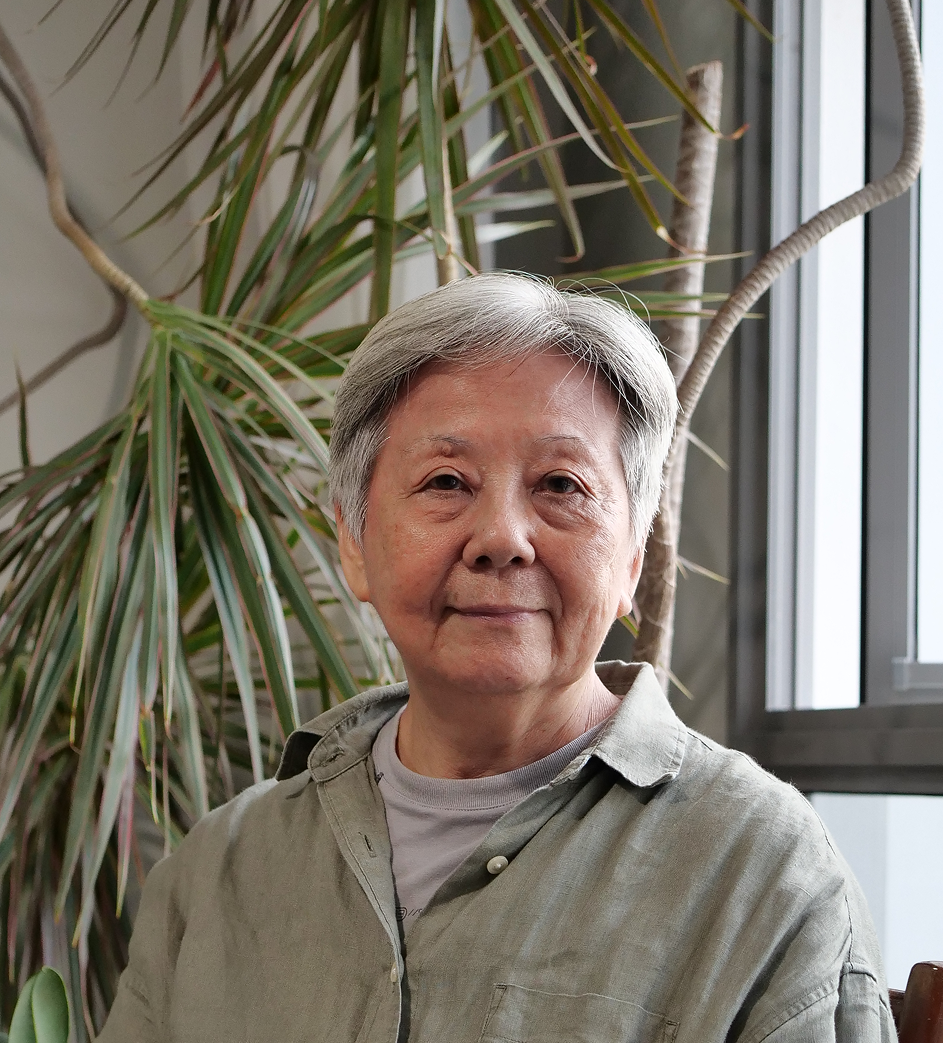
Amanda Heng
Amanda Heng (b. 1951, Singapore) turned to artmaking in her late 30s, leaving her job as a tax officer to study printmaking at LASALLE College of the Arts in 1986, before co-founding The Artists Village in 1988. She was among the first in Singapore to advance critical ideas on gender roles and identity politics not only through her art, but also by organising and participating in exhibitions on women’s issues, engaging in art education on gender politics and initiating the first women’s art collective in Singapore. Impacted by Singapore’s shifting language and cultural policies from the 1960s, Heng’s performance and process-based practice is, for her, a means of responding meaningfully to prevailing social norms and current events while fostering collaboration and exchange with her audiences. Today, her interdisciplinary practice is grounded in broader concerns with humanity, intercultural exchanges and communication in urban conditions. She is representing Singapore at the Venice Biennale in 2026.
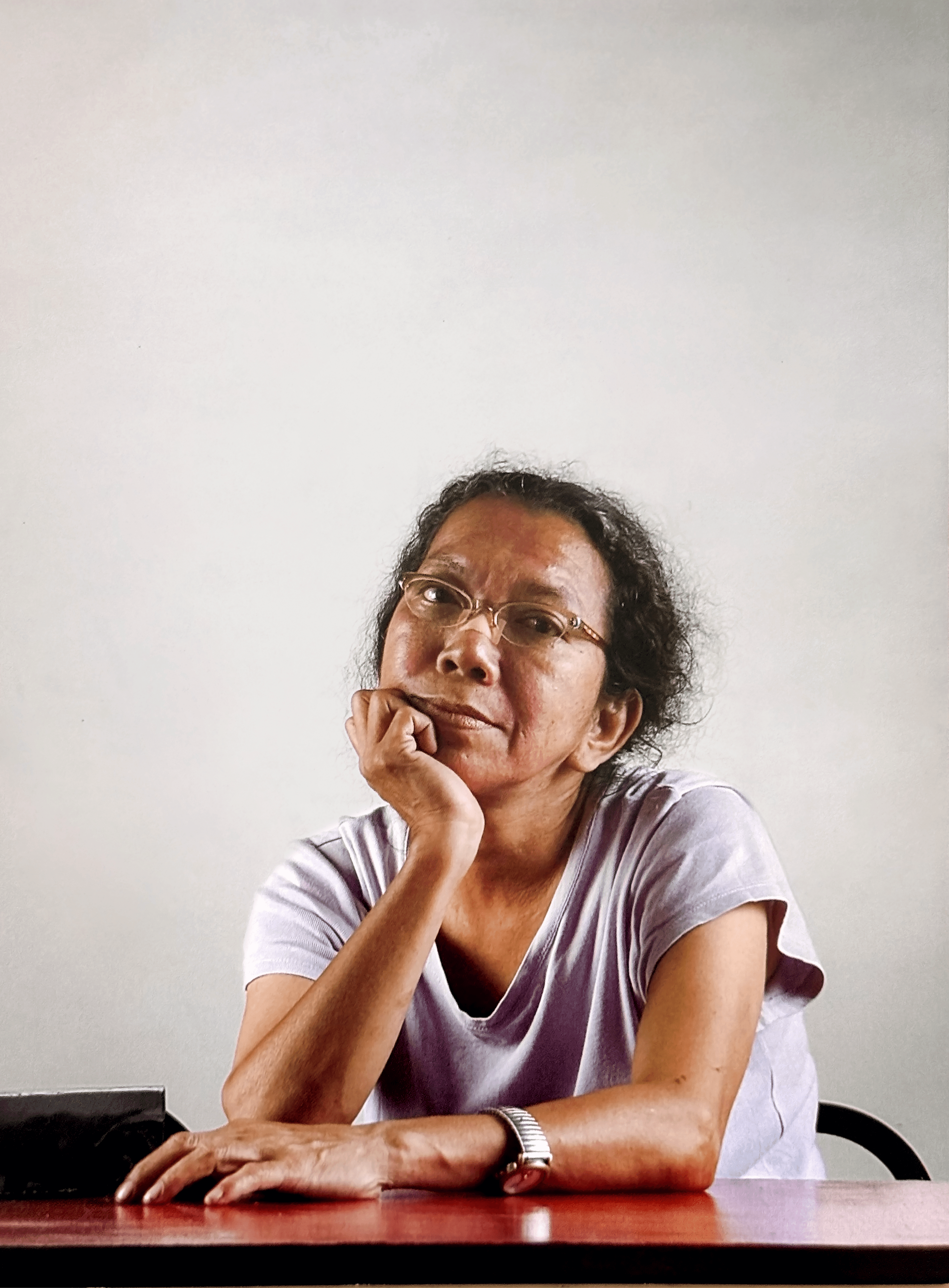
Dolorosa Sinaga
Dolorosa Sinaga (b. 1952, Indonesia) is an artist, human rights activist and art educator, for whom these roles are deeply intertwined. Trained in sculpture at the Jakarta Institute of Arts (IKJ) in the early 1970s and later at Central Saint Martins in London, she returned to teach at the IKJ in 1983 and eventually served as Dean. The years leading up to the fall of Indonesia’s New Order regime in 1998 was a critical moment pivotal time of political awakening for Sinaga. Despite an expanding global economy and growing opportunities for socio-economic mobility in the 1990s, Sinaga observed that women remained systematically disadvantaged and excluded. Sinaga declared her commitment to amplifying women’s voices through her art. Her sculptures have since dealt with themes of historical memory, social injustices and women’s struggles. Sinaga also established Somalaing Art Studio for artmaking, mentorship and collaborations, and the Beranda Rakyat Garuda (the People’s Veranda of Garuda), a space for dialogues on art, politics and culture.
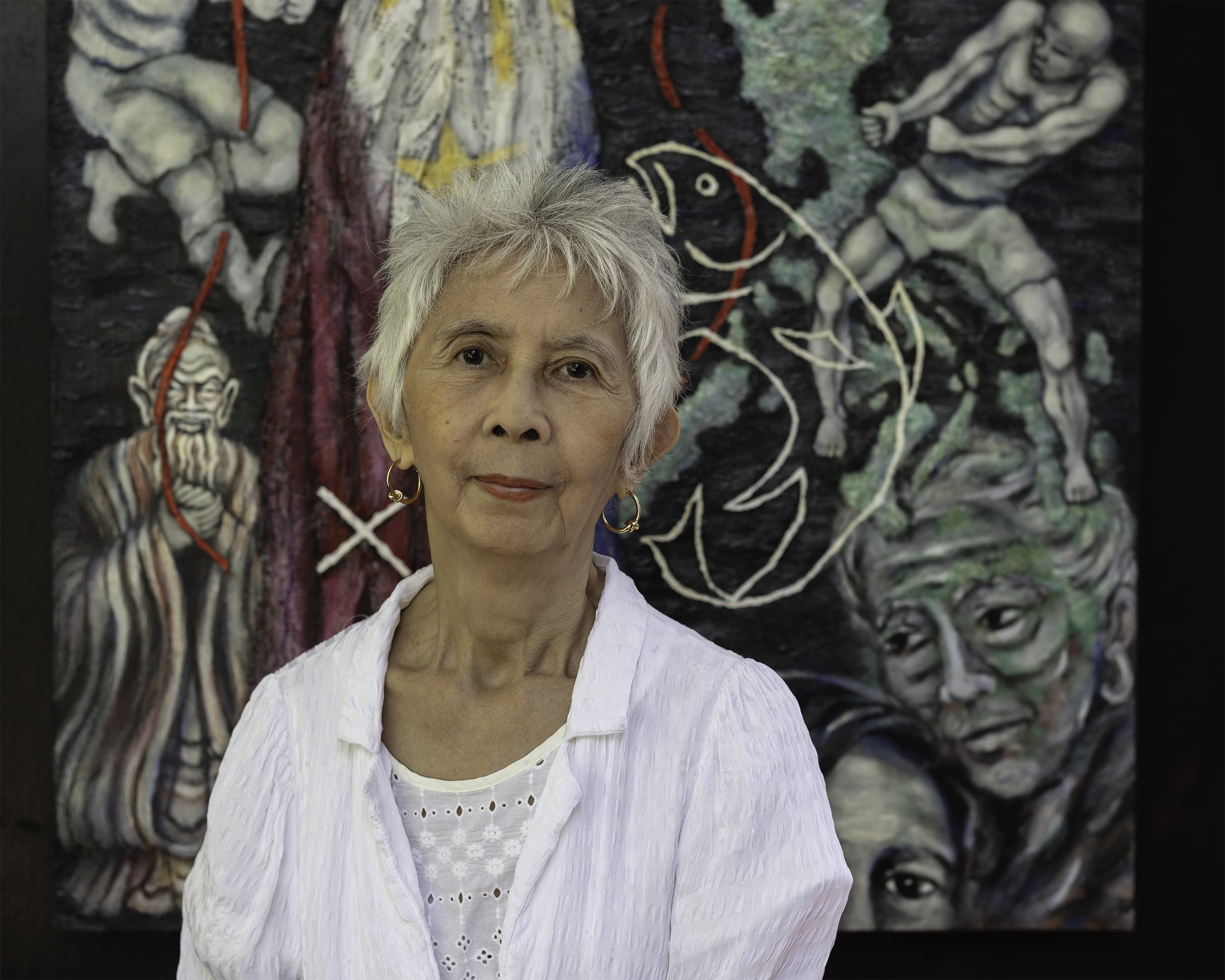
Imelda Cajipe Endaya
Imelda Cajipe Endaya (b. 1949, Philippines) began her artistic career in the late 1960s, during a period of ferment in the Philippines under the Marcos regime. In the 1970s and 1980s, confronted with mounting social injustices, Endaya channelled what she described as “rage – the rage inside and the rage all around” into art. Combining indigenous and new materials, she forged a socially-engaged practice that highlights the oppressive conditions faced by marginalised communities. The political changes in the 1980s – following the overthrow of Marcos in 1986 and the brief climate of optimism that ensued – gave Endaya and her peers time and space to consider their positions as women and the empowerment that came with collective action. She co-founded KASIBULAN in 1987, the longest running feminist art collective in Southeast Asia. Beyond her studio, she is also an educator, organiser and writer who founded PANANAW, the first major visual arts journal on Philippine art.
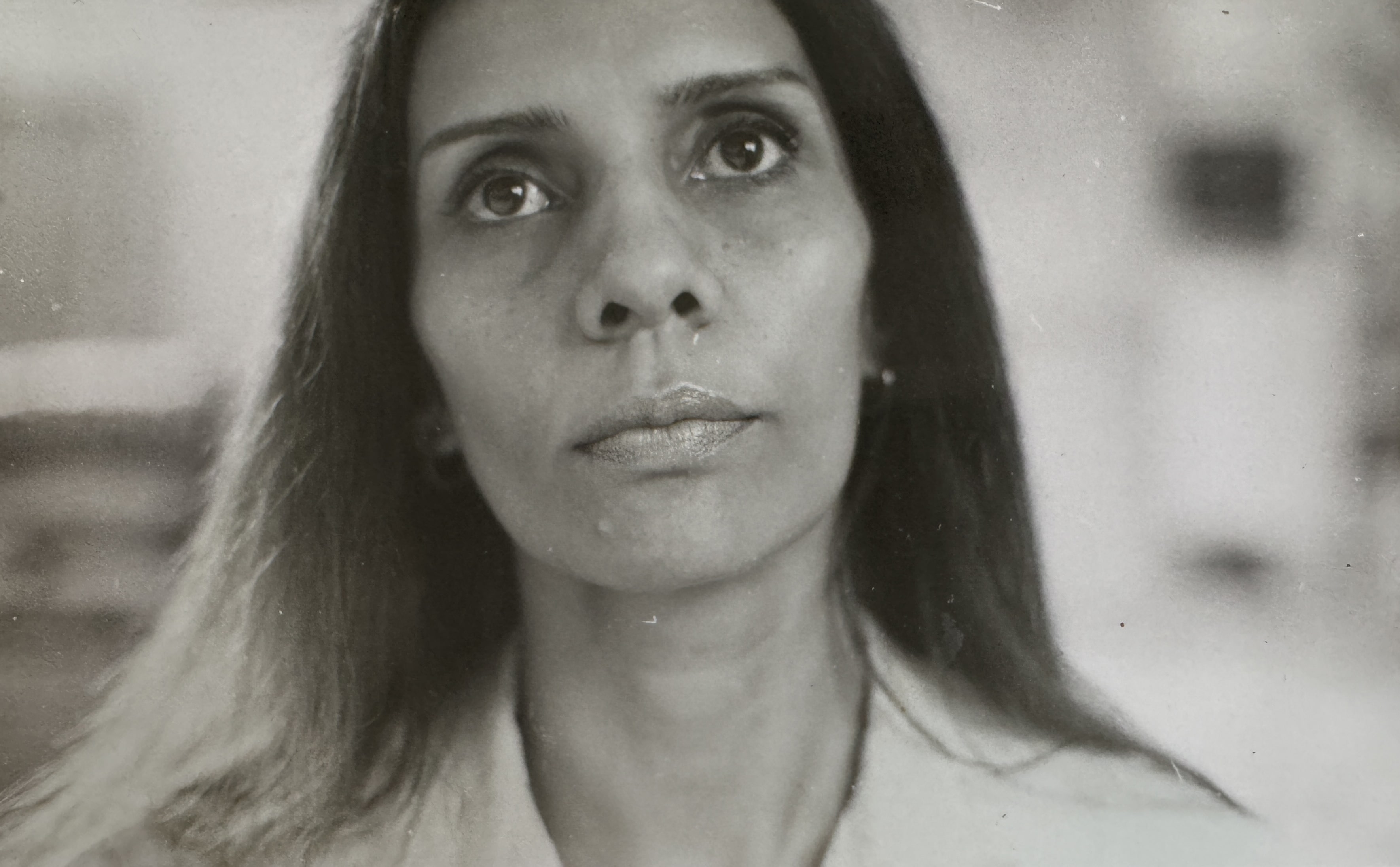
Nirmala Dutt
Nirmala Dutt gained prominence in the 1970s as a fearless voice committed to making art that raised awareness of the social, political, and environmental struggles in Malaysia and around the world. She dismissed the false binaries of “political” and “pure art,” raising critical questions about form and context at a time when abstract expressionism was dominant in the Malaysian artworld. Shunning labels, Dutt maintained that she was “an artist first and foremost – not necessarily just a woman artist or feminist artist or political artist.” Across painting, collage, photography, and installation, she critiqued war, violence, environmental destruction, and the lived struggles of women, children, and indigenous groups, affirming the potential of art to speak truth to power.
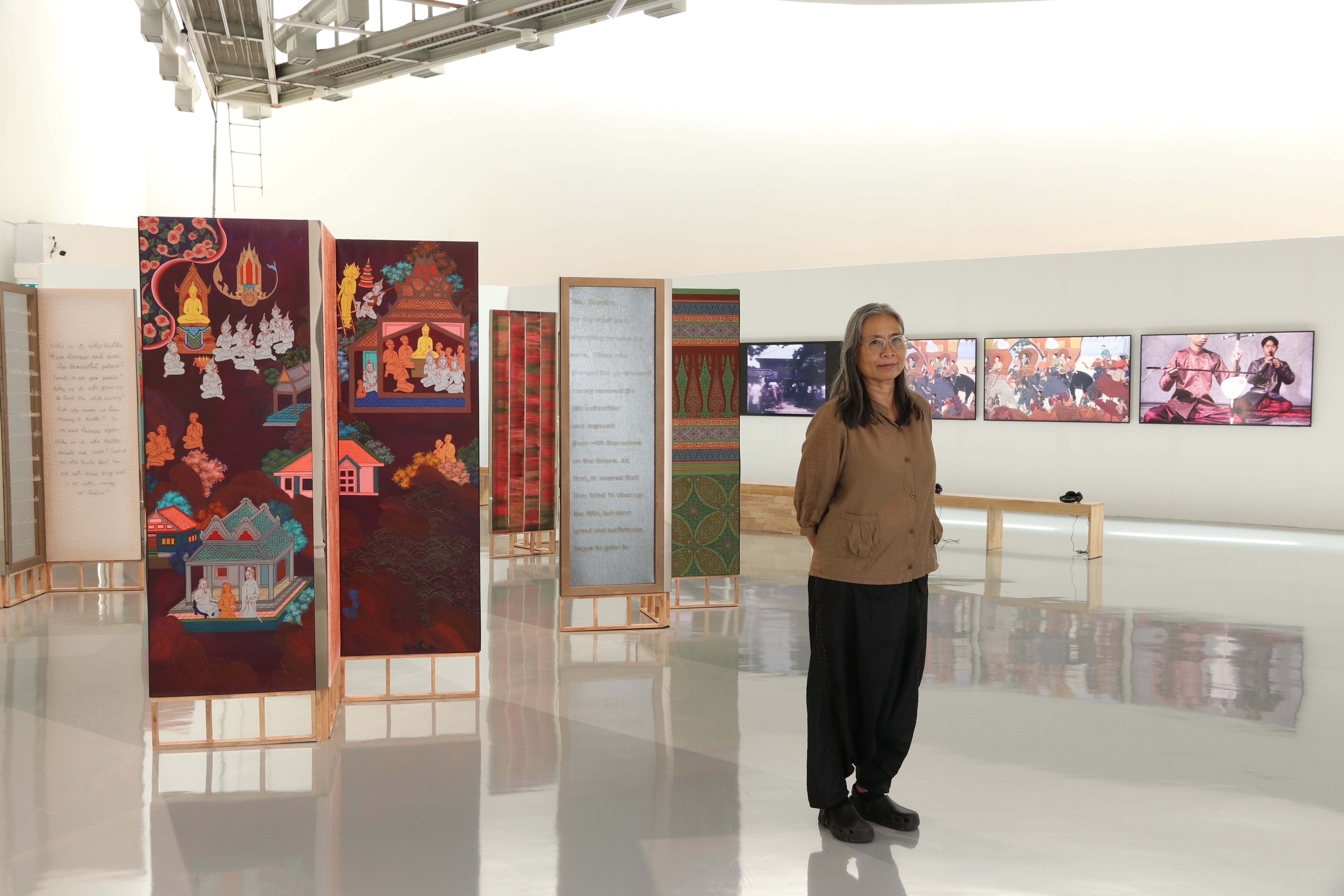
Phaptawan Suwannakudt
Phaptawan Suwannakudt (b. 1959, Thailand) describes herself as having been born into the environment of temple painting – a graphic storytelling form for Thai Buddhist narratives widely practised for centuries – being the daughter of respected master mural painter Paiboon Suwannakudt (Tan Kudt). Following her father’s death in 1982, she became the first woman to helm a Buddhist temple mural workshop in Thailand, which she sustained for 15 years before deciding she no longer wanted to work “with her back to the world” – a decision prompted by the discovery that, beyond temple walls, young girls were being trafficked. Thereafter, Suwannakudt left for Sydney in 1996, where she pursued her practice while raising a family and completing her studies. This move opened a period of critical reflection, as she negotiated her identity as a Thai artist in Australia and, later, as an Australian artist in Thailand. Today, her practice involves expanding and readapting traditions of Thai mural painting as a means of storytelling and connection. She is a co-founder of Womanifesto, a feminist art project that later evolved into an international biennial of performances, workshops, residencies and exhibitions.
Exhibition Materials
-
Exhibition BrochureView Here (PDF, 1.7 MB)
-
Exhibition ContentView Here
-
Access AdvisoryView Here (PDF, 66.7 KB)
-
Learning Resources – Amanda HengView Here (PDF, 2.2 MB)
-
Learning Resources – Dolorosa SinagaView Here (PDF, 1.9 MB)
-
Learning Resources – Imelda Cajipe EndayaView Here (PDF, 1.9 MB)
-
Learning Resources – Nirmala DuttView Here (PDF, 2.1 MB)
-
Learning Resources – Phaptawan SuwannakudtView Here (PDF, 1.9 MB)
Ways to experience this exhibition
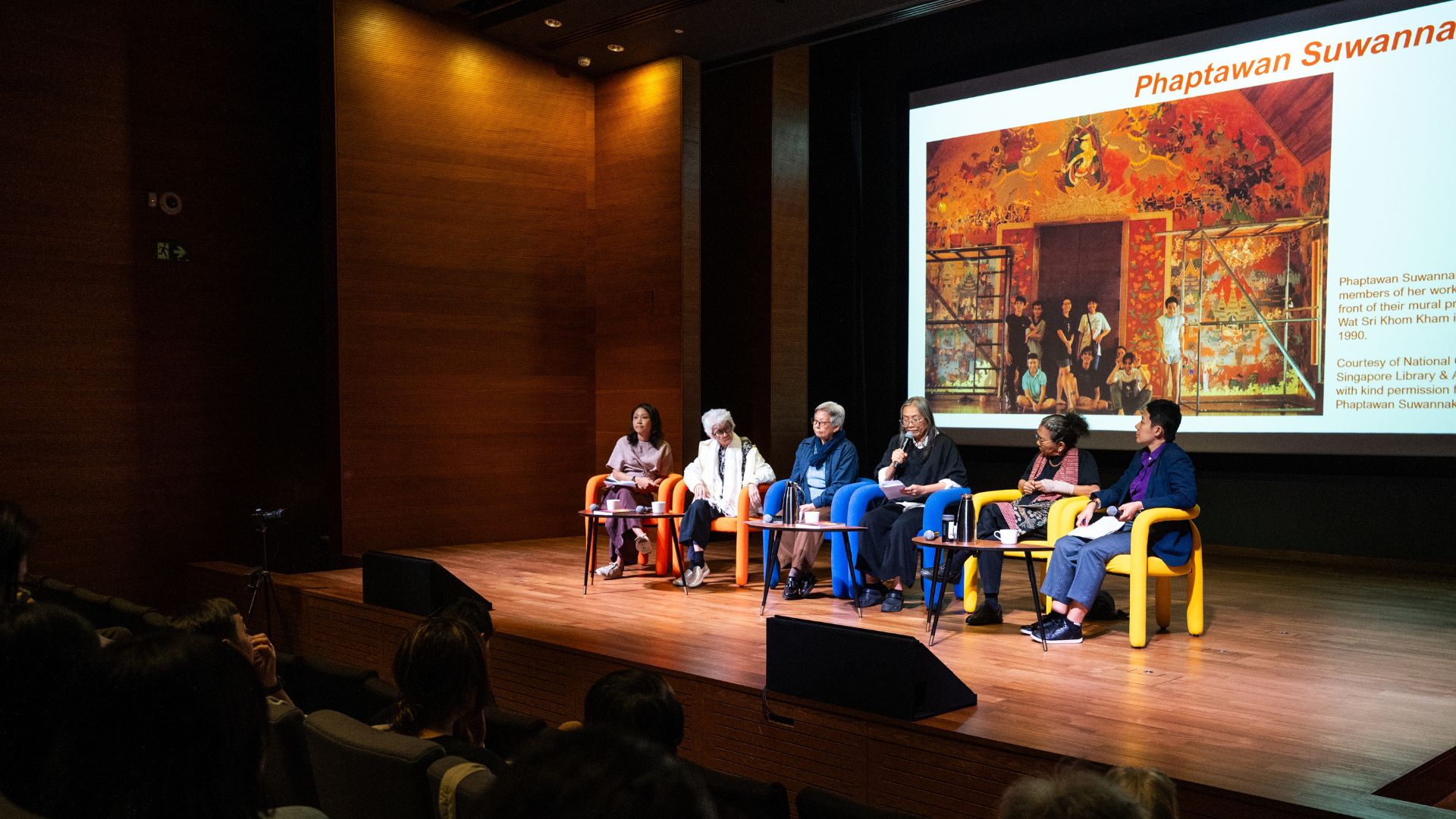
Watch this conversation with artists and curators of "Fear No Power", where they discuss how women in Southeast Asia have envisioned alternative ways of working and creating together.
Explore other exhibitions
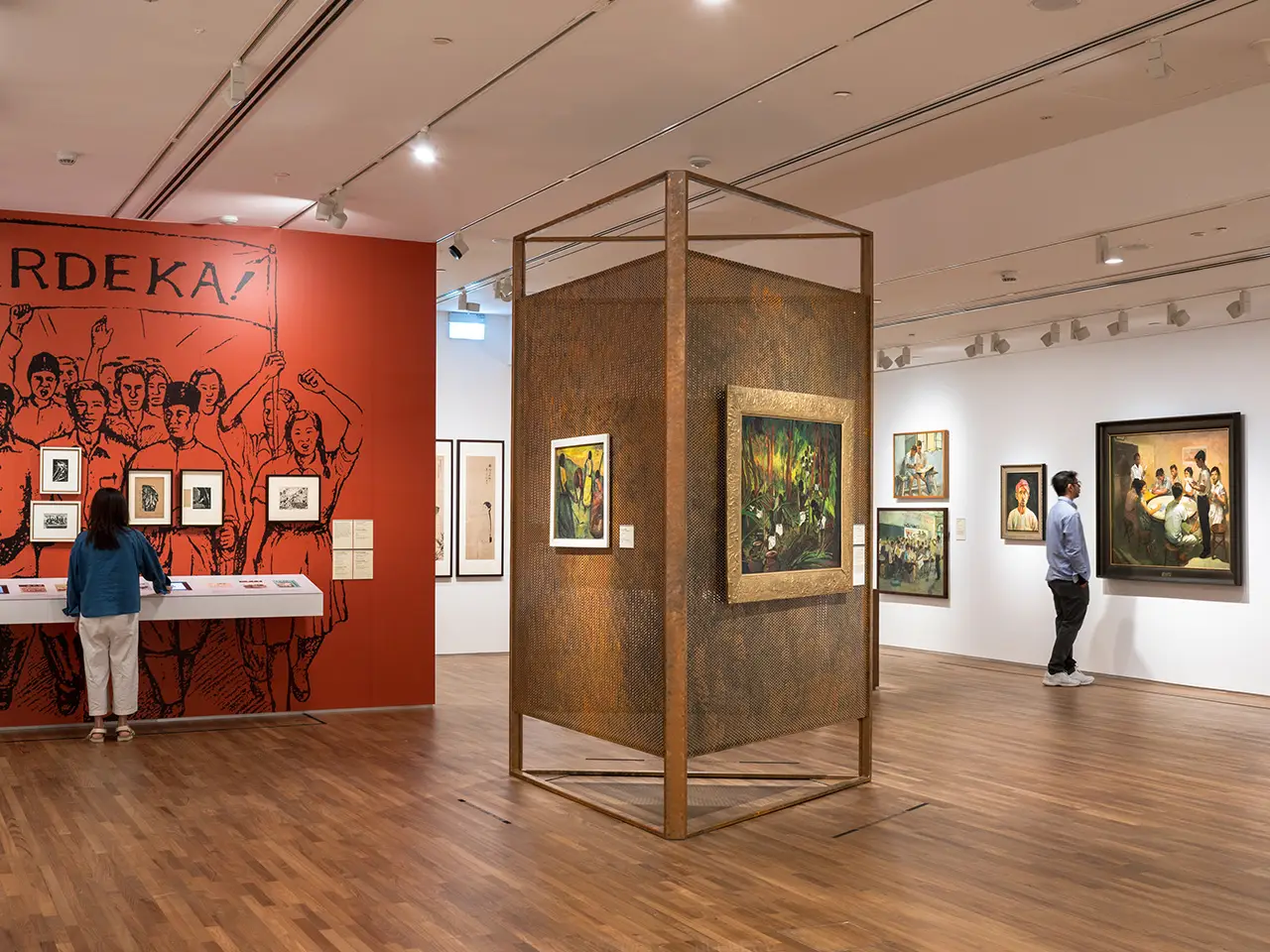
Singapore Stories: Pathways and Detours in Art
The newly revamped DBS Singapore Gallery exhibition presents a layered, ever-changing story of Singapore’s art history. Explore the unique pathways and detours of artists, and see their iconic artworks from the 19th century to present.
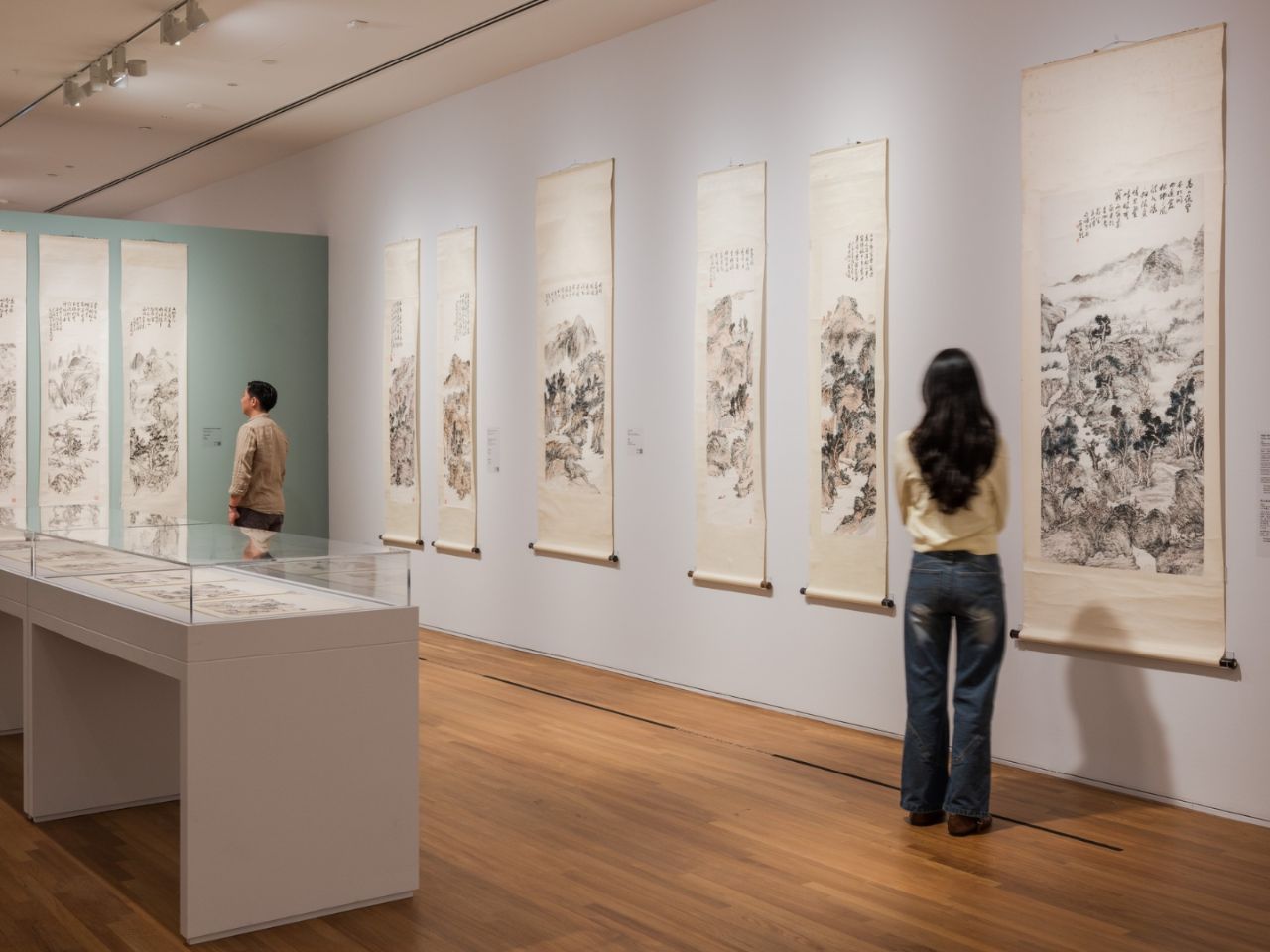
Fan Chang Tien: Rhythm of the Southern Brush | 范昌乾:南方笔韵
This exhibition examines the artistic journey and enduring legacy of Fan Chang Tien (范昌乾) (1907–1987), a pivotal figure in the development of Chinese ink art in Singapore. It traces his southward movement from China to Thailand and finally to Singapore in 1956 – a journey marked by his commitment to art and education.

SINGAPORAMA by Navin Rawanchaikul
SINGAPORAMA is a multimodal installation by Thai artist, Navin Rawanchaikul and Navin Production, presenting a panorama of diverse peoples and stories in Singapore.