


The history of ink art in Singapore is rarely included in the broader discussion of modern and contemporary Chinese ink, which most frequently focuses on mainland China and occasionally on Hong Kong and Taiwan or the Chinese diaspora.1 A few local exhibitions have attempted to survey the evolution of ink art in Singapore from different perspectives or approaches.2 However, gaps or discrepancies in the treatment of its development within the broader narrative of Singapore art history still remain. It is often dealt with as an ethnic-based or a medium-based art form, while artists for whom ink painting was an important aspect of their oeuvre are often neatly contextualised within the framework of Singapore modern art.3 What has been overlooked is how ink art, as a time-honoured Asian art form, has been transferred and transformed within a modern immigrant social context, characterised by multicultural convergence and intercultural exchanges. The challenge lies in describing and contextualising such a transformation within the larger arena of Singapore art and, in particular, understanding its relationship with other local art discourses as well as its place within the bigger picture of modern and contemporary Chinese ink.
Section 01
Transferring Tradition
Towards the end of the 19th century, the “sojourner” (huaqiao) pattern of overseas Chinese migration to Singapore and other parts of Southeast Asia revealed the strengthened ties between overseas Chinese and their homeland.4 In particular, the commitment to “Chineseness” was greatly enhanced through the promotion of Chinese cultural values.5 It is against this backdrop that Chinese art, as part of the greater legacy of China, was promoted and disseminated, primarily through education, social groups, media and cultural activities.
The first professional art school, the Singapore Overseas Chinese Art Academy was founded in Singapore in 1922. In addition to Western painting, the school also provided lessons in Chinese painting, which was referred to as “national essence painting” (guocuihua).6 The school’s use of the term demonstrates an awareness of Chinese nationalism within the local Chinese community. In 1929, the first formal art organisation in Singapore and Malaya, the United Artists Malaysia (or Nanyang Society of Calligraphy and Painting), was established. This society was strongly committed to cultivating and increasing interest in Chinese art.7 The Nanyang Academy of Fine Arts (NAFA), founded in 1938, began instruction in Chinese painting in 1940. This eventually led to the creation of the Chinese painting department when NAFA resumed operations in 1946, after the school’s suspension during the Japanese occupation of Singapore from 1942 to 1945.8 NAFA’s curriculum was primarily modelled on the Chinese art academy system in which the traditional teacher–disciple structure was incorporated into a modern Western educational framework. One frequently overlooked aspect of art education then was the opportunity to study Chinese painting and calligraphy at select local Chinese schools. Although it was not yet part of the art curriculum, calligraphy offered a way to learn Chinese characters through writing.9 Newspapers and publications were other key platforms for introducing classic calligraphic manuals and advertising works done by calligraphers and painters to the public. One notable example was the newspaper Tiannan Xinbao, founded by Khoo Seok Wan, a leading cultural figure of the local Chinese community.10 From the 1920s to the 1940s, more Chinese artists travelled to Singapore to participate in exhibitions and other cultural activities. Many of their shows featured Chinese paintings and calligraphy works, as seen in the exhibitions of the celebrated Lingnan School ink painters He Xiangning in 1929 and Gao Jianfu in 1930, as well as the fundraising exhibitions by prominent artists Xu Beihong and Liu Haisu during the Second Sino-Japanese War.11
The above briefly outlines the major channels that facilitated the transfer of Chinese art to Singapore since the late 19th century. But what artistic form, concept or discourse was promoted as the paradigm of Chinese pictorial tradition, that is, an emblem of Chinese visual culture? Seen within a modern context such as Singapore’s immigrant society, “tradition” is an idea that requires definition and even involves construction since there was effectively no “tradition” to pass down automatically. In the process of transference, individuals or particular groups often play critical roles in representing and promoting examples (and cultural canons) of the past. Their social and cultural backgrounds, artistic beliefs and aesthetic preferences tend to shape directly or even dominate this process. In the late 19th century, only a small group of cultural elites, such as Qing court officials or reformers (of the 1898 Wuxu Reform Movement) and their supporters, was privileged enough to enjoy and promote art activities in Singapore.12 Many were from the scholar-gentry class affiliated with China’s traditional imperial system. One significant figure in this regard is the aforementioned Khoo Seok Wan, who was an avid supporter of the reformer Kang Youwei. Apart from being a leader of the local Chinese literary circle, he was the only person among those that came to Singapore to have passed the Qing court imperial examinations. The album Fengyue qinzun tu (Painting of Zither Romance) (fig. 1) and the calligraphic manuscripts (comprising poetry and letters) produced by Khoo and his contemporaries reveal how such literati activities were conducted and how their influence extended beyond Singapore.13
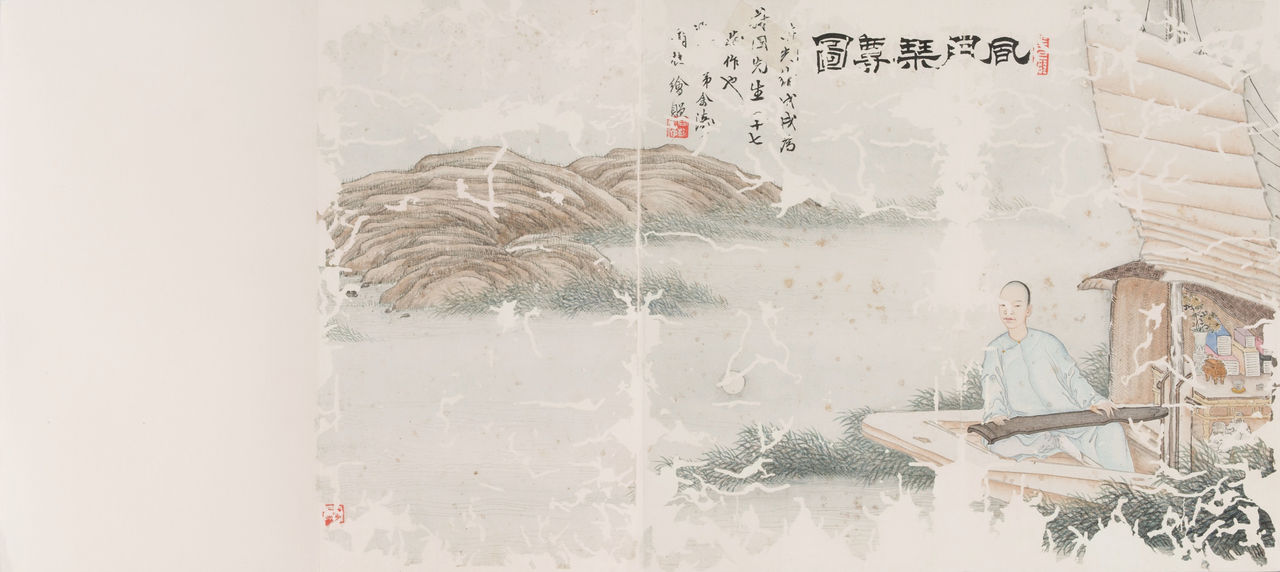
Fig. 1. Yu-Tao. Portrait of Khoo Seok Wan, in the album Fengyue qinzun tu (Painting of Zither Romance). 1898. Chinese ink and colour on paper. Collection of Mr Ong Cheng Kian.
Fig. 1. Yu-Tao. Portrait of Khoo Seok Wan, in the album Fengyue qinzun tu (Painting of Zither Romance). 1898. Chinese ink and colour on paper. Collection of Mr Ong Cheng Kian.
Such works, comprising ink painting, calligraphy and seal carving with literature (often poetry), embody the core of traditional literati art, were therefore circulated by these cultural elites and promoted to the local community, and are regarded as distinct from the works produced by artisans or court painters.14
The intellectuals moving to the south following the founding of the Republic of China in 1912, particularly those arriving in Singapore from the 1920s onwards, had experienced China’s struggle for modernisation, most notably during the May Fourth Movement. They had received a modern education and could not be considered “literati” in the traditional sense since the scholar-gentry class had been dissolved at the end of the Qing dynasty. Whilst some of them remained deeply steeped in traditional art and literature, many might be more known for their activities as educators, scholars and journalists, rather than professional artists. Nonetheless, their artworks maintained the true nature of literati art, since it was centred on the notion of self-expression as a scholarly pastime. One such representative example is the ink painting White Plum Blossoms (fig. 2) by Wong Jai Ling.
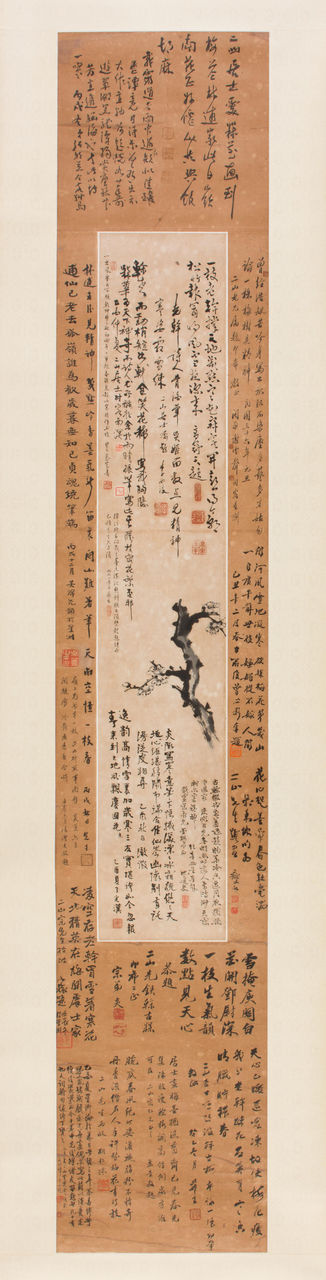
Fig. 2. Wong Jai Ling. White Plum Blossoms (with colophons). 1945. Chinese ink and colour on rice paper, 120 × 37.5 cm. Gift of Mrs Ng-Lim Chong Quek.
Fig. 2. Wong Jai Ling. White Plum Blossoms (with colophons). 1945. Chinese ink and colour on rice paper, 120 × 37.5 cm. Gift of Mrs Ng-Lim Chong Quek.
A single plum branch is painted in typical xieyi style (literally means “writing thoughts and emotions”) with abbreviated brushstrokes. It is surrounded by 22 inscriptions including two by Wong. The plum is a subject beloved by literati and as one of the “four noblemen,” it symbolises endurance and integrity in the face of adversity. This symbolism is verified by Wong’s words as acknowledged in his inscriptions. Though an unskilled painter, Wong had painted this artwork in an effort to dispel his sorrow, regarding the brutalities that Singapore suffered during three years of tyrannical Japanese rule.15 In the decade after its completion, 19 of Wong’s friends left inscriptions – mostly poems with short texts – describing their reactions when viewing the artwork. The majority of the poems, either composed or cited from other sources, link the image to its emblematic connotations so as to empathise with Wong’s own experience. The textual and iconographic components coalesce to create a unique experience of viewing this form of literati art, providing interactive visual and contextual dialogues involved in the image-making. The aim of this creative practice is to give voice to the expression of the individual spirit. The artwork was not intended for public display. Rather, it was meant for private enjoyment by the creator and his intimate circle of friends. Their engagement with the artwork in terms of painting, poetry composition, appreciation and inscription encouraged the exchange of thoughts and sentiments. Seen in its historical context, Wong’s art-making is hinged on the practice and circulation of self-expression among a group of immigrant Chinese intellectuals. It contributed to their spiritual life, permitting them to maintain an unbroken form of engagement with, and reconstruction of, their cultural inheritance, in a social setting far from their cultural homeland.
Calligraphy is understood as the highest and most sophisticated mode in Chinese visual arts. Its pictographic nature is believed to share the same origins as painting (shuhua tongyuan). Within the local context and amongst the Chinese intelligentsia, calligraphy was commonly practised as an important form of daily self-cultivation. Partly due to the “amateur” nature of such practice, calligraphy, as compared to ink painting, is less recognised in local art history. Of the early generation of Singaporean and Malaysian calligraphers, Pan Shou was very influential. He was also a celebrated poet and scholar. Pan’s Poem of Zither (fig. 3) is a monumental artwork and was created when he was 81.
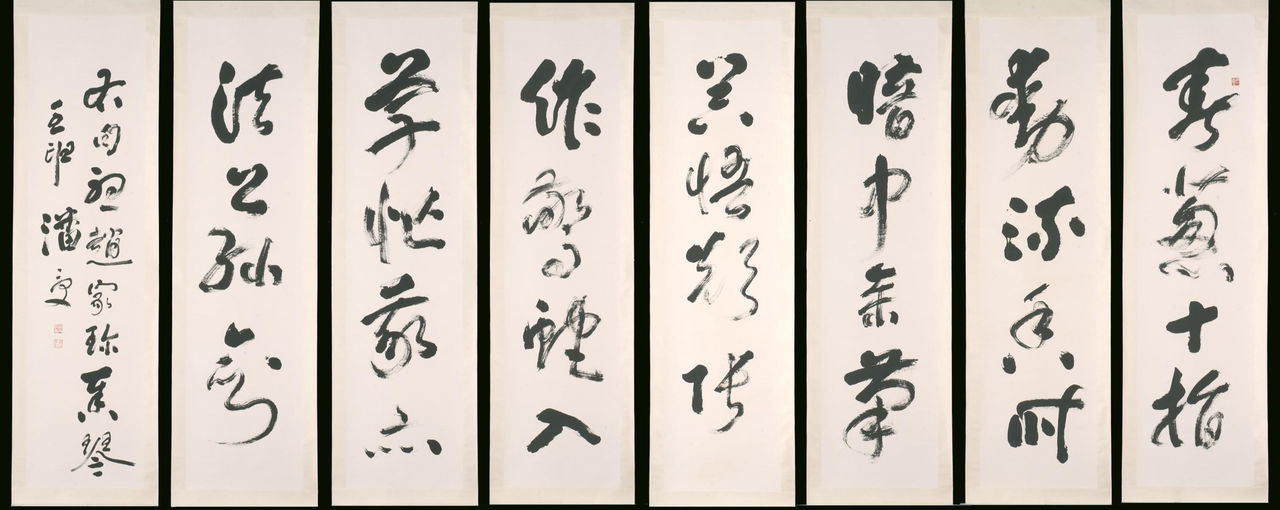
Fig. 3. Pan Shou. Poem of Zither. 1992. Chinese ink on paper, 248 × 64 cm (each). Collection of Singapore Art Museum.
Fig. 3. Pan Shou. Poem of Zither. 1992. Chinese ink on paper, 248 × 64 cm (each). Collection of Singapore Art Museum.
It demonstrates his accomplishment in calligraphy and poetry and his skill in perfectly harmonising these two traditions. Pan composed the verse in the classical qijue poetic form, commenting that the music of the zither inspired him to realise the true path of calligraphic brushwork.16 Despite the challenging large-format composition, Pan nonetheless expressed vitality and spontaneity in the “running cursive” style (xingcao) for which he is best known. His powerful, extremely disciplined brushwork resulted from a lengthy study of ancient calligraphy masterpieces. Although copying of classical models could be an obstacle to creativity, within the Chinese artistic tradition, it was considered a necessary means to achieve excellence and to forge an individual style. Working with highly formalised characters and a rigorous brush method, Pan is masterful in expressing his individuality; his “running cursive” script has a vigorous, yet untrammelled quality, with brushstrokes that are natural and elegant, replete with inner strength. Their rhythmic linearity evokes a sense of zither music, which resonates with the content of his poetry. In addition to its ideographic context, calligraphy, as attested by Pan’s Poem of Zither, possesses its own formal aesthetics and expressive capacities and has inspired literati painters in their exploration of the ink medium.17 As such, calligraphy later became a significant source of creative inspiration in 20th-century modern art.
Many early generation calligraphers worked as educators, including Pan Shou, Chang San Sheh, Hwang Sheo Wu, See Hiang To, Tan Keng Cheow, Wong Jai Ling and Chen Jen Hao. Like Pan, Chang and Hwang were scholars of Chinese literature. Tan, Wong and Chen were particularly active in promoting calligraphy in primary and secondary schools.18 Some of their students, such as Tan Siah Kwee, Lim Tze Peng and Koh Mun Hung, continued their studies and are considered the second generation of calligraphers.19 Artworks by the early calligraphers do not merely imitate classical masters based on copying of tie (model copybooks of a master’s writings that were passed down in the form of rubbings, copies and prints) but also reflect the renewed aesthetics initiated by the Epigraphic School (Beixue) of early Qing dynasty. Drawing from the connoisseurship of scripts carved on ancient oracle bones, bronze vessels and stone monuments, the Epigraphic School challenged the increasingly ossified Tie School that had dominated since the Tang dynasty.20 Within local calligraphy circles, the Epigraphic School had considerable influence on early calligraphers. Inspired by metal and stone inscriptions from an earlier age, works by artists such as Tsue Ta Tee, Chang San Sheh and See Hiang To convey robust, natural and archaic sensibilities.
The innovative reforms in calligraphy that immigrant artists and intellectuals brought to Singapore reflect a revival of the declining literati ink painting tradition since the late 19th century. This revival was spearheaded by masters of the Shanghai School such as Zhao Zhiqian, Ren Bonian and Wu Changshuo. In tandem with innovations in calligraphy, the Shanghai School ink painting also assimilated epigraphic aspects into xieyi painting. Moreover, the cosmopolitan environment of Shanghai inspired new aesthetic tastes that were favoured by the urban consumer public. Shanghai School ink painting, as exemplified by Wu Changshuo’s works, is characterised by archaic, vigorous and untrammelled brushwork, vivid colours and dynamic compositions.21 Shanghai School wielded significant influence in China during the early period of the Republic and this renewal of traditional painting was soon disseminated to Singapore by a number of artists who left China before and after the Second Sino-Japanese War. Most were trained in art academies in Shanghai and some received instruction first-hand from the Shanghai School artists. Among them, Li Kuishi, Chen Chong Swee, Huang Pao Fang and Wu Tsai Yen had moved to Singapore before the war.22 Though See Hiang To’s erudition in seal carving and calligraphy was mostly due to his scholarly family background, his ink paintings were largely influenced by the Shanghai School.23 See became an instructor at NAFA in 1941, and together with Chen Chong Swee, probably served the longest in the academy. Over decades, they nurtured a generation of painters who became well-versed in literati art. Their students include Tan Kian Por and Tan Kee Sek, who apart from painting, are also proficient in calligraphy and seal carving.
Artists such as Chen Wen Hsi, Cheong Soo Pieng and Fan Chang Tien arrived in the post-war period. Fan was a pivotal figure in the transmission of the Shanghai School to Singapore. He studied at the Xinhua and Changming art academies during the late 1920s and early 1930s, training under renowned Shanghai School artists such as Wang Geyi. Wang was a pupil of Wu Changshuo, and thus Fan is widely regarded as a successor to the Shanghai School. Although Fan had lived in Singapore since the mid-1950s, he produced fewer artworks depicting local subjects than artists of his generation, such as Cheong Soo Pieng and Chen Chong Swee. Instead, Fan continued to specialise in the xieyi style of flower-and-bird painting and was particularly celebrated for his compositions of orchids and bamboo, two symbolic literati motifs. Fan’s early works are noteworthy for a brisk and rhythmic brush style. Towards the end of his career, his brushwork tended to be quite forceful, as seen in the handscroll Orchids and the Rock (fig. 4).
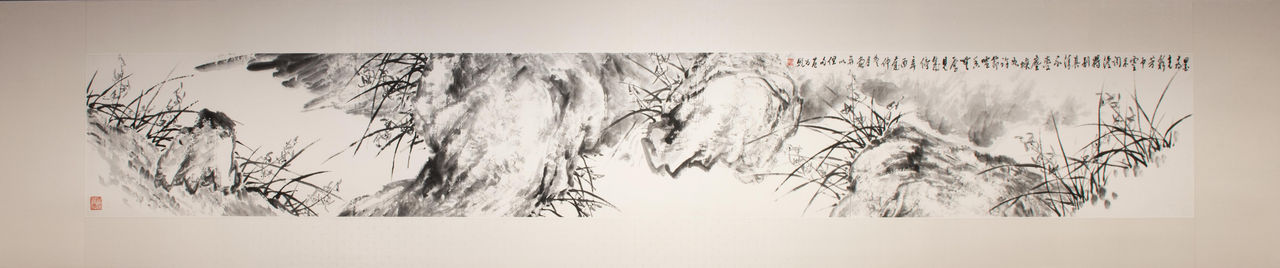
Fig. 4. Fan Chang Tien. Orchids and the Rock. 1981. Chinese ink on paper, 49 × 364 cm. Gift of Heng Siew Leng.
Fig. 4. Fan Chang Tien. Orchids and the Rock. 1981. Chinese ink on paper, 49 × 364 cm. Gift of Heng Siew Leng.
Equally adept in the landscape genre, Fan composed the background of the painting with well-structured rocks rendered in precise yet spontaneous, textural strokes, creating an imposing feel in the imagery. In fact, the nurturing of such expressive individualism via brush-and-ink was, in no small part, due to his long-standing dialogue with tradition.
Fan’s oeuvre reflects that he had consciously maintained strong ties to the lineage of literati painting.24 This may explain why he is rarely included among the early artists regarded as pioneers of the local modernist movement. Instead, Fan is widely recognised in the history of Singapore art as a transmitter of the ink legacy. Regarding himself as a “gardener,” he provided students with comprehensive grounding in traditional Chinese ink painting. Many of his students began their training under him as secondary school pupils and continued as private students in their adult years.25 Some of them include Ling Cher Eng, Nai Swee Leng, Tan Oe Pang, Lim Kay Hiong and Tan Siow Aik. Shanghai School became highly influential in Singapore as a result of Fan and others. In the narrowest sense, Shanghai School ink painting in the local context became the major pedagogical gateway to master pictorial conventions and techniques of Chinese painting. More broadly, it constitutes a crucial model of tradition, encapsulating the essence of the rich system of calligraphic aesthetics and an elite literati art, underpinned by Confucian, Buddhist and Taoist philosophies. It places greater emphasis on individual expression than objective representation and its aspect of self-renewal reveals an inclusiveness to external resources – the spirit necessary for modern transformation.
With the end of World War II, the conditions for Chinese painting in Singapore gradually improved. The following decades witnessed the maturation of the second generation of ink artists. The transmission of tradition from the early migrant artists to these locally trained individuals is particularly evident in the establishment of societies specialising in Chinese art.26 At around the same time, China experienced an unprecedented rupture of cultural tradition – wrought by the Cultural Revolution – and Chinese painting struggled to survive under Communist ideology. Such tragic events unexpectedly benefited the Singapore art scene as many ancient masterpieces were brought to Singapore. Due to the efforts of a few knowledgeable collectors and artists, Singapore eventually became an important centre for collections of Chinese ink painting.27 Chen Chong Swee remarked that the increased interest in Chinese painting was the result of many opportunities to see high-quality authentic pieces in exhibitions organised by collectors and cultural societies in Singapore.28
Section 02
Modern Transformations
Since the late 19th century, Chinese ink in the local context has largely been presented as a traditional art form that symbolises the cultural essence of China. Its situation centres on transmission and continuity, revealing concerns about national identity and the maintenance of cultural ties with China. This consciousness is valid both at the individual level and for the wider Chinese migrant community. With the transference of the tradition of literati art (in particular via the Shanghai School ink painting) as a paradigm of Chinese pictorial culture, the subsequent transformation provides other aspects that further complicate the narrative. This transformation represents a direct interaction with the broad discourse of 20th-century Chinese ink painting which simultaneously responded to local circumstances. The individuals involved in the process of transmitting the artistic legacy often played the dual role as inheritors of a time-honoured tradition and as forerunners of modern innovation through their creative talents.
In the late 19th century, Chinese painting represented a self-contained system that possessed a complete set of standardised techniques, pictorial conventions and interpretive criteria, which then became a highly conventionalised “closed” discourse.29 The artist’s quest for originality did not require a rupture with the past. On the contrary, the past was regarded as “an inexhaustible source of guidance and of validation” and this is well exemplified by the innovative revival of tradition in Shanghai School painting.30 The concept of “modern” was derived from Western ideology. In other words, its value was affirmed in the linear progression from the past to the future and a radical break from the past to pursue the “new.” This notion of the “modern” gained increasing momentum among Chinese artists against the backdrop of the May Fourth Movement which was characterised by a radical rejection of Chinese cultural heritage and the advocacy of Westernisation to achieve national modernisation. The May Fourth Movement proved to be a watershed in modern Chinese painting. Kang Youwei launched an unprecedented criticism of literati painting and this stance was continued by leading cultural figures such as Chen Duxiu and Lu Xun.31 Literati painting was harshly attacked for its orientation towards self-expression and its inability to reflect real life and convey imagery realistically. Western realism was therefore seen as an ideal model for reform.
The following decades witnessed divergent trajectories in the “modernisation” of Chinese painting. Led by Xu Beihong, a seminal figure in 20th-century Chinese art, realist reform through Western methods became increasingly pervasive. Xu came to Singapore on seven occasions from 1919 to 1942 and during his stays from 1939 to 1942, he forged particularly strong links with the local art scene.32 Xu’s The Painting in the Spirit of Six Dynasty Poetry (fig. 5), produced during his time in Singapore and Malaya, testifies his realist reform of ink painting by incorporating Western-style perspective and the use of live models within the conventions of Chinese figurative painting.
Increasing contact with European modernism from the 1920s onwards opened another Western-inspired trajectory in the modernisation of the ink tradition. In this vein, Lin Fengmian was unquestionably one of the forerunners to explore the connection between Chinese and modernist aesthetics. Contending with the Western-influenced trajectories, artists such as Qi Baishi, Huang Binhong and Pan Tianshou followed the Shanghai School and sought to revitalise tradition through innovative transformations. However, with the establishment of the Communist regime in China in 1949, Socialist Realism became established as the official paradigm for modern Chinese painting. Artistic diversity and freedom were almost entirely eliminated and Lin Fengmian’s political and artistic marginalisation after 1949 stands as a stark example.33
The evolution of modern Chinese painting from the late 19th century until the 1980s was influenced by concerns and tensions that centred on an East–West dichotomy.34 By the time migrant artists from China settled in Singapore, a majority of them were already familiar with Chinese and Western art as both subjects had been part of the curriculum in Chinese art academies since the early 20th century. Although realism became increasingly influential after the May Fourth Movement, many artists who studied in the modern art centre of China – the metropolitan city of Shanghai – nevertheless came into contact with diverse artistic movements.35 From the 1920s onwards, these migrant artists brought up-to-date knowledge and information about new and emerging art trends to Singapore and produced works that responded to the modern development of Chinese painting. All of these contributed to the local transformation of ink painting. Artists who arrived from China encountered a sociocultural milieu entirely different from their homeland. In the post-war period, Singapore was transitioning from British-colonial rule to independence and was grappling with nation-building as well as seeking a new cultural identity that will integrate its multi-ethnic migrant community. It was within this environment that the forging of a distinctively local and regional art discourse became an important issue for migrant artists. This is probably best exemplified by Lim Hak Tai’s vision for Nanyang art, and the four artists Chen Wen Hsi, Cheong Soo Pieng, Liu Kang and Chen Chong Swee who travelled to Bali to discover the aesthetic identity of the region.36 These four artists were later regarded as pioneers of the Nanyang School, the first distinct local modernist movement in Singapore. With the exception of Liu Kang, these artists also worked in the ink medium and had a significant impact on the development of ink painting in Singapore. The role of ink painting shifted largely from being a pictorial signifier of Chinese cultural identity to a post-war search for innovation. The latter was greatly inspired by realist or modernist art, but was often meditated by local circumstances and concerns.
Amongst the early generation ink painters, Chen Chong Swee pioneered the depiction of Malayan life as a subject matter in Chinese painting, infusing new life into the tradition. Chen was a graduate of Shanghai’s Xinhua Academy of Fine Arts and was already residing in Singapore in 1932. In the 1930s, he had depicted indigenous life and kampong (village) views but his ink style did not reach full maturity until the post-war period.37 Chen believed that art should be firmly grounded in realism and the responsibility of an artist lay in the portrayal of life and times.38 His stance on the innovation of Chinese painting emphasised “the inclusion of new things” and “the ability to express modern life.” 39 This realist approach explains the artist’s commitment to the representation of his immediate surroundings. Chen was of the opinion that visual innovation required the assimilation of Western techniques. However, he insisted that the inherent spirit and pictorial virtues of Chinese painting should not be compromised.40 Chen’s best ink works convincingly reflect his reconciliation of Chinese and Western methods, as seen for example, in the realistically rendered Landscape (fig. 6).
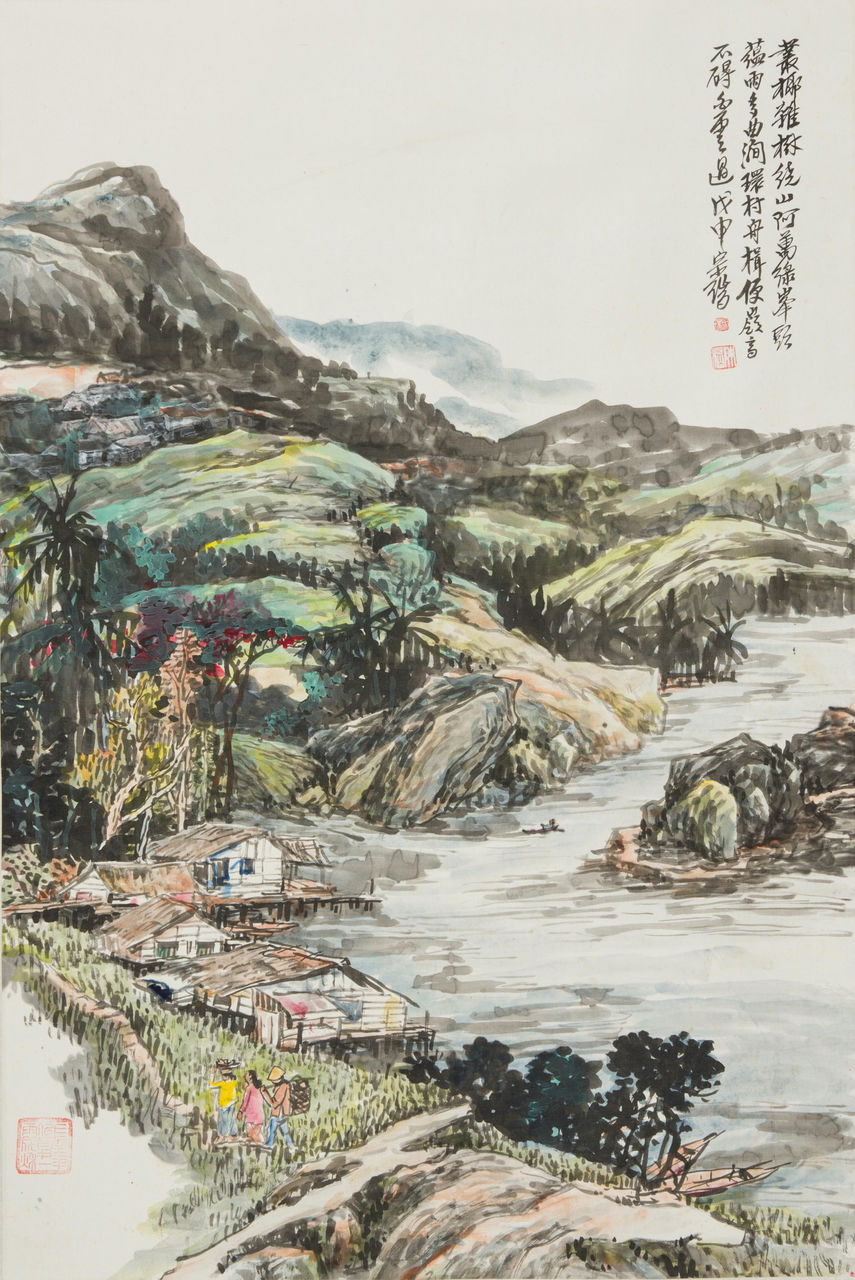
Fig. 6. Chen Chong Swee. Landscape. 1963. Chinese ink
and colour on paper, 127 × 64 cm.
Fig. 6. Chen Chong Swee. Landscape. 1963. Chinese ink
and colour on paper, 127 × 64 cm.
In this artwork, the tropical scene is adeptly transformed into the vertical-compositional schema of classical landscape painting by using the Chinese convention of depicting distance and perspective. The painting After Bath (fig. 7), with its subject drawn directly from life, has a compositional structure derived from Western fixed-point perspective.
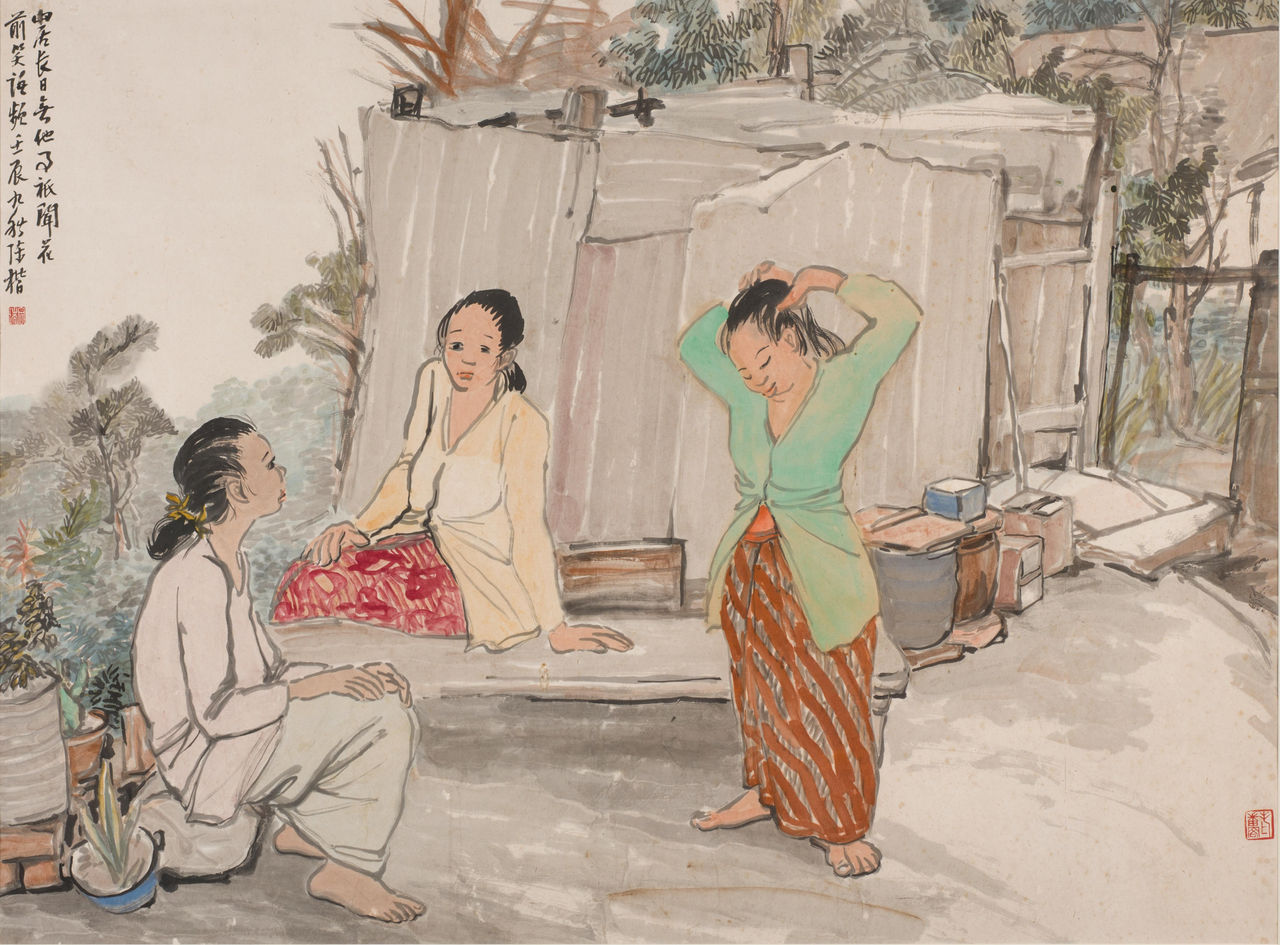
Fig. 7. Chen Chong Swee. After Bath. 1952. Chinese ink
and colour on paper, 76 × 119 cm. Gift of the family
of the late artist.
Fig. 7. Chen Chong Swee. After Bath. 1952. Chinese ink
and colour on paper, 76 × 119 cm. Gift of the family
of the late artist.
What is noteworthy is the fluid and succinct linear rendering of the female figures with little application of chiaroscuro, alluding to the essential pictorial character of traditional figural painting.41 The simplicity and plainness embodied in Chen’s art is balanced with realism and the aesthetics of literati painting. Similarly, See Hiang To, though educated in the scholarly art tradition, relates his inclination to realism in both his writings and paintings. This can be seen in his work, Wayang Kulit (fig. 8), which was inspired by Xu Beihong’s figure painting.42 This trust in realism offered an immediate path to the localisation of ink painting.
Amongst his peers, Chen Wen Hsi’s innovations position him as a forerunner in the regional modernist discourse as well as a respected master within the broad narrative of 20th-century Chinese ink painting.43 At the beginning of his training in Shanghai in the 1920s, Chen chose to enrol in the art education department, so as to be grounded in both Chinese and Western art.44 He received instruction from the traditional master Pan Tianshou and the modernist proponent, Ni Yide, who was a founding member of the first Chinese avant-garde group Storm Society (Juelanshe).45 Since the 1920s, there has been a growing interest to bridge literati art and modernism, both in theory and practice.46 Departure from verisimilitude and emphasis on subjectivity rather than representation, were believed to be values shared by both traditions, and this formed important common ground for Chinese artists in their assimilation of modernist art. At the same time, modernist formal explorations inspired artists to rediscover the visual potential of their indigenous artistic legacy.47 The innovations by Chinese artists, often underpinned by such a comparative or relativist approach, primarily focused on bridging the formal values of Chinese and modernist art. This context offers a basic framework to understand Chen’s innovation centring on Chinese–West dialogue.
Chen mapped his art through a stylistic dialogue with early masters, within the lineage and continuity of traditional Chinese painting. The selective inheritance of pictorial elements from the unorthodox and individualistic traditions of Ming and Qing masters – traditions that embodied “modern” sensibilities for later developments in Chinese painting – fitted well with Chen’s study of Western modernism, which became more entrenched after he settled in Singapore.48 A considerable body of Chen’s works in oil and mixed media, often portraying local and tropical scenes, is evidence of the artist’s continual experiments with modernist styles. His works in oil reveal a particular interest in Cubism and geometric abstraction and this significantly influenced the compositional structure of his ink paintings. This is demonstrated in Playful Gibbons (fig. 9), in which the bough stretching from the lower right to the upper left forms a long parabolic curve, creating an asymmetrical dynamism within the pictorial space and is pivotal to the overall composition.
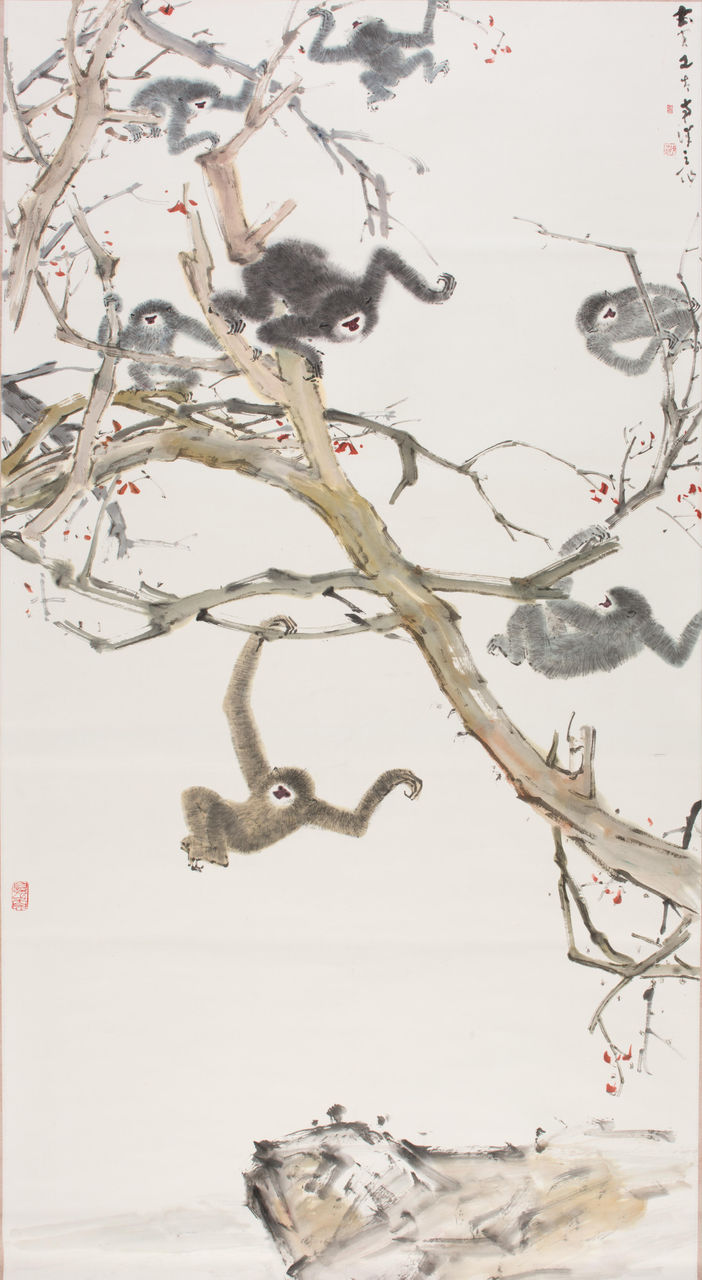
Fig. 9. Chen Wen Hsi. Playful Gibbons. c. 1980s. Chinese ink on paper, 175.5 × 95 cm. Gift of the artist.
Fig. 9. Chen Wen Hsi. Playful Gibbons. c. 1980s. Chinese ink on paper, 175.5 × 95 cm. Gift of the artist.
In addition, the careful positioning of the gibbons into three groups at the top, middle and lower part of the composition, suggests another three arcs that traverse the parabolic curve. The position and lively movement of the gibbons create a sense of rhythm, which is intensified, transferred and balanced with brushstrokes that criss-cross the tree branches and twigs. The rock at the bottom anchors the movement and spatial dynamism of the composition. These pictorial elements, including negative spaces, are interpreted by the artist as dots, lines and planes, composed to create an aesthetic impact that evokes harmony, symmetry, contrast and rhythm. Chen’s concept of pictorial rhythm, influenced by the formalist legacy of modernism, merges effectively with the highest doctrine of Chinese painting known as qiyun shengdong (a sense of spiritual resonance and vitality) as canonized by Xie He of the Six Dynasties period. In effect, formalistic principles are hidden structures that underscore Chen’s visualisation and they highlight the unique aesthetic values of the Chinese pictorial tradition that Chen understood through his study of early masters. Hence Chen’s imagery can be seen as a communion between Chinese and Western aesthetics, with Western references internalised in the Chinese pictorial idiom. As such, the dichotomy between East and West is dissolved.
The dual approach towards Chinese and Western art fundamentally shapes Chen’s analytic perspective with an open-mindedness in dealing with different artistic sources. Herons (fig. 10), completed near the end of Chen’s life and one of his most significant artworks, provides some clues to his handling of the East–West binary.
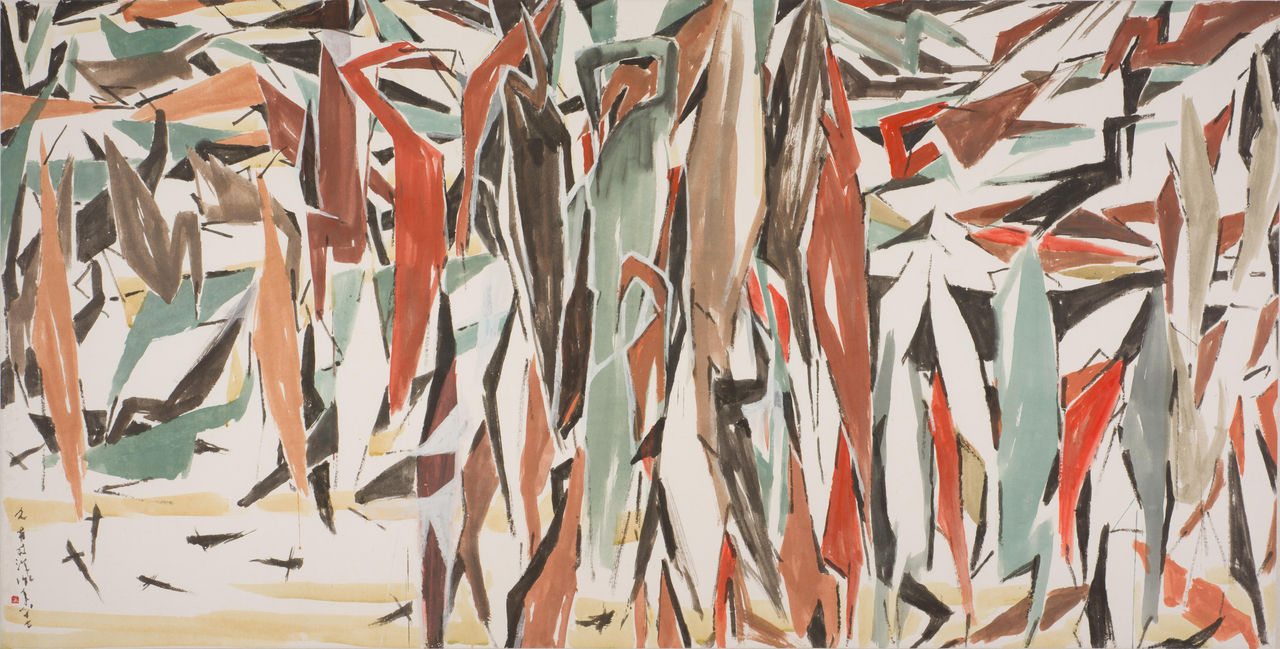
Fig. 10. Chen Wen Hsi. Herons. c. 1991. Chinese ink
and colour on paper, 123 × 245 cm.
Fig. 10. Chen Wen Hsi. Herons. c. 1991. Chinese ink
and colour on paper, 123 × 245 cm.
The heron is one of Chen’s favourite subjects. The bird’s elegant, elongated form allows him to explore the possibility of formal exaggeration and distortion, in a style influenced by Bada Shanren, the early Qing dynasty eccentric master and modernist masters like Amedeo Modigliani.49 The flock of herons which dominates this large composition, is structured in a Cubist-manner of interlocking and intersecting geometric planes, unified by ink outlines and multicoloured shapes to form a complex structure. It is as if the artist is pushing the entire pictorial field towards abstraction. But noteworthy is the small blank rectangular area in the lower left corner. In this section, Chen employs the xieyi style to sketch a playful school of fish, while the liubai (literally “leaving white”) ground implies boundless waters, or perhaps an endless void; it is a spatial composition that is clearly derived from the aesthetic tradition of Chinese painting. Rather than adopting an approach of assimilation and reconciliation as seen in Playful Gibbons, Herons is more explicit in its reference to Western sources. They even dominate this artwork. The large field of geometric forms is suggestive of a Western perception of space; the three-dimensionality is deconstructed and reconstructed into a flattened visual surface where the positive and negative, the figure and ground, are interchangeable. This contrasts with the small liubai, a Chinese concept of pictorial space, and is indicative of a physical reality, such as the surface of the water. At the same time, the void also alludes to a metaphysical Taoist world view. In Herons, two distinct systems of visual space coexist.
Chen noted that abstraction within the Chinese and Western pictorial contexts took different paths. For him, the latter was not a sensory exercise but was grounded in theory and linked to various Western disciplines.50 This profound insight probably helps to understand the artist’s more critical handling of East–West influences in his experimental artworks. Rocky Hill (fig. 11), one of his later landscapes, is a more intriguing example in the treatment of the East–West binary.
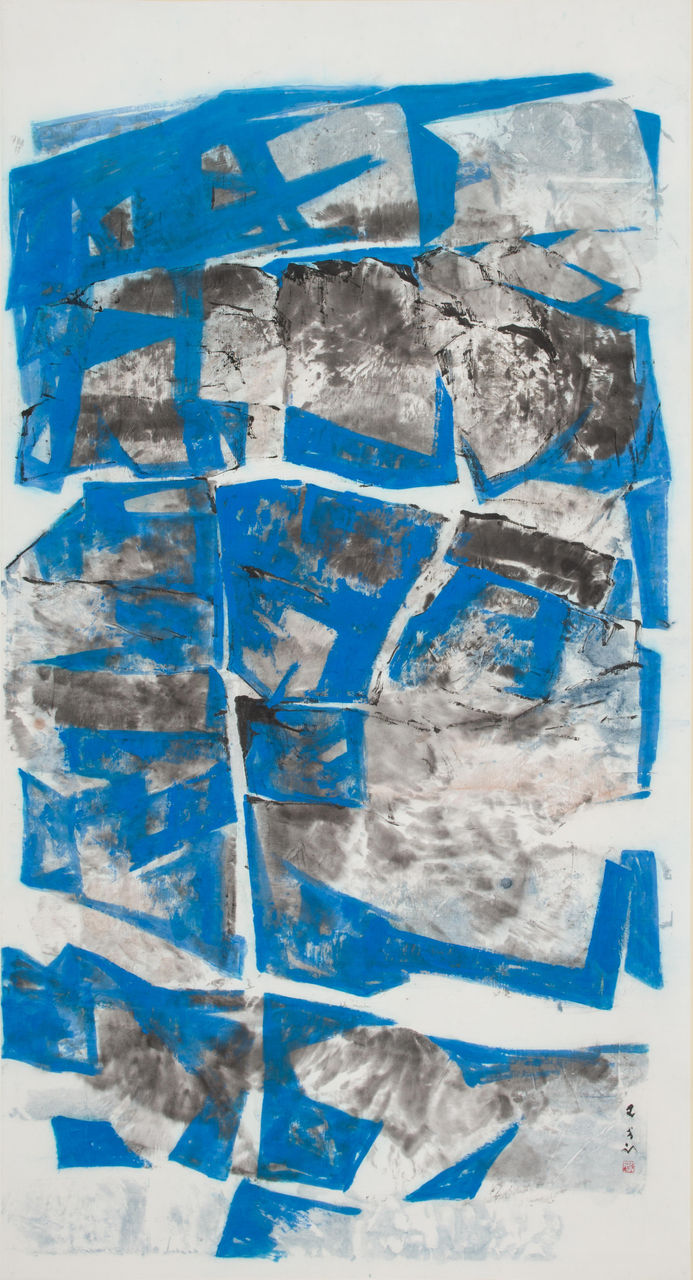
Fig. 11. Chen Wen Hsi. Rocky Hill. c. 1982. Chinese ink
and colour on paper, 180.3 × 97.3 cm.
Fig. 11. Chen Wen Hsi. Rocky Hill. c. 1982. Chinese ink
and colour on paper, 180.3 × 97.3 cm.
The painting ground is a textured ink surface, alluding to a mountain form that is stylistically and schematically derived from classical Chinese landscape painting. Yet the coherence of the image is interrupted, even deconstructed, by fragmented geometric shapes in opaque blue painted flatly over the ink surface in a manner similar to his Cubist-inspired images. The effect is bizarre and unsettling, since the pictorial heterogeneity between the bottom and top layers is clearly intentional. Instead of achieving stylistic integration, the artwork foregrounds the incompatibility between Chinese and Western sources, an aspect that is at the core of this artwork’s pictorial content. Ultimately, it evokes a postmodern sensibility. On the one hand, Chen’s art offers an individualistic possibility as to how Chinese ink painting can be innovated through unifying modernity and tradition while retaining the dominance of identity and conventions of “Chinese” painting. On the other, his ink works are highly experimental and hence removed from its distinctiveness as “Chinese” paintings.
The art of Cheong Soo Pieng offers a different approach in the treatment of ink. Cheong is, perhaps, not an ink painter in the conventional sense and his works in an “ink-based” or “ink-related” mode is best seen within regional modernism, in particular, Nanyang art. From the modernist position which was liberated from traditions and canons, Nanyang artists were “free to select, from the available schemas, features which were suitable to their own aspirations, without having to adopt any supporting ideology. The selection was governed primarily by formal (stylistic) requirements.” 51 As such, Cheong’s art practice was highly versatile in its use of medium and selection of subject matter; it is guided by an eclectic adoption of visual resources. Although Chinese painting is an important source for his art, it does not necessarily dominate it. Throughout his career, Cheong continued to revisit his own traditional culture as well as search for creative inspiration from Southeast Asia and Western art. These elements coalesced in his art. From the 1950s to the 1960s, Cheong’s ink works explore diverse subjects, including figurative and landscape paintings that capture the distinctiveness of local life and its natural surroundings. They suggest a stylistic mixture of sketching from life, and an impressionistic summary of pictorial techniques and elements of Chinese painting.
Cheong also translated local scenes, most notably images of kelong (fishing villages), into grid-like semi-abstract schemas in ink. Such a treatment is more reminiscent of Cubism than Chinese painting. Cheong’s ink works display a clear modernist approach, unapologetic in its break with the legacy of Chinese painting. His linear brushwork in both his representational and non-representational pieces, possess sharp, neat, and smooth qualities that depart from a calligraphic-based brush method.52 Cheong is perhaps the first painter in Singapore to experiment with a purely abstract ink painting style. His visit to Europe in the early 1960s inspired the creation of a group of abstract, lyrical works inspired by nature. The abstract movement prevalent at this time and the possible exposure to works by other Chinese artists such as Zao Wou-ki might have stimulated Cheong’s new approach.53
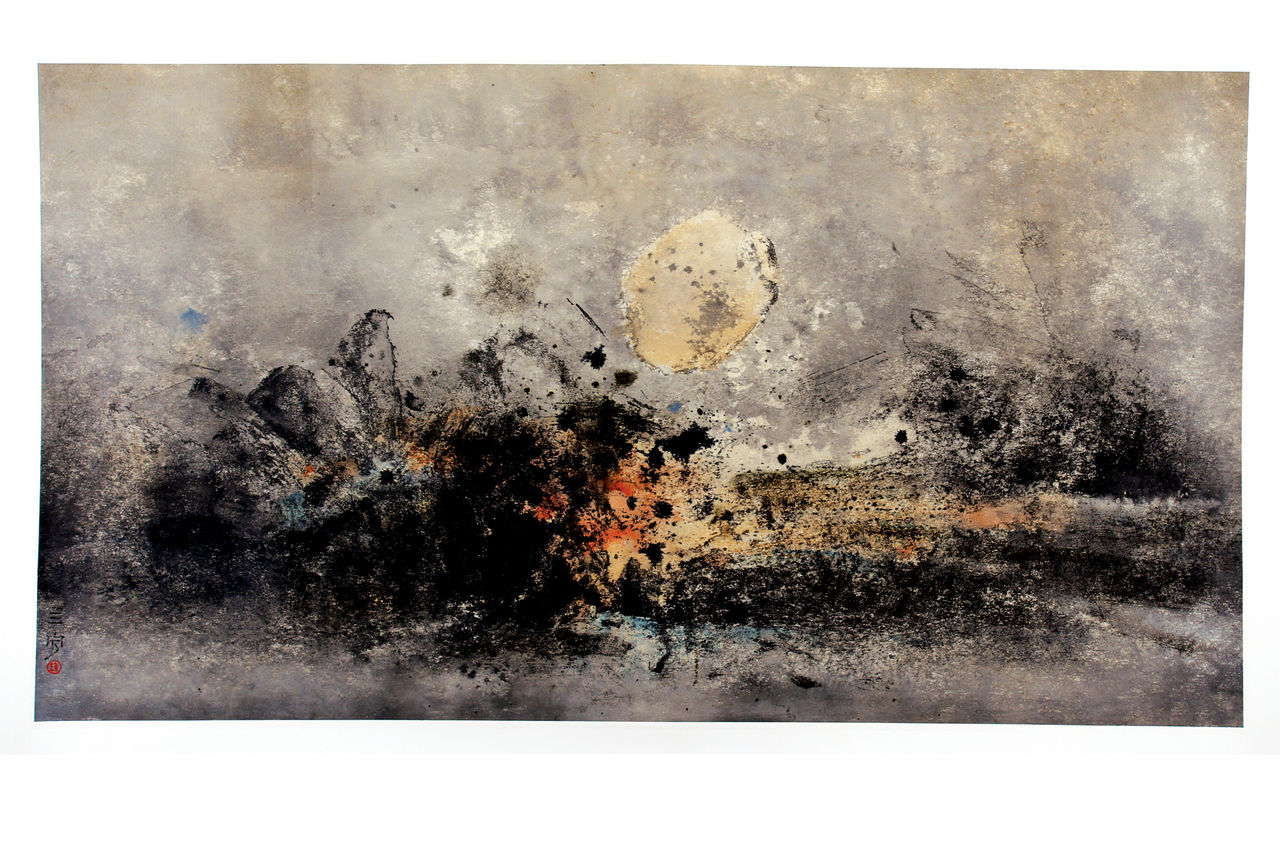
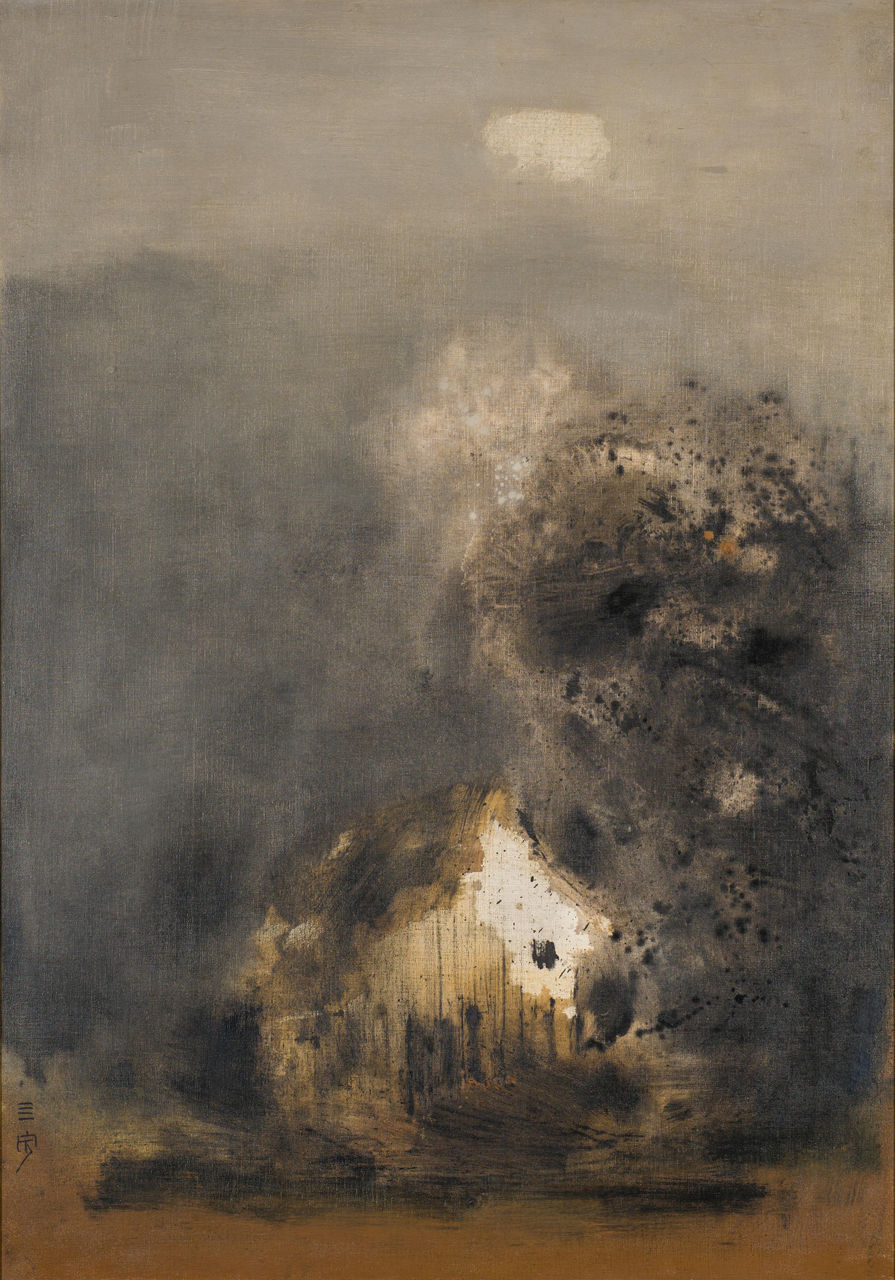
Interestingly, Cheong was able to translate the fluid expressiveness achieved in ink works (fig. 12) into the medium of oil (fig. 13).54
Late in his career, Cheong created his best-known compositions of Indonesian women with serene facial expressions, often posing in pairs. Overall, these pieces have a decorative quality. The figures are often placed in natural settings, which viewers with an understanding of classical Chinese landscape painting would recognise as references to the grand Northern Song landscape tradition. The compositional structure and the background mountain in Cheong’s Landscape (fig. 14), for example, clearly hint at the landscape schema of Fan Kuan.55
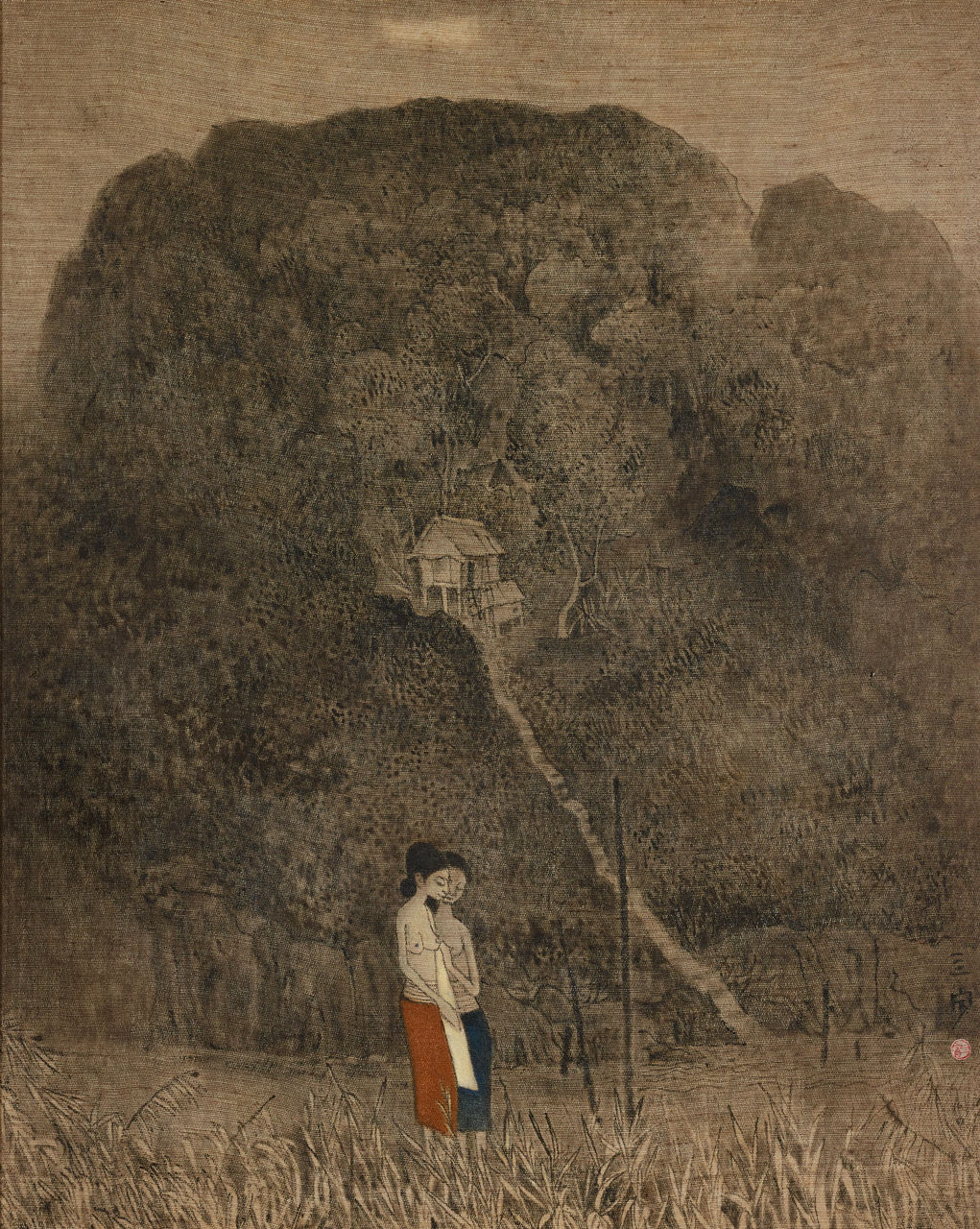
Fig. 14. Cheong Soo Pieng. Landscape. 1981. Oil on canvas, 100.5 × 80.5 cm.
Fig. 14. Cheong Soo Pieng. Landscape. 1981. Oil on canvas, 100.5 × 80.5 cm.
Moreover, he also employed the corner compositional format seen in the works of Southern Song court painters Ma Yuan and Xia Gui.56 Like his abstract artworks, he illustrated these subjects both on canvas and paper. This adaptation of the realist tradition of Chinese painting fits well with the figurative lineament of the pictorial motif. In his later years, Cheong produced a body of ink sketches that discard highly refined formalism; they are characterised by agile, free and spontaneous brushstrokes and represent a spiritual return to the literati tradition. Cheong adopts an eclectic strategy in order to achieve modernity that releases him from the burden of traditional doctrine as well as the East–West dichotomy. Cheong’s creations are contemporary interpretations of the “ink aesthetic,” in which references to the Chinese pictorial tradition are defined by his individual artistic vision.57
The experiments led by artists like Chen Wen Hsi and Cheong Soo Pieng have pushed “Chinese painting” to the non-traditional realm. As a result, the conventional boundaries of traditional “Chinese painting,” have been partially, if not fully, disintegrated. It has been transformed into a more open, fluid discourse, largely shaped by intercultural contacts. The period from the 1950s to the 1980s was a golden age for first-generation immigrant artists. Working in Singapore, they not only benefited from new inspirations but also enjoyed artistic freedom and inclusiveness. The experimentations by Cheong and Chen are grounded in artistic autonomy, a factor crucial in the quest for modernity and originality.58 Although the diversity and individualism forged by the early generation artists were continued by younger ink painters, the challenges encountered by the latter might be overlooked. In an article from 1977, the ink painter Zhuang Shengtao highlighted the dilemma faced by local ink painters who were part of the overseas Chinese artist community – an increasingly Westernised society had led to a weakening of the spiritual essence of Chinese painting that require firm cultural grounding. While acknowledging that intercultural fusion had its place, Zhuang voiced his concerns about how such an approach might result in a creative compromise due to a Western-dominated culture milieu.59 However, the most immediate challenge was probably how to further navigate the paths established by their teachers, since many of these individuals were students of the first-generation artists.
A firm grounding within a local and regional context appears to be a common awareness among second-generation Singapore artists, including those who adopted ink as their principal medium. Their painting subjects, drawn from the region, ranged from landscape and people to fauna and flora. Representative examples are works by artists such as Ling Cher Eng, Tan Kian Por, Nai Swee Leng and Lee Hock Moh. These artists share the common approach of rendering local subjects using pictorial conventions of Chinese painting while maintaining the cultivation of brushwork at the core of their practices. Self-taught painter Lim Tze Peng’s distinctive and vivid compositions of local themes are derived from plein-air drawings and convey a sense of intimacy (fig. 15).60 Influenced by calligraphic lines, Lim creates imageries that are spartan and characterised by a sense of vigour.
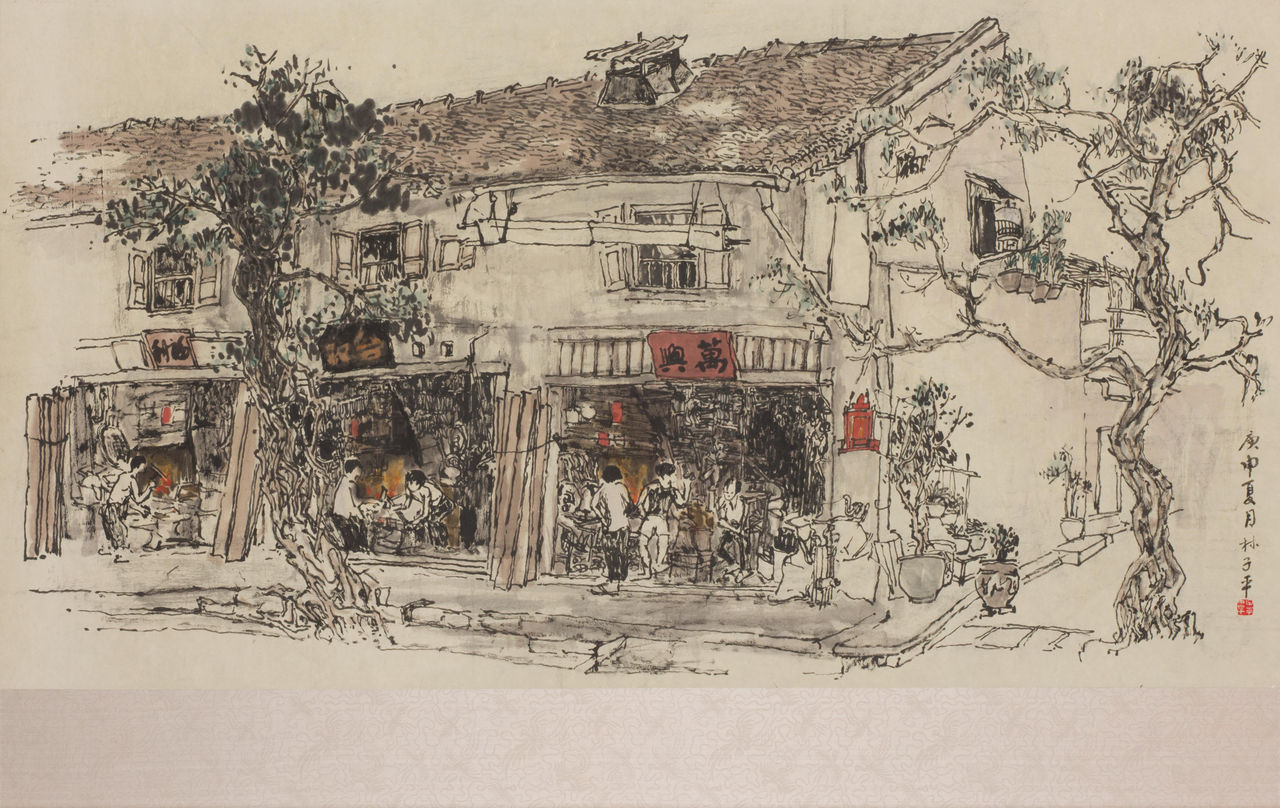
Fig. 15. Lim Tze Peng. Blacksmith. 1980. Ink and colour on paper, 67 × 124 cm. Gift of Mobil Oil Singapore Pte Ltd.
Fig. 15. Lim Tze Peng. Blacksmith. 1980. Ink and colour on paper, 67 × 124 cm. Gift of Mobil Oil Singapore Pte Ltd.
The 1960s and 1970s witnessed an increased interest in modernism in the Singapore art scene.61 Almost neglected in the narration of Singapore ink painting is the work of artists in this period which further elucidates how ink and calligraphy elements, as formalistically or culturally charged “ink aesthetics,” operated in the context of Singaporean modern art. Some of these young artists began to employ ink-related elements in a modernist mode, often centring on abstraction. Movements at this time, particularly the internationalisation of American Abstract Expressionism, provided a key subtext to the collective response to abstraction, and engagement with ink painting traditions. This tendency is also seen in the modernist ink movements which emerged in the 1960s in Taiwan, Hong Kong and among Chinese diasporic artists.62 In Singapore, Chen Wen Hsi’s student Ho Ho Ying maintained calligraphic inspiration as a key component in his oil and mixed media pieces. Also worthy of note in this regard is another pupil of Chen, Wong Keen, who experimented with the abstraction of ink in the early 1960s. Tan Teo Kwang’s works reveal consistency in handling the ideographic and pictographic dimensions of Chinese characters. Tan’s conscious deployment of his own cultural resources began during his schooling in London.
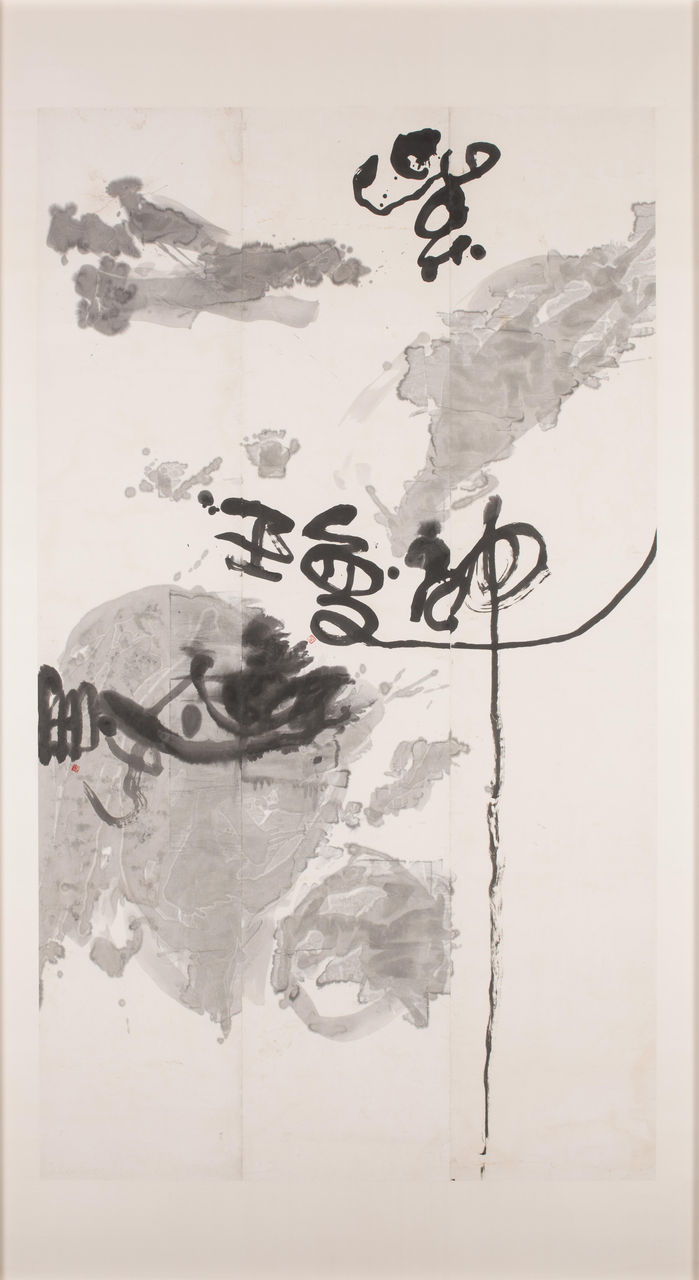
One of his earliest works is Calligraphy or Paintings (fig. 16).63
One of his earliest works is Calligraphy or Paintings (fig. 16).63
1 2
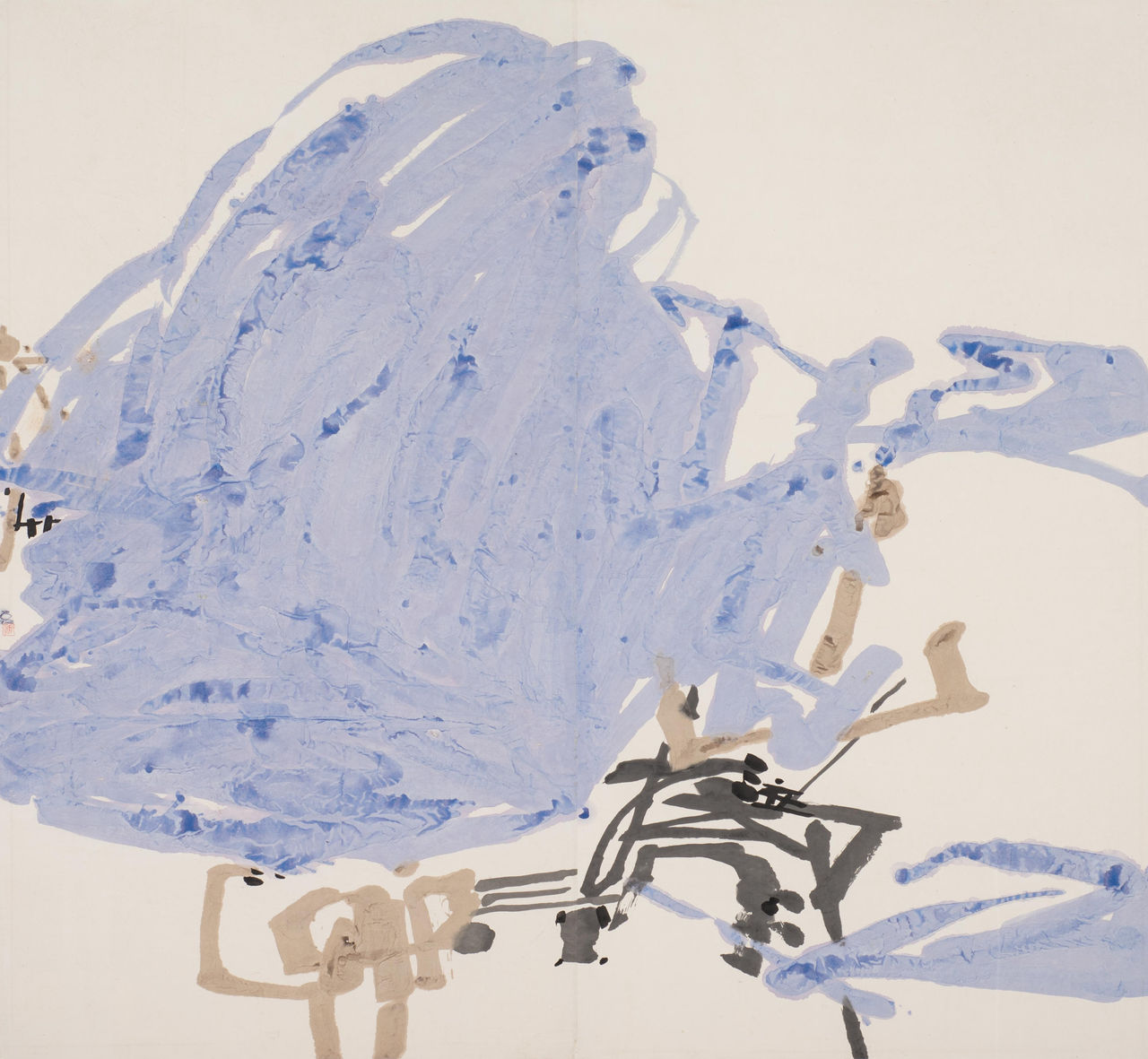
After moving back to Singapore, his style matured, as exemplified by Patacasso (fig. 17).
After moving back to Singapore, his style matured, as exemplified by Patacasso (fig. 17).
2 2
The artwork’s title is an acknowledgement of his two artistic models, Bada Shanren and Pablo Picasso. His imagery, derived from Chinese scripts, evokes uncertainty and fluidity that exist in the reciprocal transformations occurring between script-writing and image-making. Similar explorations were later seen in the experimental ink works of the 1980s’ New Wave Chinese avant-garde movement.64
In the late 1970s, a new ink movement emerged among the second-generation ink painters who were grounded in traditional techniques and scholarship. Zhuang Shengtao is one of the earliest to close the gap between his traditional training and influences from Western cultures.65 Henri Chen Kezhan also went abroad to study after extensive training in Shanghai and in Lingnan School painting.66 The all-over pictorial surface and the textures of dripped or splashed ink in their paintings are reminiscent of Jackson Pollock’s Abstract Expressionist works. However, a closer look reveals a hidden pictorial idiom created by the rhythmic application of ink, which results from a subtle balance between spontaneity and technical proficiency in handling the traditional medium. The rhythm created by calligraphic brushstrokes in Henri Chen’s artworks (fig. 18) achieves a chromatic richness similar to effects in the oil medium, but also conveys a vividness characteristic of the flower-and-bird painting by the Shanghai School masters.
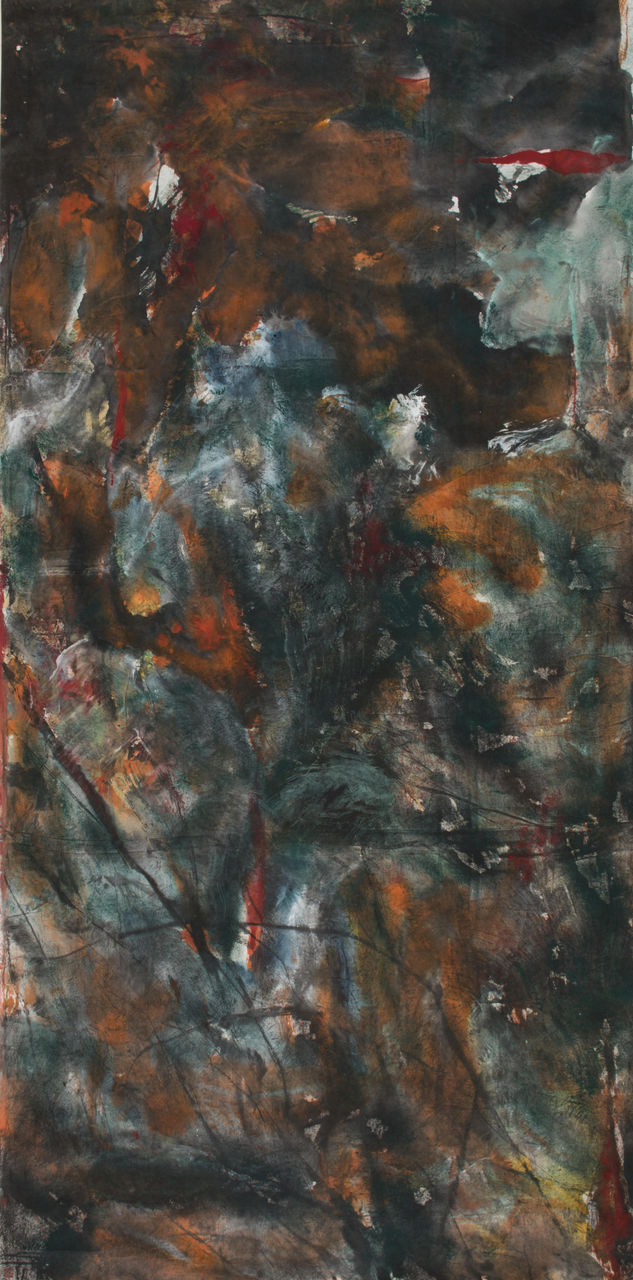
Fig. 18. Henri Chen Kezhan. Untitled. 1992. Chinese ink
and colour on paper, 240.1 × 121.9 cm. Collection of
Singapore Art Museum.
Fig. 18. Henri Chen Kezhan. Untitled. 1992. Chinese ink
and colour on paper, 240.1 × 121.9 cm. Collection of
Singapore Art Museum.
Dialogue with nature remains a major inspiration for both artists, as was the case with traditional Chinese literati artists. The expressive xieyi style enabled them to shift seamlessly from a traditional field to non-objective expressions inspired by Western references.
The reference to certain Western formal aspects may also be identified in the art of Tan Oe Pang, Tan Swie Hian and Chua Ek Kay. For instance, select pieces by Tan Oe Pang and Tan Swie Hian hint at the influence of Surrealism, while the composition in artworks by Chua Ek Kay suggests a link to Minimalism. However, formal innovation is not necessarily the primary thrust of their creation. Early on in his career, Tan Oe Pang had already posited a close connection between art and philosophy as he contemplated the Western and Chinese views of existence and the cosmos.67 Tan’s philosophical approach to ink practice can be traced to the early 1980s, when experimental ink artists in the New Wave movement also began to borrow philosophical concepts to challenge the canon of ink tradition. His images are derived from ancient totems, his feelings about the mysteries of the tropical rainforest and an unfettered imagination in the illustration of fauna and flora, landscape and city scenes. All these elements coalesce in the fusion of the old and the new. At the core of his artistic practice is an approach that considers art as the experience and expression of the essential relationship between subjectivity and the cosmos. As early as the Six Dynasties period, pictorial creation was affirmed as a means to metaphysical enlightenment, a path to understanding the ultimate principle of the universe, as underscored in Zong Bin’s treatise on landscape painting. Tan Swie Hian’s creative practice stands out as his proficiency in multiple languages and profound knowledge of different cultures and philosophies facilitated the creation of a cross-disciplinary and cross-cultural artistic voice. His works in ink or other media are frequently inspired by Buddhist classics, Zen enlightenment and his personal religious experiences.68 Tan’s methodology shares similarities with the free and unobstructed expression at the root of literati painting, a tradition that is virtually anti-technique with the notion of creation buttressed by deep learning and cultivation.
A later student of Fan Chang Tien, Chua Ek Kay’s art practice shows another contextual logic. Like many local painters, his stylistic development started with the depiction of local subject matter. With deeper immersion in both Chinese and Western art discourses, the pictorial transformation visible in his art reflects his evolving creative practice.69 For instance, the primary forms in his work Yellow Door 1 & 2 (fig. 19) are taken from the local landscape, but as a creative act, the artwork transcends the superficial reality of “representation” or “expression.”
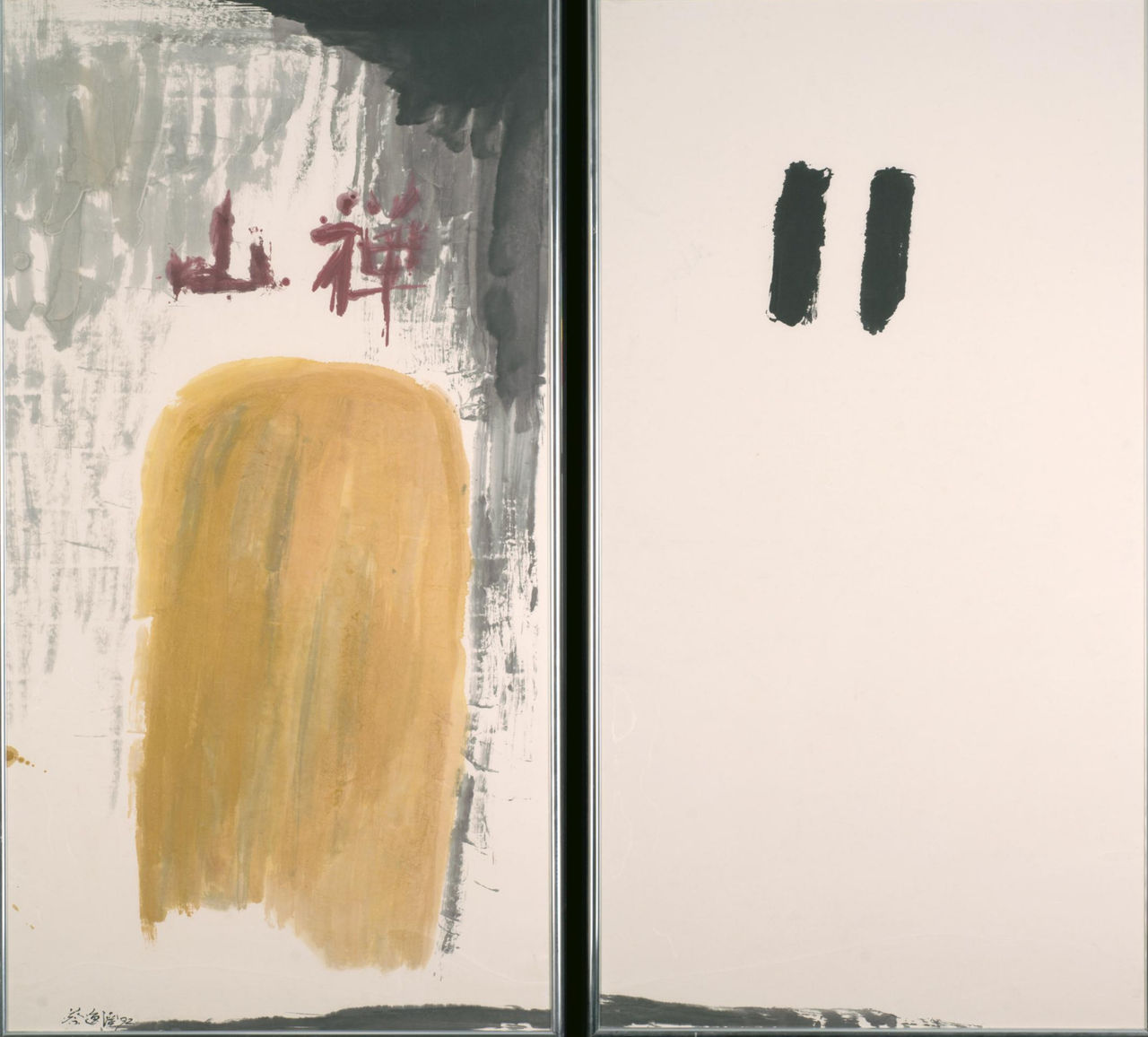
Fig. 19. Chua Ek Kay. Yellow Door 1 & 2. 1992. Chinese ink
and colour on paper, 184 × 100 cm (each).
Fig. 19. Chua Ek Kay. Yellow Door 1 & 2. 1992. Chinese ink
and colour on paper, 184 × 100 cm (each).
The image is derived from a Minimalist-inspired compositional structure. At the same time, it implicates the central aesthetic concept of void and fullness (with philosophical associations drawn from Taoist theory) and indicates Chua’s profound involvement in Zen enlightenment at the time of creation. Despite their creative, individualistic approaches being far removed from traditional conventions, these artists, in their different ways, retain their aesthetic or spiritual reverence for the canon of brushwork as the essence of ink tradition. This development differs significantly from other places, such as mainland China where resistance against brushwork traditions emerged in the quest for modernity.
The artworks of the aforementioned painters suggest a possible departure from the first-generation painters in terms of creative methodology. The principal strategy of the latter comprises intercultural dialogue, centring on communication of visual forms. By contrast, second-generation painters grew up in an increasingly non-homogenous cultural milieu, in which they could engage multiple art sources more deeply and with better linguistic abilities. In this case, individual artists could map their creative methodologies to multiple artistic systems or legacies, deploy eclectic strategies and play the roles of both insider and outsider (of particular artistic lineages) in a transferable way. This tendency potentially led to greater immersion in the complex, non-binary relationships between tradition and modernity, internal and external cultures. Meanwhile, the gaps and subtleties in cross-cultural communications present not only challenges but also opportunities for individual creativity.
Section 03
Conclusion
Dealing with traditional art forms in the context of Asian modernities is an issue which needs more discussion. The plurality of approaches towards ink painting in Singapore suggests that artists were unfettered in their explorations. Ink painting could simply remain as a type of traditional art form, a signifier of the close associations with ethnic cultural identity. But it was also transformed to reflect modern variations. Some models were shaped by the duality of innovation and the continuity of tradition, while others departed from the artistic lineage of ink art and interpreted its legacies freely, either aesthetically or ideologically. Modernity often develops from the personalised deployments of multiple art resources and intercultural exchanges. The increasing fluidity and openness of ink discourse in contact with external art forms led to its intermingling or integration with the sphere of modern and contemporary art. Working in the 1980s at a distance from local developments in Chinese painting, Tang Da Wu, a leading figure in the local avant-garde art scene, created a body of ink works, comprising intriguing images that relate to his conceptual approach. It is unnecessary to over-interpret the relationship between his ink works and the heritage of Chinese painting.70 Tang’s ink works (fig. 20) imply alternative possibilities of unfettering the ink medium from its culturally and linguistically heavy burdens, and offer new artistic sensibilities pertaining to the contemporary.
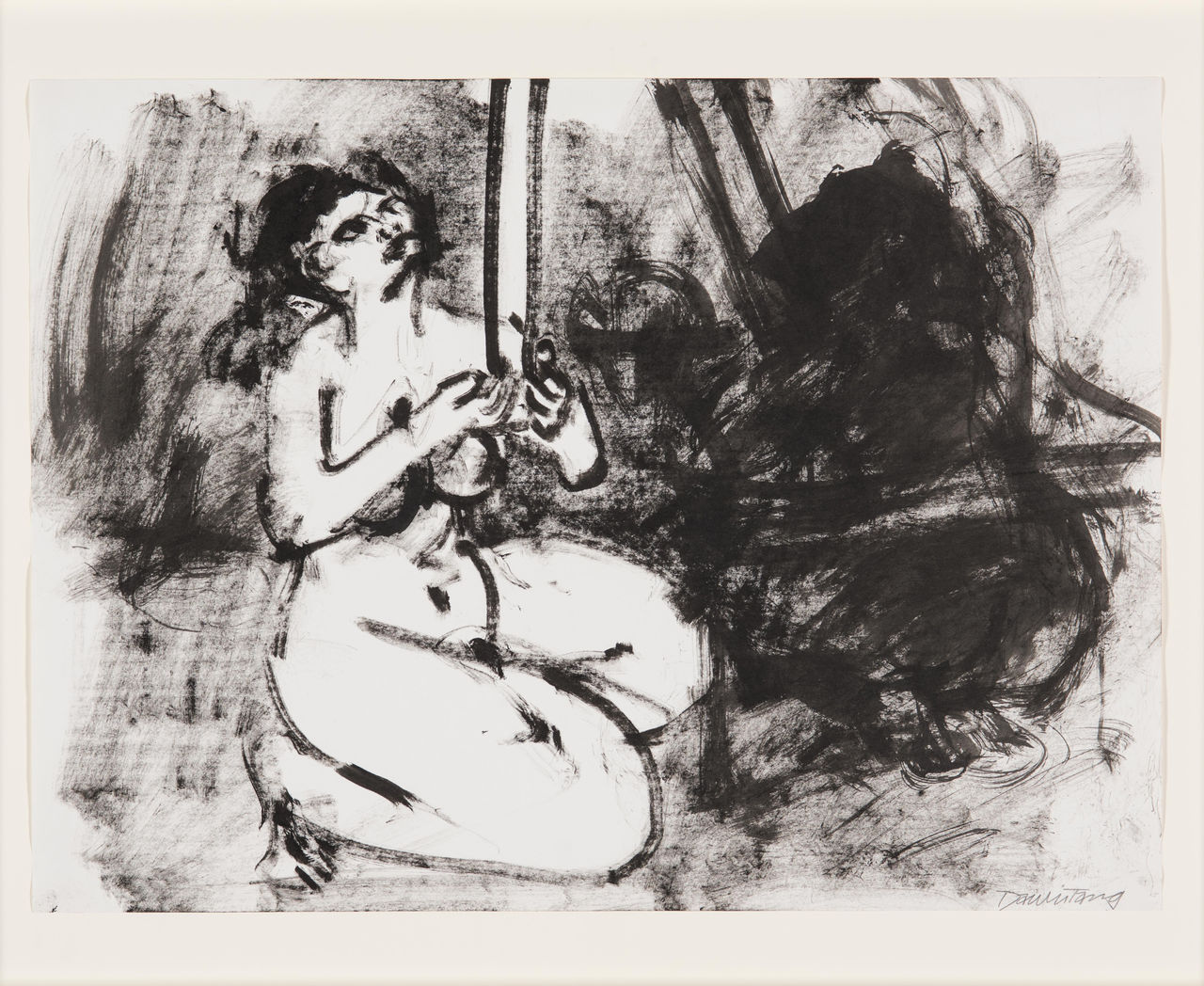
Fig. 20. Tang Da Wu. Woman Supporting the Roof.
c. 1988. Chinese ink on paper, 56 × 76 cm.
Fig. 20. Tang Da Wu. Woman Supporting the Roof.
c. 1988. Chinese ink on paper, 56 × 76 cm.