


Section 01
A Big White-Shed
The act of creating the inaugural long-term display for the DBS Singapore Gallery (Singapore Gallery) has entailed significant discussions with art historians, critics, artists and curators on the topic of “modernism” in Singapore, ranging from what definitions, terminologies and technologies one may adopt, to whether there is a specific story to be narrated about the “modern” in Singapore and its associated regimes. Many of the discussions have also revolved around the history of progress and the challenges associated with charting a linear narrative where individual artists, movements and artworks are often evoked to substantiate the “success” of a national story of modern art. This process has entailed the curators constantly inquiring if the linear narrative still holds hermeneutic validity or whether it only serves its own purpose. Throughout this process, one thing has come to be clarified: the curatorial remains a practice lodged in-between such discursive queries; and despite the challenges, sufficient strategies have had to be devised in realising what has come to be titled Siapa Nama Kamu? Art in Singapore since the 19th Century.
These discussions have been heavily supplemented by the careful study of work done at key art institutions, galleries and independent art spaces in Singapore since the 1950s. In terms of institutions, it has ranged from the foundational work done by art historians like Michael Sullivan and William Willetts at the University Art Museum (1955–1973) at the then University of Malaya in Singapore, to the pioneering curatorial efforts of Constance Sheares, Choy Weng Yang and T.K. Sabapathy since the 1970s at the National Museum Art Gallery (NMAG, inaugurated in 1976) and most recently, the work done by peers at the Singapore Art Museum (established in 1996) and National University of Singapore Museum (established in 2002).1 In the past two decades or so, much scholarship has been generated by art historians, critics and curators both regionally and globally in the burgeoning fields of Southeast Asian studies and art history and this exhibition has sought to gather and consult these views.2 It is not the intention of this essay to recount all the discussions. At the outset, however, it may be pertinent to evoke one recent conversation with Constance Sheares who reflected on the establishment of the NMAG in the 1970s, a prototypal reference to National Gallery Singapore in terms of tracing the early tenets of the national art collection, its inaugural exhibition format and for initiating in Singapore, one of modernism’s most enduring inventions – the white cube:
The inaugural exhibition curated by Constance Sheares was titled ART 76. An exhibition by invitation, the artworks were chosen based on a set of guidelines established by a selection committee, which comprised, amongst others, Liu Kang, artist and President of the Singapore Art Society at the time; Christopher Hooi, then Director of National Museum; and Constance Sheares herself.4 Out of 234 artworks submitted by 100 artists, 150 artworks by 92 artists were selected. As a survey of paintings and sculptural works current to the time, the number of artworks per artist was restricted to two; emerging and established artists were presented side by side, highlighting innovations and tensions; and the selections were restricted to artworks that had been created within the last two years of the exhibition and not previously exhibited. In the catalogue, Sheares describes the exhibition as a strategy towards “homogeneous display and systematic viewing” laid out in five thematic sections: figurative painting, non-figurative painting, Chinese painting and calligraphy, watercolours and prints, and sculptures (fig. 1 image not reproduced in the digital edition).
The curator also pre-empted reactions, “it [the exhibition] should give rise to a much healthy controversy.” 5 For the art community and museologists in Singapore, the exhibition marked a turning point. Returning to our more recent conversation, Sheares continued:
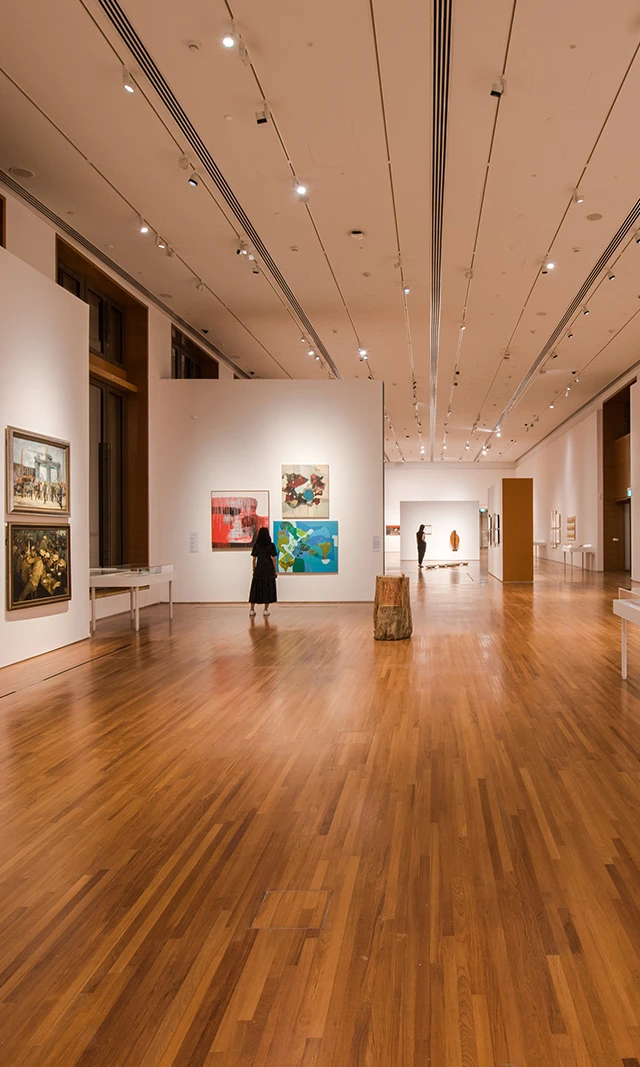
The NMAG was newly constructed, measured about 1,000 square metres, and was located on the ground and first levels of the building along Stamford Road; it was accompanied by a multipurpose theatrette and a paintings store with temperature and relative humidity control.7 Sheares’ evocation of the “big white-shed” is perhaps a sort of “tropical” adaptation of the white cube, with its even walls and artificial lighting, a space seemingly undisturbed by time. Here, context met content in a manner that was new. The white cube was also a marker for a specific global milieu of the 1970s, a period increasingly guided by Post-Minimalism and conceptual art; the convention of the modern gallery design was no exception. The introduction of the white cube into a museum setting in Singapore was then a simple but radical gesture. What it achieved was that it brought attention to the gallery space, as inseparable from the artworks exhibited inside it. It was the precursor of manifestations such as the SAM and now National Gallery Singapore. It has enabled us to retrospectively recognise that the hermetic white cube not only conditions, but also brings into focus the artworks presented in them. In the years following 1976, some artists would come to contest this dichotomy, of what it means to remain outside (the social, the political, and economic) and that which rests inside (the timelessness of art). In any case, this epistemological shift in 1970s Singapore continues to form a significant but lesser studied aspect of the multiple genealogies that form the nexus between the “art historical” and the “curatorial.” For the purpose of this essay, it may suffice to say, the 2000s and the extended project of Siapa Nama Kamu? is a time of Singapore developing a sufficient memory of the art historical and the curatorial, set within two historical buildings (the former Supreme Court and City Hall). In this current manifestation too, the white cube, or its counterpart – the “big white-shed” – persists as an ideal amidst interiors broken by the presence of structural columns from an earlier era.
Section 02
Making Exhibition Matter
In Malay, “Siapa nama kamu?” means “What is your name?” This question is taken from National Language Class, a painting that hung on the walls of the City Hall in the 1960s, where the Ministry of Culture was located.
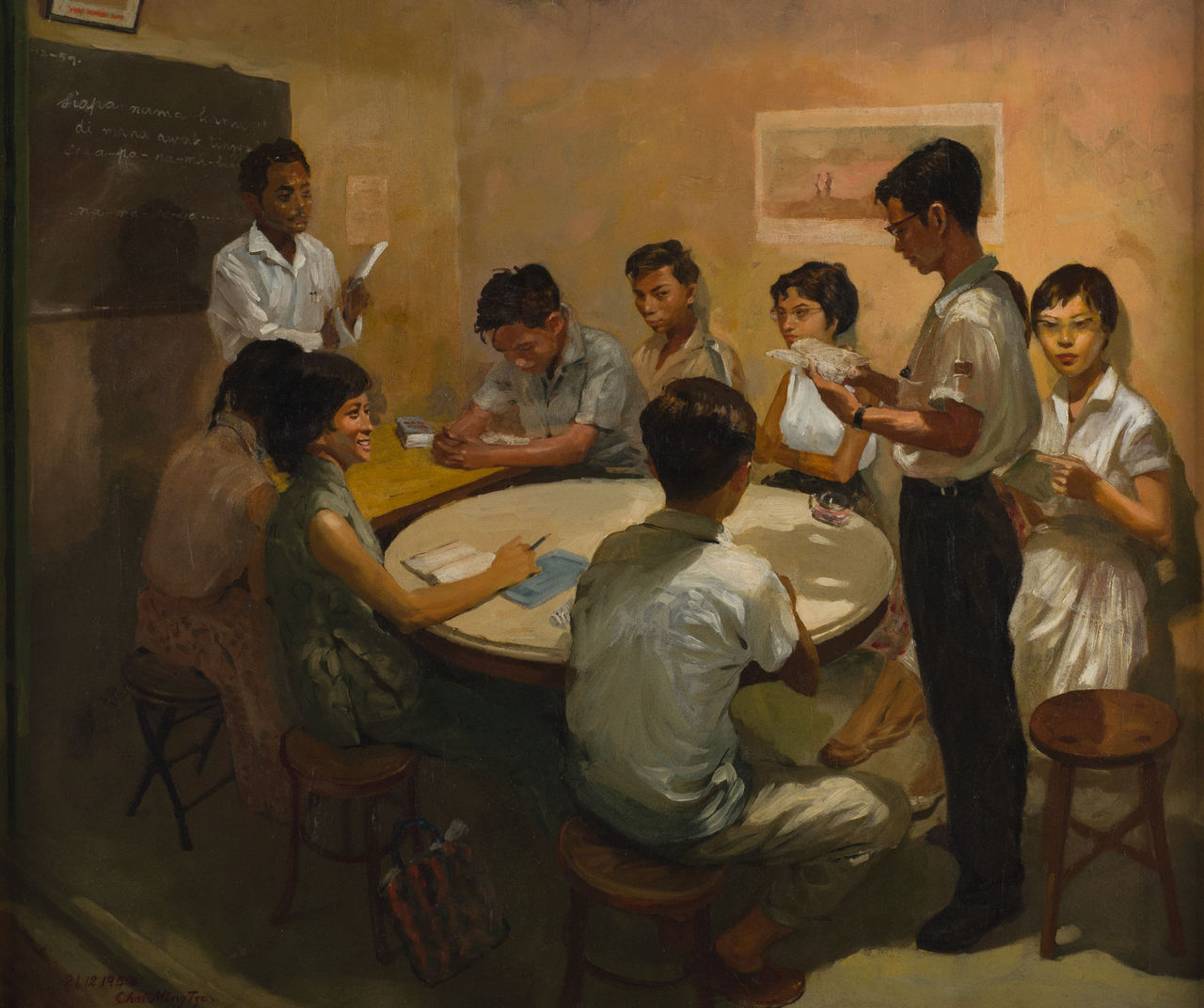
Fig. 2. It was painted by Chua Mia Tee in 1959, the year Singapore gained self-governance status from the British, and has since then come to resonate with that historical moment. Chua Mia Tee. National Language Class. 1959. Oil on canvas, 112 × 153 cm.
Fig. 2. It was painted by Chua Mia Tee in 1959, the year Singapore gained self-governance status from the British, and has since then come to resonate with that historical moment. Chua Mia Tee. National Language Class. 1959. Oil on canvas, 112 × 153 cm.
Chua was part of a generation of young artists who were actively involved in the independence struggles of the 1950s. In the painting, a group of ethnic Chinese students are shown seated around a table, learning the national language from a Malay teacher. Behind the teacher hangs a blackboard, on which the question remains inscribed: Siapa nama kamu? A basic, if not trite, phrase usually taught in elementary language class; it is a fundamental question that can lead one into an intricate analysis of how audiences relate to art. It actively courts an analysis of the contingent mechanisms of inclusion and exclusion, representation and de-representation, accumulation of memory and pitfalls of the art historical and the curatorial, as it operates within this exhibition it is an intimation of what is shown, how it is shown, but also maybe what is not shown. Siapa Nama Kamu? is then a question and an invitation.
The curatorial narrative for the Singapore Gallery is spread across six broad sections, each containing its own sub-themes and concerns driven by the ebb and flow of the story of art in Singapore that has been written and exhibited since the early 20th century (fig. 3 image not reproduced in the digital edition). In working through the narrative, the research efforts have been managed through a series of touchpoints: How does one begin to understand Singapore art? Are there shared experiences that connect artists in Singapore? How is Singapore art connected with other art developments regionally and globally? What are the key impulses that drive art in Singapore? Is it indeed possible to think about Singapore as a “non-territorial” category, where we consider how it has been represented both within Singapore and outside? How are we able to tell a history of Singapore through Singapore art? Moreover, how is art history or art historiography curated? Could one lobby for two types of art histories, one of the museum and the other of academia? If such an imagination was to be put forward, what sort of an exposition would this generate?
The exhibition layout seeks to enable broader insights into a constantly evolving “national” Singapore cultural tradition. In a quasi-chronological flow that begins from the late 19th century, its queries include: human and psychosocial geographies that remain mediated through issues that pertain to the local vis-à-vis the global; urgent questions of postcoloniality – its possibilities and challenges; the often romanticised notion of itinerancy, but also the productive relations itinerancy creates in terms of the circulation and transference of ideas; and finally the shifts in the physical landscape as a constantly evolving realm mediated through topical concerns of the “industrial” and the formal. In this regard, the terms “modern,” “modernity” and “modernism” may find a connective ambit in Singapore’s story of art as capitalism’s ferocious successes. What is more, if one were to seek a vantage point for this exhibition, it would be to track the ebb and flow of cultural survivals and revivals and the constant reconfiguring of specific traditions under the domain of the modern. As such, the inaugural display is structured in a contained yet open-ended manner; it brings together artworks that have alluded to the generality of modernisation in Singapore, with the specificities of regional, transnational and historical continuities and discontinuities.
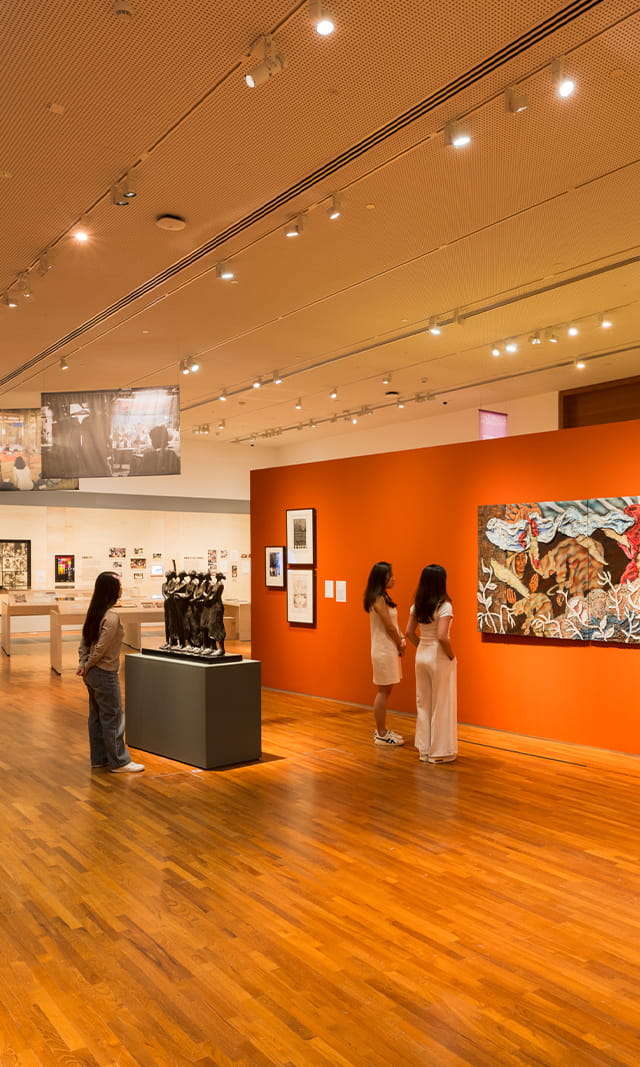
Although it cannot be the task here to examine all the ramifications of the aforementioned queries, we may certainly begin by providing insights into carefully selected moments that this particular exhibition seeks to unravel. It may be pertinent to observe that throughout the Singapore Gallery, each of the six sections: “Tropical Tapestry,” “Nanyang Reverie,” “Real Concerns,” “Tradition Unfettered,” “New Languages” and “Shifting Grounds,” is perceived as a “funnel” that constructs narratives which oscillate between the spatial and the historical. As a spatial encounter, it was important to consider how we may devise particular routes for exploration within the exhibition. As a general structure, it is laid out somewhat chronologically to orient the viewer about the historical evolution of art, with each section comprising thematic clusters that branch out from the main walking route, directing the visitor’s attention to specific areas of enquiry. Key artworks that mark turning points are highlighted. The gallery texts and labels have received careful attention, especially for cases where details had to be mined through archival or oral history research. Likewise, this publication, too, contains detailed essays on each of the six sections highlighted above, with each curator not only surveying in some depth the complexities of each art historical moment and theme, but also discussing the challenges of their display.
Section 03
Tropical Tapestry
Most accounts of Singapore’s art history tend to start with the rise of art associations, art schools and exhibitions in the early 20th century, the typical infrastructure expected in an emergent art scene. However, the current narrative expands the conventional scope by looking further back in time, and at a wider range of sources of visual representation. This section presents a proposition about the localisation of visual traditions seen through the colonial encounter and impact of the arrival of migrants with varied value systems from the 19th century onwards as well as how Singapore could be visualised. Located within the Malay Archipelago, Singapore found itself at the crossroads of not just trade, but also an imagination of what a young colony could look like. A settlement prior to the arrival of the British is known to have existed on the island as early as the 16th century. Yet it was in the 19th century that sojourners and settlers would bring with them various ideas that began to intermingle with the local landscape. This was a period when different individuals from varied backgrounds converged on Singapore from far-flung places such as China, the Indian Subcontinent and the territorial West. These encounters created contact points between Europe and Asia. As Singapore, Malacca and Penang (forming the Straits Settlements) were part of the British sphere of influence in the 19th century, the curatorial effort has involved including artworks produced within the Straits Settlements. It would be anomalous to restrict the narrative to artworks produced in Singapore when artists and patrons were moving fluidly across the Straits Settlements and within the Malay Peninsula. Lastly, we also chose to include a wider range of materials such as hydrographic charts, photographs and prints. Whilst historical or ethnographic museums generally value these materials for their social and cultural value, the same works are displayed in the Singapore Gallery as examples of some of the earliest visual representations of Singapore and its environs. These types of materials, by their ease of reproduction and wide circulation, were critical, perhaps more so than paintings and sculptures, in disseminating and popularising certain impressions and visual tropes.
While taking into consideration the evolution of Singapore art discourses from the 19th century, this exhibition is centred on the key moments (mediated by artists and artworks) that have taken place from 1819 to the present. There are a number of reasons for taking this year as a starting point. Firstly, 1819 was the year when Sir Thomas Stamford Raffles founded modern Singapore and this date has assumed critical significance in popular, governmental and scholarly discourse of Singapore. It is also the year when Captain Daniel Ross, a ship commandant on the fleet that brought Stamford Raffles and William Farquhar to Singapore, commissioned one of his fellow sailors to sketch an outline of the Singapore harbour, to date, considered one of the earliest visual impressions of the Singapore landscape (figs. 4 and 5 images not reproduced in the digital edition).8 Secondly, the 19th century is significant for it is also the period when much of Southeast Asia came under European colonial rule. With diverse values and systems coming into close contact with the region’s existing social structures, the 19th century represents a break.
During the 19th century, one particular visual reference that emerged was that of the tiger, a beast which was already connected to a range of stories from literary and historical texts from the 15th and 16th centuries, such as the Sejarah Melayu (Malay Annals). In 1835, for instance, the land surveyor and architect G.D. Coleman’s trip into the dense jungles of Singapore met a close encounter with a tiger.
.jpeg/_jcr_content/renditions/cq5dam.web.1280.1280.jpeg)
Fig. 6. This moment has since come to be captured in a wood engraving that stresses upon an unassimilable otherness the tropical environs of the colony represented. Heinrich Leutemann. Unterbrochene Straßenmessung auf Singapore (Interrupted Road Surveying in Singapore). c. 1865. Wood engraving. 20.8 × 29.4 cm. Collection of National Museum of Singapore.
Fig. 6. This moment has since come to be captured in a wood engraving that stresses upon an unassimilable otherness the tropical environs of the colony represented. Heinrich Leutemann. Unterbrochene Straßenmessung auf Singapore (Interrupted Road Surveying in Singapore). c. 1865. Wood engraving, 20.8 × 29.4 cm. Collection of National Museum of Singapore.
The art historian Kevin Chua describes the potency of this print (and hence the event itself) as, “The image is about the very hinge between the human and the animal: we are brought back to 1835, the moment of man’s encroachment into the interior [of Singapore], the beginnings of capitalism, and the origin of separation between the human and the animal.” 9 As a forever interstitial moment between what is imagined and the real, it was decided that this print would also be the first work that the public encounters in the exhibition. In many ways, the conflation between the operative terms “tropical” (registering a climatic and atmospheric difference in how the Other is said to behave and adapt to the arrival of European science) and “tapestry” (referencing the gathering of materials that traverse and complicate the distinction between what constitutes “art” and “artefact”) are meant to intimate the public into considering not just an impending “modern” by the early 20th century, but also the plausible sources that such a reality drew upon.
Whilst much of the details will be unravelled in the accompanying essays including citations of key texts that have formed a significant part of the existing scholarship that this exhibition has also relied upon, perhaps it is worth discussing one important bugbear we have had to contend with, that is, “tradition,” and how this challenge has been managed. Much of it is concerned with the difficult decision of manoeuvring through the ethnographic-centric bases that make up much of early art historical scholarship about Southeast Asia and this evolving emphasis on seeking a plausible position for objects that are today relegated as “artefacts” vis-à-vis modern art displays. This concern has been navigated through the selection of paintings and sculptures (fig. 7 image not reproduced in the digital edition) created by artists from Singapore that bear a particular semblance to the artefactual.
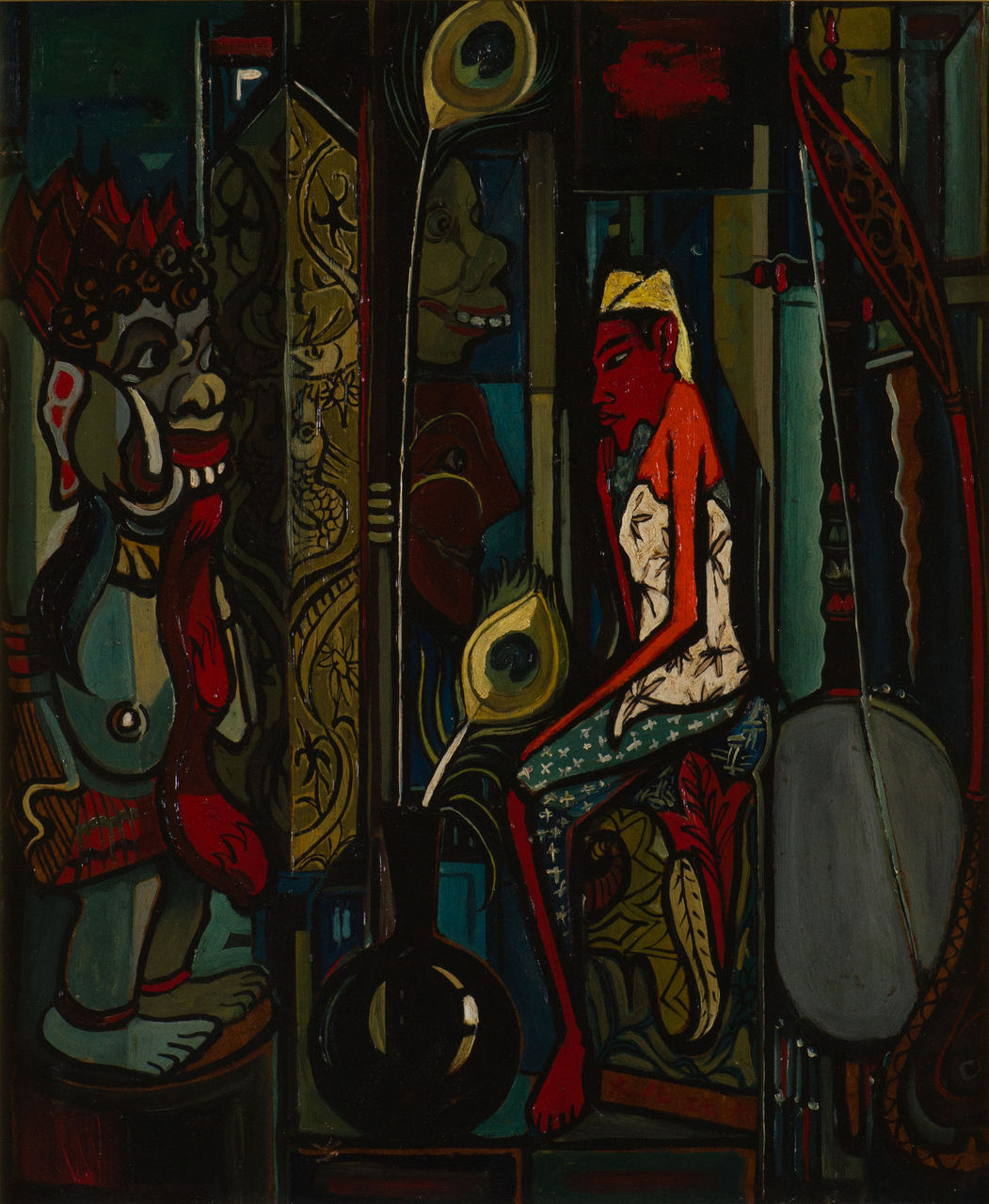
Fig. 8. One such instance would be Lim Mu Hue’s 1957 painting Within the Museum I, which showcases two artefacts, most plausibly dvarapalas, which are traditionally door guardians in Javanese temple carvings, a vase of peacock feathers and weapons. Lim Mu Hue. Within the Museum I. 1957. Oil on masonite board. 58 × 49 cm.
Fig. 8. One such instance would be Lim Mu Hue’s 1957 painting Within the Museum I, which showcases two artefacts, most plausibly dvarapalas, which are traditionally door guardians in Javanese temple carvings, a vase of peacock feathers and weapons. Lim Mu Hue. Within the Museum I. 1957. Oil on masonite board, 58 × 49 cm.
A figure with Malay headgear and patterned clothes is ensconced within these paraphernalia, seated upon an ornate base with floral carvings. It is known that this picture is based on the Raffles Museum and Library, and many artists in Singapore during the 1950s and well into the 1970s maintained an interest in the artefactual bases of Southeast Asia. A sustained study of this topic is yet to be undertaken. Although the display of Lim’s painting may well have been supplemented with temple carvings, ornate headgear and so forth, a conscious decision has been made to resist such a curatorial gesture for it may, subconsciously or otherwise, lead one into dichotomies that construe the artefact (and in effect those who produced it) as Other, establishing a distance that is both spatial and temporal. What is being resisted here is that the presence of such “artefacts” juxtaposed with works of “modern art” ought not to turn into a theoretical absence or become relegated to what Johannes Fabian describes as a “conjuring trick,” that despite all its well-meaning intentions only further reinforces the dichotomy between art and artefact; in effect, keeping those that produced these artefacts outside the time of history.10
The 19th century and the entire section titled “Tropical Tapestry” is, for the inaugural exhibition, held as “contingent”; to not just understand why Singapore was pictured by the coloniser and the colonised in particular ways, but to begin charting how a certain groundwork was laid for the rise of the “modern” in Singapore art. It is intended that “Tropical Tapestry” will open up a discussion about how and what came to form the sources for modernist art practices in Singapore during the 20th century. At the time of writing, suffice to say, not only should the 19th century in Singapore art be read as a work-in-progress, but also one of the most exciting terrains for the scholar to tread upon.
Section 04
Nanyang Reverie
As a site of connection between East and West, the most banal fact about Singapore is its location. The “Nanyang,” translated as “South Seas,” is a pre-modern trading term used by the Chinese for the Southeast Asian region, taking its compass direction south of China. Yet, Nanyang is not just a geographical term. It is an impression of a landscape and resource – a region rich in cultures with its various languages, ethnicities, customs, traditions and syncretic belief systems – that Chinese migrant artists encountered anew. “Nanyang Reverie,” with allusions to an intensely contemplative, yet a dreamlike state where mental impressions commingle with changing material and climatic realities, examines the emergence of the Nanyang School of painting as it came to be formed in Singapore and then Malaya from the 1930s. This could be claimed as one of the earliest examples of a localised school of painting.
To understand the emergence of the Nanyang School of painting, one critical task has been to locate the earliest of migrant artists who had trained in the art centres of the period such as Paris and Shanghai, and later made Singapore their home. These artists would eventually create artworks that expressed local subject matter in styles that integrated their understanding of Chinese ink painting and School of Paris traditions. Tchang Ju Chi was one of the earliest practising artists in Singapore, a lesser-studied figure contemporaneous to artists such as Xu Beihong and Georgette Chen. These artists were well-travelled and reflected cosmopolitan influences in their artistic practice. Hence, a group of artworks have been brought together to establish traces that we have fondly begun to describe in curatorial discussions as the “proto-Nanyang School,” as it charts emerging modernist strands of artistic practice in Singapore in as early as the 1930s when artists consciously reworked Western conventions to develop a local expression of self and place.
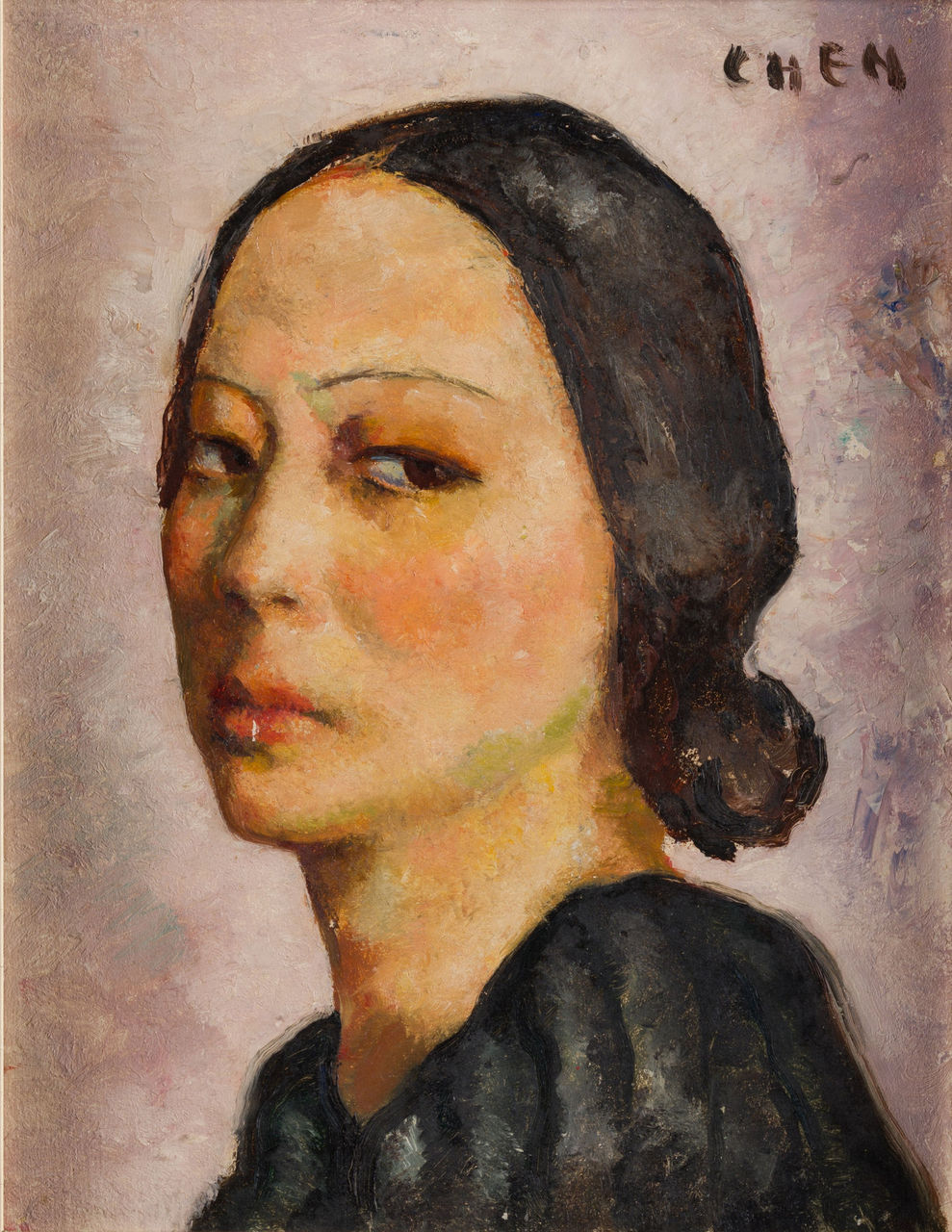
Fig. 9. Georgette Chen. Self-Portrait. c. 1934. Oil on canvas. 35 × 27 cm. Gift of Lee Foundation.
Fig. 9. Georgette Chen. Self-Portrait. c. 1934. Oil on canvas, 35 × 27 cm. Gift of Lee Foundation.
The establishment of the Nanyang Academy of Fine Arts (NAFA) in 1938 could then be seen as part of this larger momentum that had already begun some years earlier. Tchang, who worked in the medium of oil, taught at NAFA, and was already using the imagery of tropical fruits and local people in his artworks, is a significant case in point.
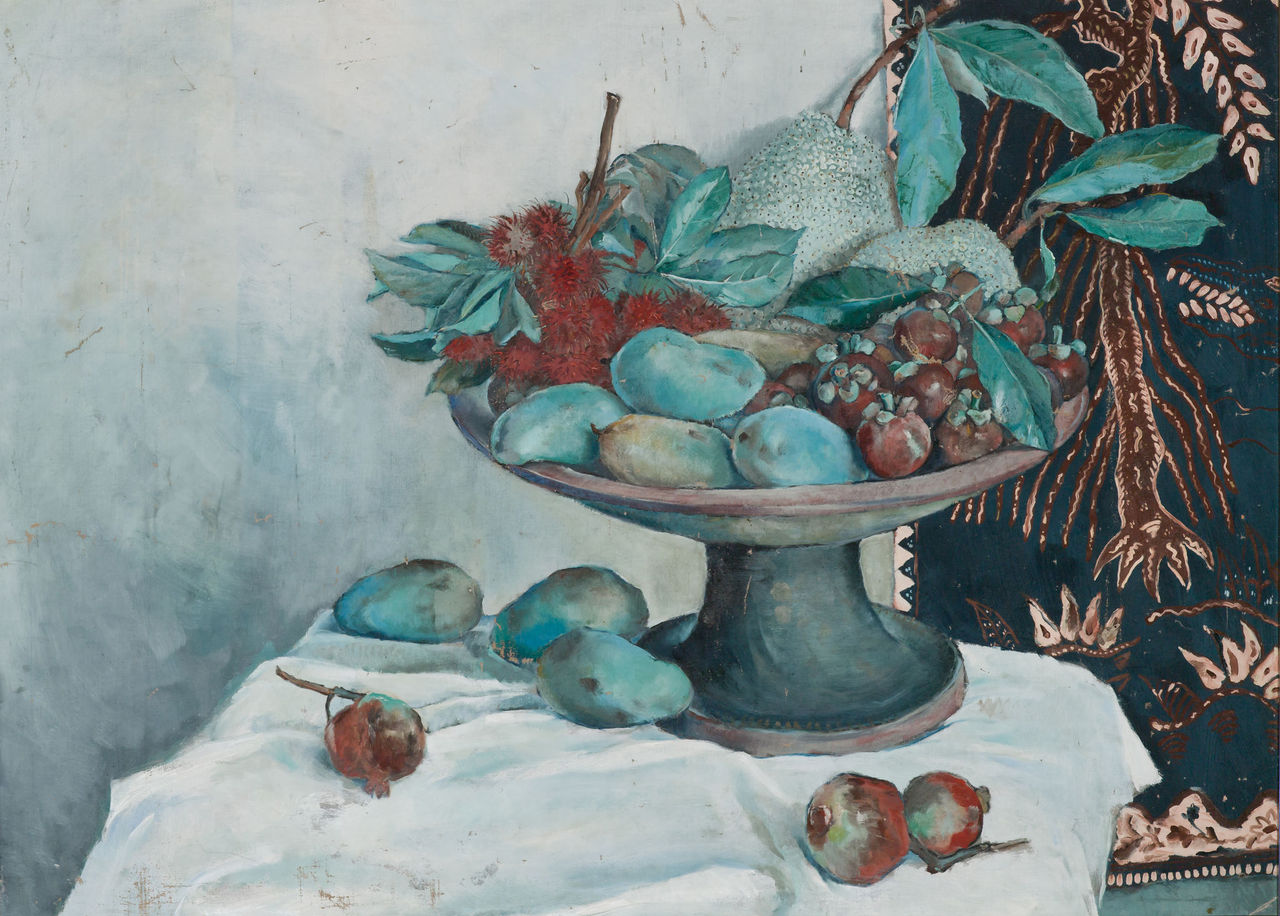
Fig. 10. Tchang Ju Chi. Still Life. c. 1930s. Oil on canvas. 94 × 130 cm. Gift of Chang Si Fun (Shewin Chang).
Fig. 10. Tchang Ju Chi. Still Life. c. 1930s. Oil on canvas, 94 × 130 cm. Gift of Chang Si Fun (Shewin Chang).
Art education and practice in Singapore flourished until the advent of World War II. When Singapore fell to the Japanese forces in 1942, many artists and intellectuals who were active in anti-war efforts either fled the island or were among the first rounded up. Some lost their lives and many, interned. Existing scholarship on this period of Singapore’s art history tends to focus on the efforts of the prisoners of war. Whilst these small drawings or sketches provide a record of their harsh living conditions during internment, many of these artists would have little connection to the Singapore art scene during the postwar period. The one exception would be Richard Walker. Before being interned, he was already an influential art superintendent in the British colonial school system in Singapore. After the war, he continued to play an active role in local art societies in the 1950s. As such, this exhibition has instead chosen to focus on key artists in Singapore’s art history, and how their practice was influenced by the war. For instance, many leading local figures like Tchang Ju Chi had joined forces with visiting artists such as Xu Beihong in organising exhibitions in Singapore to raise funds for the anti-Japanese war efforts in China. Some of Xu’s best-known works were created during the tumultuous years he spent in Singapore (fig. 11 image not reproduced in the digital edition). Whilst many art groups and schools had to be closed down during the Japanese Occupation, artistic production did not cease completely. Key artists such as Liu Kang and Lim Hak Tai continued to create artworks, reflecting their experiences of the war. This remains a fruitful area for further research.
Returning to the question of the Nanyang School that burgeoned after the War, it is pertinent to note that while there was a conscious attempt at espousing the concept of the local in their subject matter, the artists associated with the School were in reality often viewing Southeast Asia as outsiders. Their thoughts about this “new” Southeast Asian landscape are documented in published essays and personal letters. In order to complicate this incongruity between the “localness” of their philosophy and an inherent exotification of subject matter being depicted, one of the strategies this exhibition deploys is that it pre-empts the question of “Bali” as a site that remains central in examining what a plausible “modern moment” in Singapore art may mean. Existing art historical discourse positions the 1953 exhibition Paintings on Bali held by Liu Kang, Chen Chong Swee, Chen Wen Hsi and Cheong Soo Pieng, as a watershed event in the development of the Nanyang School. This is supplemented in the current exhibition by suggesting that the “1952 Bali moment” can be traced to earlier stirrings in the 1930s. This is seen through the inclusion of paintings by European peripatetic artists such as Adrien-Jean le Mayeur de Merprès who had exhibited his Balinese-inspired works in Singapore before World War II. Le Mayeur is known to have hosted the four artists during their sketching trip in Bali in 1952. Other artworks include the Balinese-inspired sculptures and paintings by lesser-known itinerant European artists such as Tina and Julius Wentscher, who had used Singapore as their base to explore the region.
Whilst some acknowledgement of Le Mayeur is important, one may also consider the formalistic innovations brought about by the Nanyang School artists as they not only approached the region as source (subsequently developing a distinctive artistic language), but as their familiarity with the region grew, also made significant investments in examining the ritualistic, decorative and experiential nature of Southeast Asia.
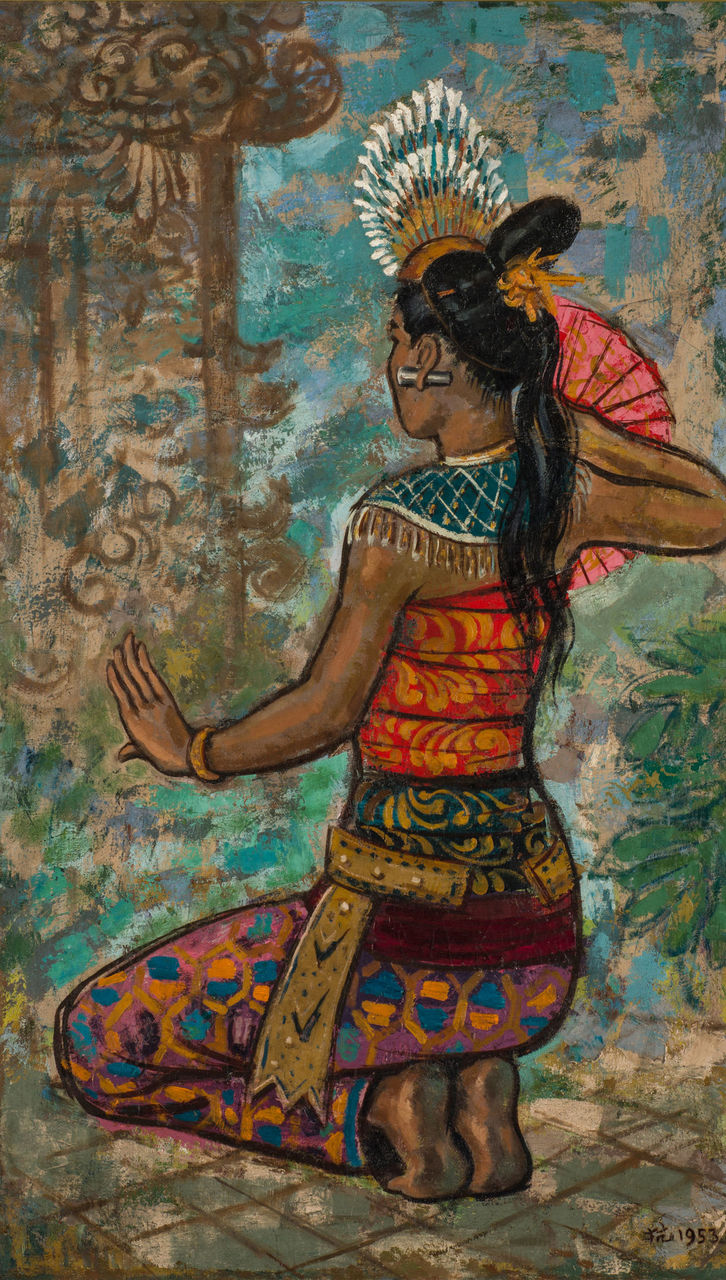
Fig. 12. For instance, Liu Kang’s Souri, painted in relation to a pastel drawing done during the 1952 trip, is set in a temple courtyard; an inflection that also depicts Bhoma, the son of god Vishnu and goddess Basundari, at the gateway of the temple. Liu Kang. Souri. 1953. Oil on canvas. 120 × 70 cm. Gift of Liu Kang Family.
Fig. 12. For instance, Liu Kang’s Souri, painted in relation to a pastel drawing done during the 1952 trip, is set in a temple courtyard; an inflection that also depicts Bhoma, the son of god Vishnu and goddess Basundari, at the gateway of the temple. Liu Kang. Souri. 1953. Oil on canvas, 120 × 70 cm. Gift of Liu Kang Family.
Liu Kang even wrote about this:
By the late 1950s, many artists from diverse backgrounds sought to establish a local identity for art created in this region. Hence, we have explored how the discursive construct of the Nanyang School could also be expanded, or remade into an open-ended category that different artists and groups could lay claim to, with differing intents and purposes. A critical question that we have had to contend with is how its story should be told alongside parallel artistic developments of other ethnic groups in Singapore. For instance, artists like Suri Mohyani are critical in emphasising the practice of Malay artists in Singapore and the region. While Suri Mohyani was known for his kampong scenes and scenery of rivers and lakes, Kampong Kuchan (Lorong 3, Geylang) (fig. 13), painted in 1951 and also a recent acquisition, is especially significant for its reference to a particular site, Kampong Kuchan, home to a community who were said to be descendants of the Orang Laut or sea peoples who inhabited the Riau-Lingga archipelago.
/_jcr_content/renditions/cq5dam.web.1280.1280.jpeg)
Fig. 13. Suri Mohyani. Kampong Kuchan (Lorong 3, Geylang). 1951. Watercolour on paper. 45.7 × 60.2 cm.
Fig. 13. Suri Mohyani. Kampong Kuchan (Lorong 3, Geylang). 1951. Watercolour on paper, 45.7 × 60.2 cm.
Suri Mohyani was also instrumental in encouraging artists like Latiff Mohidin, who held his first exhibition at the Kota Raja Secondary School in Singapore in 1951. A detailed study of artists such as Suri Mohyani and a tracking of proliferating networks between artists in Singapore, Malaysia and Indonesia during the 1950s are much needed.
The Nanyang School reached a certain maturity by the 1970s when many of the seminal artworks associated with it were produced. These include Georgette Chen’s Lotus in a Breeze (c. 1970), Cheong Soo Pieng’s Drying Salted Fish (1978) and Liu Kang’s Life by the River (1975). Indeed, the final section of “Nanyang Reverie” highlights the interesting challenge and perhaps the limits of linear exhibitionary displays, as styles and approaches which tend to defy clear periodisation are included before the narrative falls back in time to the Social Realist movement in the 1950s. The Nanyang School, as a movement has tremendously mobilised and visited the region of Southeast Asia, in effect also highlights the geographic position of Singapore set within a vast archipelago. As such, it is worth noting that Siapa Nama Kamu? should not be seen in isolation but in relation to its counterpart, Between Declarations and Dreams: Art of Southeast Asia since the 19th Century. The former, being the national showcase, adopts a general horizontal art historiographical model and attempts to critically abridge the meaning and peculiar message of art history. The latter, which also includes Singapore in its narrative, produces a vertical art history based on the short term as “event,” the medium term as “conjuncture,” and the longer duration as “structure.” Both the categories of “nation” and “region” still remain pertinent and continue to endure in Southeast Asia, and the hope is that both exhibitions will provide insights into these complex and constantly evolving epistemologies. It is within such a regional matrix, which remains open to discourse and discussion, that the Singapore Gallery has been positioned.
Section 05
Real Concerns
In order to communicate his or her ideas, an artist may choose a particular kind of expression, medium and style. However, the choice is also influenced by the artist’s circumstances. In the aftermath of World War II, competing views of how Singapore may be represented began to take shape. Artists debated publicly about what or who would be the ideal subject, and how this might be depicted. If indeed the main offering of “Tropical Tapestry” and “Nanyang Reverie” is an intimation into itinerancy, arrival and a sense of home, “Real Concerns” surveys the period between the 1950s and 1970s and connects more directly with the struggle for nationhood and its later postcolonial manifestation of the industrialising nation.
The distinction between “Nanyang Reverie” and “Real Concerns” needs emphasis. The former features early migrant artists who pursued the aesthetic ideal of the Nanyang, seeking a distinct art rooted in the rich cultural forms of Southeast Asia. The latter, arose almost simultaneously during the 1950s, comprising a younger generation, many of whom had trained under the aforementioned group at NAFA. Mainly organised under the banner of the Equator Art Society (EAS, established in 1954), they began to position their art within a broader regional turn towards realistic depiction, amidst the raging anti-colonial movements in Malaya and the intense ideological debate in a seemingly bipolar world of the Cold War. These artists turned to Social Realism as a way to remark upon social conditions, often with political undertones. In many ways, both the “Nanyang” and “Real” approaches informed each other in constructing differing views about the local, and how artistic creation may have sight of the present by being mindful of the past.
In recent years, the Malayan Emergency (referring to a period of unrest from 1948 to 1960, following the creation of the Federation of Malaya) has received more rigorous attention from historians. This has, in turn, sparked more interest in cultural movements of the period, particularly the EAS, resulting in exhibitions and public talks which have surfaced more artworks from the period. This has provided much fertile ground for us to work on, including research into mediums such as woodcut and genres like self-portraits and life drawings. In the current exhibition, this emerging scholarship has had to be balanced with more practical concerns. Whilst some of the other founding members of the EAS such as Chua Mia Tee, Lee Boon Wang and Lai Kui Fang have received some art historical attention, figures such as Tay Kok Wee, a founding member of the EAS, have been overlooked.
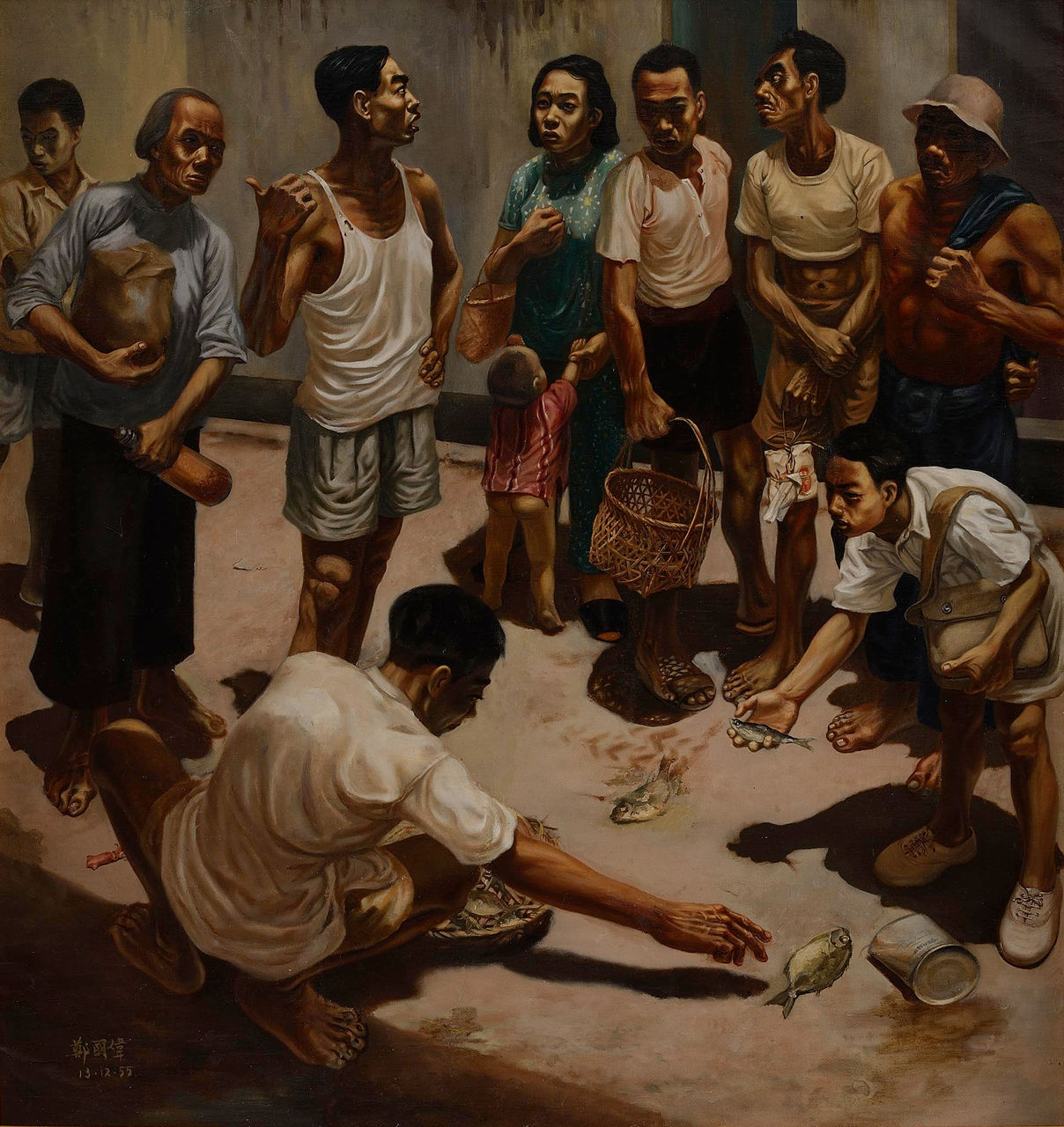
Fig. 14. Picking, one of the few surviving works by Tay, was first shown at the landmark Singapore Chinese High Graduates’ Art Association’s exhibition in 1956. Tay Kok Wee. Picking. 1955. Oil on canvas. 103.5 × 98 cm.
Fig. 14. Picking, one of the few surviving works by Tay, was first shown at the landmark Singapore Chinese High Graduates’ Art Association’s exhibition in 1956. Tay Kok Wee. Picking. 1955. Oil on canvas, 103.5 × 98 cm.
In 2007, the artwork was considered for From Words to Picture: Art during the Emergency, a seminal exhibition that surveyed the art by the EAS at the Singapore Art Museum. At the time, the curator Seng Yu Jin decided not to display the artwork due to its poor condition. The artwork has since been acquired for the national collection, and restored for display in this exhibition. In terms of genres, a number of self-portraits and figure studies have been acquired for the national collection. It is intended that these artworks will be critical additions to the study of figurative practices in Malaya during the 1950s and 1960s.
With Singapore’s eventual independence in 1965, its landscape came to be industrialised at an immense pace. This provided a different frame of reference for realist art, which eventually shifted from a nationalist prerogative with political undertones, to a focus on changing landscapes and subtexts of the industrial. This is reflected in the medium of watercolour, which gained a stronghold in the art scene of the 1960s. Although largely inherited from the British tradition since the 1930s, its techniques and subject matter were further developed by local watercolourists such as Lim Cheng Hoe and Ong Kim Seng. In 1969, the Singapore Watercolour Society was established by thirteen artists, which included figures like Chen Chong Swee. Through their diverse styles, they transformed local scenes and views of a fast-changing national landscape into pictorial sites filled with aesthetic emotions (fig. 15).
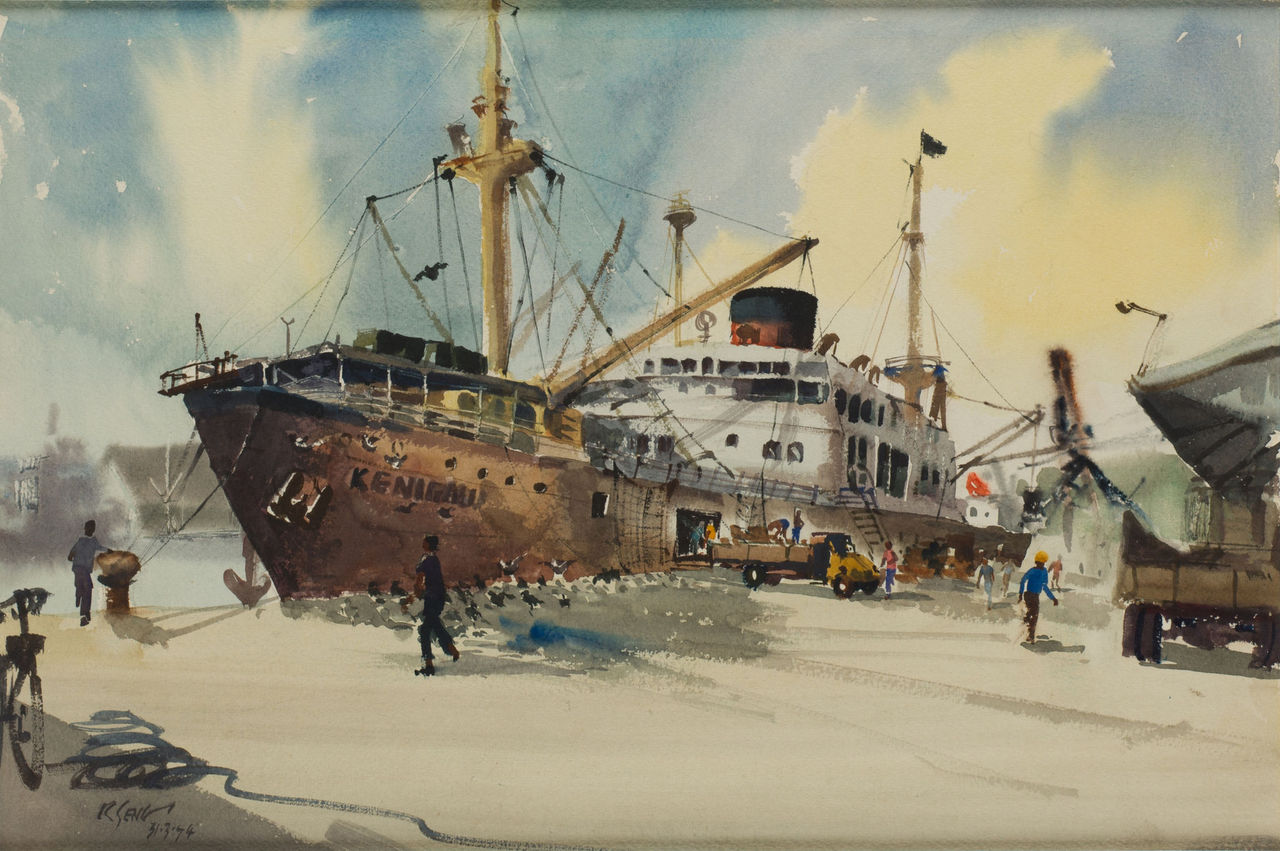
Ong Kim Seng. Wharf. 1974. Watercolour on paper. 37.8 × 56 cm.
Fig. 15. Ong Kim Seng. Wharf. 1974. Watercolour on paper, 37.8 × 56 cm.
Curatorially, Siapa Nama Kamu? remains cognisant that the “nation” requires attention, but also critical unpacking. Taken as a whole, the exhibition may be perceived as a series of multiple, and sometimes inconsistent narratives that are produced simultaneously at the national, regional and transnational levels. The challenge has been to consider if we can think about the nation as a collective subject and an evolving entity, with its ideal state only existing outside itself – in the peripheries through the acknowledgement of contestations, slippages and silences. At the point of writing, what remains certain is that a degree of elasticity has been worked into the presentation, in anticipation of lesser-known histories and materials. These other narratives may or may not resist accommodation into a “national” structure of such an exhibition, but will nonetheless become critical nodes from which to glean, a much richer notion of the past. The suggestion here is that this project ought not to be perceived as an anachronism, but as an exhibitionary type, and one such node within a much larger national discussion that is mediated through degrees of “institutionalities,” curatorial malleability and historical consciousness.
Section 06
New Languages and Tradition Unfettered
As the Social Realist movement faced its own hurdles, the art of the 1960s also registered a thematic turn. In 1963, artist Ho Ho Ying said, “Realism has passed its golden age; Impressionism has done its duty; Fauvism and Cubism are declining. Something new must turn up to succeed the unfinished task left by our predecessors.” 12 The new artistic language, he might have added, was abstraction. Ho was the first Chairman of the Modern Art Society (MAS, established in 1964) and their intellectual vitality was formidable. This was a call to engage with the “new” as part of an international dialogue that had registered a shift in perceptions and value systems towards the non-representational, which also alluded to a sense of artistic adventure. Brian O’Doherty describes this period (albeit in the Western context) as "always suffering from the pride that demands the testing of limits.” 13 It could be worth recalling that this international turn paralleled and informed calls in Singapore for an art gallery and the white cube. To return to Sheares’ words cited earlier, “At the National Museum Art Gallery, I tried to create a big white-shed. I came to this realisation after a study trip in the USA.” 14 If indeed a definition of the “new” in “New Languages” was to be attempted, it would be a call to consider a mode of working that began to emerge during the 1960s and 1970s, which personified an attitude that emphasised process as much as product in the making of art, a time when art came to be defined and described as “work.” This meditation could be tracked through the well-documented artistic debates between collectives such as the MAS and the EAS. The MAS called for a reconsideration of art in a rapidly industrialising Singapore, whereas, the EAS, as the “Real Concerns” section highlights, had been invested heavily in thinking about the possibility of art as a social device towards generating “change” in service of the newly independent nation. In addition to highlighting key artworks by those who pushed for the “new” and non-representational, the exhibition also includes a survey of what one may describe as the “early strands of abstraction in Singapore,” as it took shape in the 1950s led by artists such as Lim Hak Tai, Cheong Soo Pieng, Chen Wen Hsi and Yeh Chi Wei. These artists based their abstract works on personal experiences which often alluded to the physical and tangible (fig. 16).
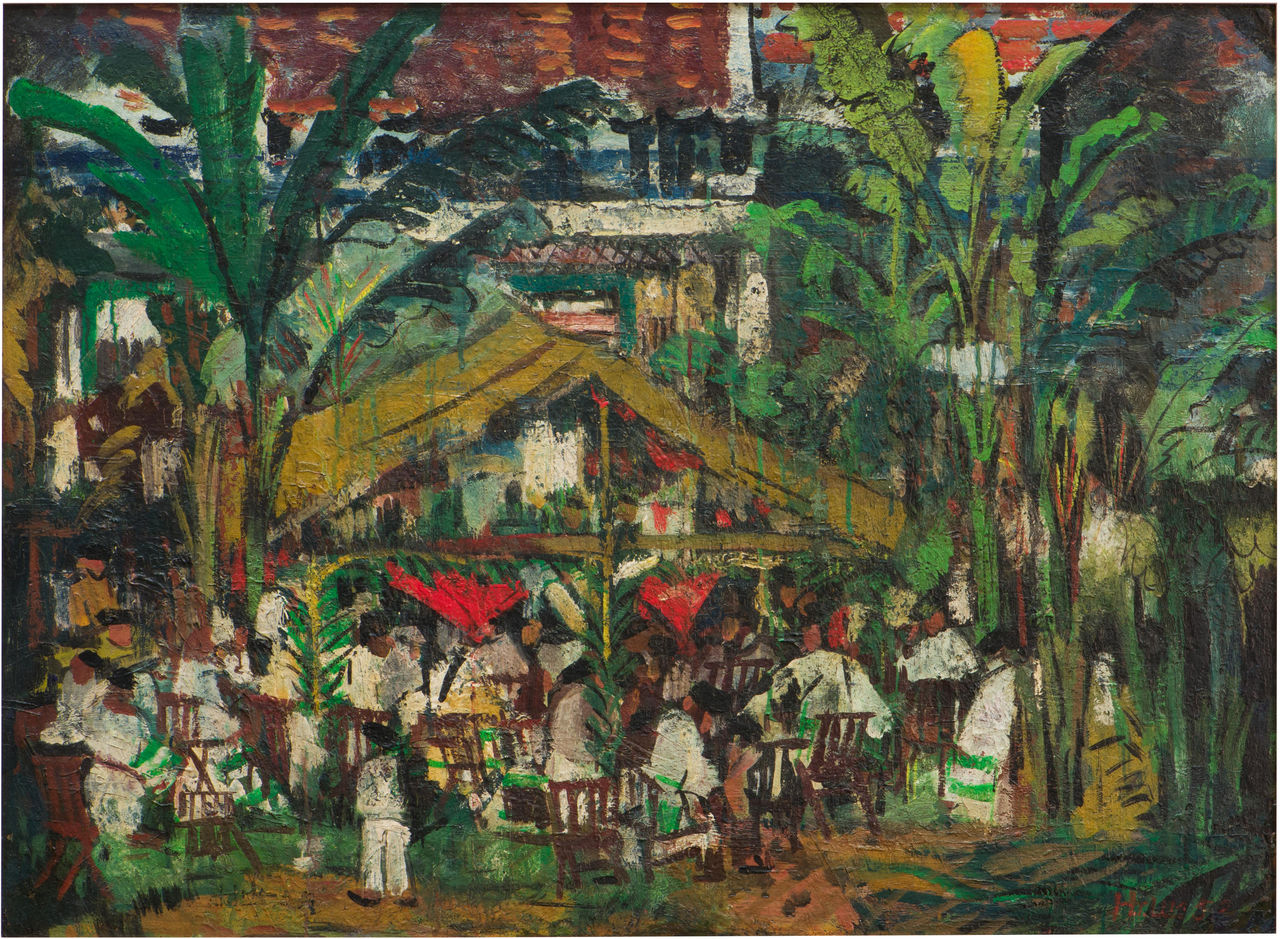
Fig. 16. Lim Hak Tai. Malay Wedding. 1952. Acrylic on board. 70.5 × 96 cm.
Fig. 16. Lim Hak Tai. Malay Wedding. 1952. Acrylic on board, 70.5 × 96 cm.
Suffice to say, the 1960s marked a shift, led by loosely organised artist associations such as the Alpha Gallery (established in 1971), which argued publicly that the medium and materials of the artwork were by themselves the reality and that a work of art ought not to refer to anything other than itself. These artists called for a fresh perspective of what a painting or sculpture could mean. These “new” artworks were stripped-down, and made of materials with smooth, shiny surfaces such as steel, cement, and fabric. These artists also showed an increasing concern to individualise these materials as their own expressions. These explorations tended to be based on personal experiences, local contexts but also a broadly “internationalist” ethos. For the members of the Alpha Gallery, the site of the gallery was critical in the reception of its art. It not only presented artists based in Singapore, but also artists from Southeast Asia (fig. 17 image not reproduced in the digital edition). Critics labelled these artworks as minimalist or reductive art, but often these labels were rejected. For Alpha Gallery, one thing remained certain: Realism was not a sufficient criteria for the future of art and did not speak to the essence of the region’s industrialisation process. In surveying the artworks of this period, what emerges in “New Languages” is possibly bound by the fracture between the modern (not “modernism” per se) and early murmurs of what we refer to as the “contemporary.” This is something we shall return to in the section titled “Shifting Grounds.”
In tracking some of the significant works that form preludes to contemporary practice in Singapore, this exhibition has entailed the process of “remaking for display” selected artworks which were either of a temporal nature or have been destroyed due to various circumstances. One such example is Cheo Chai-Hiang’s 5’ x 5’ (Inched Deep) (2015), which is based on a 1972 proposal the artist made to the MAS for its annual exhibition consisting of instructions for an outline of a square measuring five feet by five feet to be drawn over the space of a wall and adjoining floor. Although the 1972 proposal was titled 5’ x 5’ (Singapore River), the 2015 version is differentiated from its past iterations by being a part intervention in the exhibition space itself. This artwork has been discussed heavily by art historians and whilst the debate is far from resolved, it was never acquired into the national collection. It has now been brought into the collection as a series of instructions authored by the artist, which the Gallery is free to recreate in the future for exhibitionary purposes as an inch-deep incision made into the floor and walls of the exhibition space (fig. 18 image not reproduced in the digital edition).
Presented in tandem with “New Languages” is “Tradition Unfettered,” a survey of Chinese ink practices in Singapore. Contained as a significant cross section of the Singapore Gallery, the story of ink in Singapore should be read as treading a fine line, as one that rests between the nuances of a particular medium with strong affinities to “tradition” and its capacity to make transparent the fracture between modernity and its evolving present. In terms of the strength and longevity of its practice in Singapore, it is without parallel in Southeast Asia. Limited by the availability of extant artworks, the inaugural hang focuses on the period from the 1940s to the 1980s. The selected artworks will also be rotated more regularly due to the conservation needs of paper-based works. Whilst the display remains self-contained with occasional slippages between it and its parallel sections, that is, “Real Concerns” and “New Languages,” at this point, it is a space that rides on some level of ambiguity, a term we use with optimism as we continue to develop the collection and research the various unexplored assumptions between ink, abstraction and conceptual practice in Singapore.
The display begins with the early generation Chinese migrant scholars and artists who were instrumental in transferring the legacies of calligraphy and ink painting from their place of origin to Singapore. They nurtured a generation of Singapore painters and provided ample perspectives for innovation of the pictorial convention. Some of their key concerns included how local Malayan scenes could be captured and, if indeed, the realist spirit could be fused into the discourse. Since the 1950s and 1960s, artists such as Chen Wen Hsi and Cheong Soo Pieng opened another avenue of ink innovation by bridging aesthetic legacies between Chinese ink and Western modernism (fig. 19). This was further developed by a group of younger painters from the 1980s. In addition, artists such as Tang Da Wu are featured for their unconventional use of ink, opening up new readings.
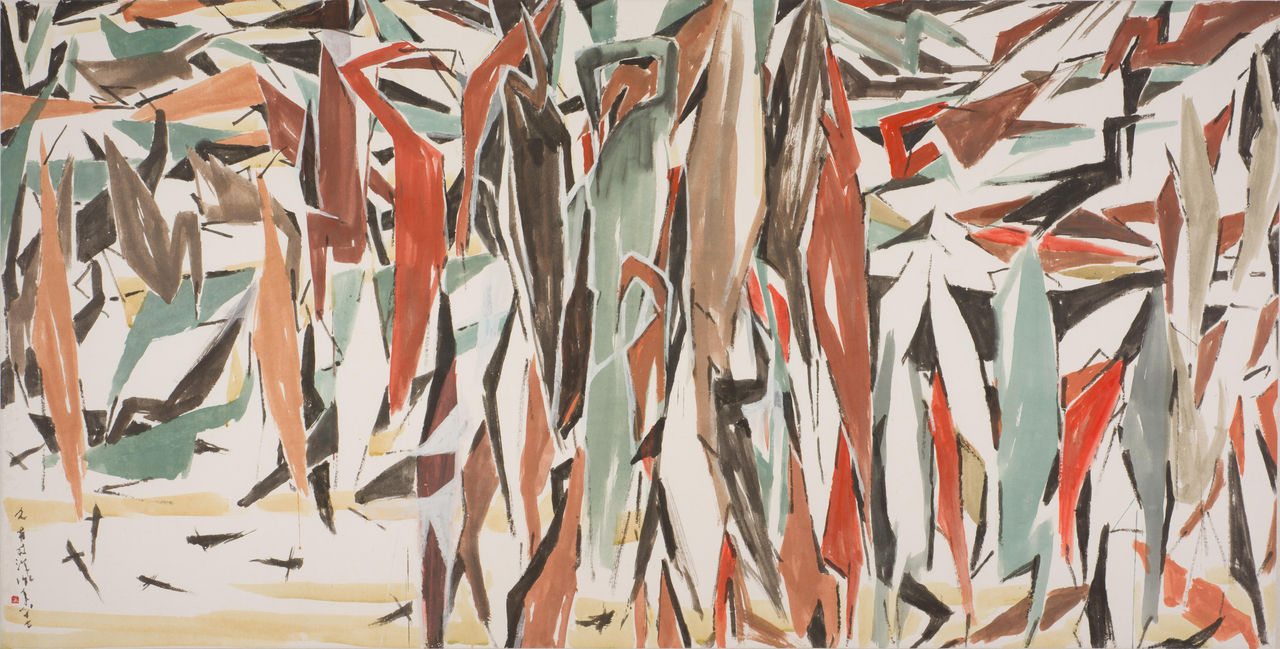
Fig. 19. Chen Wen Hsi. Herons. c. 1991. Chinese ink and colour on paper. 123 × 245 cm. Collection of Singapore Art Museum.
Fig. 19. Chen Wen Hsi. Herons. c. 1991. Chinese ink and colour on paper, 123 × 245 cm. Collection of Singapore Art Museum.
Similar to researching ink discourses in Singapore and numerous other gaps highlighted thus far, Siapa Nama Kamu?, as a project, will stretch for about five years, and aims to lodge itself within emerging debates in the field of Singapore art. With future artwork rotations, the hope is that Siapa Nama Kamu? will not only be a steady site for the display, debate and education, but also for the re-visioning of the current narrative. As we move forward, it is intended that “art history” as a discipline and the “curatorial” as a practice will not only question the linear classificatory system of charting movements, but also develop the Singapore Gallery as, what Hans Belting has called, a “circuitous gathering.” All these works of art, historical records and artistic voices being curated into the exhibition, are then historical potentiaries, created by a “Singaporean,” formerly Malayan, and broadly Southeast Asian modernity that might even cause us to change our view of what has happened and how that very history of art may be studied and re-seen. To achieve this, the artwork is and will be maintained as central and key, which is also art history’s first mode of enquiry. It thereafter hopes to inspire self-reflexive connections across artistic adventures, timelines, finesse, interruptions, territories and historical impact. With time, it should come to be seen as a layering of styles, possibilities and even paradoxical positions.
Section 07
Shifting Grounds
If the modern is governed by the constant questioning of the frameworks that govern art, the perennial artistic quest is to challenge all such established protocols. By the 1970s, this change made its presence felt as artists began to gravitate from a position that art (for it to be effective) had to make an appearance to one that was governed by conception. Alternative artistic media such as performance and innovative use of materials had already emerged in the 1970s, but became more significant by the 1980s. Artists wanted to counter the dominant approach at the time, which confined art to the white walls of the art gallery or museum by including elements of performance, the literary, and the installative. This period is marked by the activities of The Artists Village, other artist collectives such as Trimurti and 5th Passage Artists Limited, and the movement of Singapore artists within the burgeoning global biennale system of the 1980s and 1990s – three critical directions that developed almost simultaneously. A significant entry point into this section is the presentation of documents related to an exhibition by Tang Da Wu titled Earth Work (figs. 20 & 21 images not reproduced in the digital edition), which was installed within the permanent gallery displays of the NMAG in 1980. Presented in conjunction with the NMAG’s Art in Action series, the installation consisted of Product of the Sun and Me and Product of the Rain and Me alongside a selection of drawings made from earth, a rock installation and an earth “map,” which consisted of trays of clay that the artist had left exposed to track the effects of the sun and rain in a field in Sembawang (also the vicinity where Tang would co-found The Artists Village in 1988). In a newspaper report on the Earth Work installation at the NMAG, Tang made two comments:
While Earth Work’s impact in terms of presentation within the permanent collection galleries of the NMAG needs further research, this questioning of how art may or ought to be consumed and for which public by Tang may be seen as an important moment in initiating a wholly different set of negotiations in the Singapore context, one between the artist, art institution and State – a tension that intensified in various ways during the 1980s and 1990s. For the current exhibition, it is instructive, and perhaps exciting to move the notion of a live performance work having taken form in a Sembawang field, for instance, into a bodily experience in the gallery context. Being able to curate this move from an expressive mode of utterance to an investigatory and analytical one has been challenging. To curate what was “live art,” performance, action, or participation, has required an attentiveness towards the complexity of life itself, its flux, its tendency not to be easily measured and to exceed systems and dogmas. In a paradoxical way, to curate the history of performance art (one of the significant yet ephemeral mediums in the 1980s and 1990s in Singapore) has required intensive discussions with artists, historians and critics, that have led us to an admission of the particularity of one’s viewpoint and knowledge, and an acceptance of the validity of the subjective history and lived experience of its artists and observers. The events and performances themselves were so varied, ranging from happenings organised by the TAV, Trimurti and 5th Passage Artists Limited that the current exhibition cannot display more than a fraction of the whole phenomenon.
In acknowledging and presenting the tension between the ephemeral nature of performance art from the 1980s and 1990s, and their residues (in the form of videos, photographs and objects), the dynamic nature of artistic practices is highlighted through archival materials, contextual displays and the restaging of selected works. These displays will evolve over time, through the changing presentations of archives from various artists and observers of the period. One such instance is the presentation of video documents produced by Ray Langenbach who has filmed different artists performing since the 1990s. The approach that has been taken with these materials is that whilst the performance and all associated copyright are held by the artist who had conceptualised and performed the piece, Langenbach’s videos ought not to be seen as “documentations” that can stand in for a moment that was inherently ephemeral. Rather, the videos by Langenbach ought to be considered an individual’s view of the performance. In mobilising them, one surrenders to or celebrates (depending on one’s viewpoint), the selectiveness of memory as part of the necessary working of this section. In gathering these varied materials together, what has happened is that the question of orality, the performative and narratival have been forced into a conversation; three categories that have had a rather precarious presence in the history of art in Singapore. Although it is the smallest of the displays, the aim of “Shifting Grounds” is to think about how histories of artworks that are ephemeral in nature may be presented, whilst capturing that sense of recall amidst the old, the less old and now.
Section 08
Constellations/Contingencies/Gathering
The possible directions for future research and various caveats highlighted throughout this essay may be seen in terms of how exhibition-led and art historical research will evolve, change and manifest, whilst continuing to allow for deep analysis into particular artworks, artists, movements and modes of working. Given this, one wonders how the most dutiful of accomplices of the modern museum – the white cube – will evolve, transform and continue to condition the manner in which “modernity” is unhinged to consider what other sites of production outside the traditional West, such as Singapore and Southeast Asia, have to offer in terms of debates about global modernism. In gathering these works of art, could it be said that Constance Sheares’ “big white-shed,” an import of the Western museum’s frame in 1976, had not only tropicalised the canvas of the exhibition, but also enabled a story of art to be performed? Considering the white cube’s forty-year history in Singapore, and with the current gathering of artworks that range from the 19th century to present day, can we now attempt to carefully complicate binaries such as national/international, local/foreign or Western/non-Western? In this regard, museums, we would contend, are very much political beings.
It is amidst the material chronologies, developments and tensions in Singapore art that we have developed artwork commissions that occupy a virtual space, accessible on the museum’s handheld multimedia guides and social media platforms. These commissions, seen as being specific to the concerns that have governed the gathering of artworks and the design of the gallery for the inaugural hang, bring to the fore, critical statements into a conversation with the broader histories of modernism. Conceived as an ongoing series and titled Unrealised, the deployment of these interventions is considered in terms of artistic process, curatorial rationale and design approach. After the opening of the Gallery, newer possibilities and conversations will also be generated by the curatorial team by looking at particular histories that the featured artworks may be able to “tell”; it is intended these narratives will be circulated digitally.
For the inaugural exhibition, three artists have been engaged for Unrealised. Ho Tzu Nyen follows the trajectory of a fictitious figure(s) across Siapa Nama Kamu? as we listen to its thoughts and reveries, leading us through a web of natural and cultural histories – a story of Singapore from pre-history to the near present. It begins with the arrival of tigers to Singapore more than a million years ago – with the print Unterbrochene Straßenmessung auf Singapore (Interrupted Road Surveying in Singapore (c. 1865) being deployed by Ho to bridge the 19th-century colonial to the rise of modernism in Singapore in the 1930s and beyond. Ho seeks a convergence between historical time, the potency of cultural metaphors as well as the ability to tell stories within the exhibition. Likewise, Erika Tan presents the forgotten artist and weaver Halimah Binti Abdullah, a figure who was taken as a living display to the British Empire Exhibition held in Wembley from 1924 to 1925 and subsequently died in London.16 The work (fig. 22 image not reproduced in the digital edition) is presented as a journey, weaving in and out of specific locations in the Gallery, acting as a sort of metaphor for traversing through time zones/periods, fiction/fact, and raising questions about the nature of gender representations in the inaugural exhibition. As a symbol, Halimah suggests how the push towards modernity and any attempt at defining the modern within Singapore art history is bound to its silences or unstated assumptions. Tan attempts to retell gendered stories and highlight their silences by evoking the exhibition space as its landscape and calling for Halimah to be recognised as an early agent of Singapore art. This reconsideration of “Modernisms’ Others” is further propositioned by Heman Chong in an artwork titled Past, Lives (Singapore, 1819–2015) (fig. 23 image not reproduced in the digital edition), which touches upon an aspect of exhibition history and one that involves language. Presented as a Twitter feed which will randomly and continuously post, on a daily basis, titles of modern and contemporary art exhibitions that have been held in Singapore between 1819 and 2015, Past, Lives (Singapore, 1819–2015) offers an insight into the sort of residue exhibitions leave behind. In his proposal to the Gallery, Chong highlighted that “titles are possibly the first thing you might encounter when an exhibition is produced. It is an allusion to things that will come, to the objects and images one will see, to the emotions you will feel. Sometimes, it obscures, sometimes it reveals. What is in a name?”
The Singapore Gallery also hosts a special digital educational platform known as the Social Table, which provides access to the vast historical archives of Singapore art. It is conceived as an evolving record of each artwork that is displayed in Siapa Nama Kamu? over the next five years or so. Developed closely with the Education & Programmes team, the Social Table is meant to be an interactive resource that highlights the possibilities of networks and modes of thinking where ideas move through a nexus of artists working across a range of mediums at different times and inspired by movements in different places. It seeks to map the relationships amongst the artists represented in the Singapore Gallery, all of whom have played a role in the development of its art. In looking at artist connections in this manner, it is indeed an effort towards evaluating if there is value in generating such a structure that collapses chronologies in favour of a series of lateral links (fig. 23 image not reproduced in the digital edition).
In its approach to digitality, seen as layers upon which Siapa Nama Kamu? rests, the aim is to highlight, albeit subliminally, the passing of time as a means through which we may perceive the writing of art history and the process of exhibition-making. With this in mind, Siapa Nama Kamu? seeks to foster a framework that will potentially open greater interaction with other disciplines and artistic mediums that have not found sufficient representation. Significant effort is required in terms of developing the collection and displays of photography, architecture and film, in anticipation of the concern that future curatorial trajectories would move between boundaries. As platforms, Unrealised and the Social Table work in parallel to the research that continues to unfold in and for the Singapore Gallery. Together, they highlight that modernity has taken on multitudinous shapes, and the work that we do is but a contribution to a much larger debate that is ongoing within the history of art both regionally and globally. The hope is to create a space for such a discussion – to ascertain if a “Singaporean” or “Southeast Asian” modernism ought only to be looked at in retrospect, or if indeed, we are in a present moment when the concept may be expanded.